

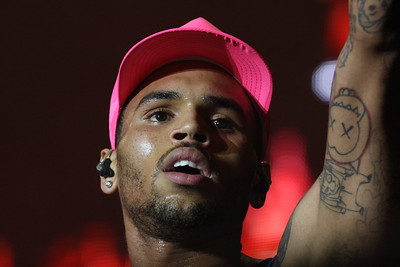
Chris Brown’s “Breezy Bowl XX Stadium World Tour” sold out arenas nationwide and made waves with its meet-and-greet photos, which fans paid upwards of $1,200 for. Brown’s success sparked discourse concerning whether it’s possible to separate the art from the artist.
The tour was announced March 27, with surprise headline performers Bryson Tiller and Summer Walker. With more than 400,000 tickets sold and 14 sold-out shows, Breezy Bowl generated over $90 million in revenue and fueled massive online fan engagement.
In some of the most viral images from the meet-and-greets, Brown is seen lifting fans in the air or recreating playful prom-style poses. These images flooded social media users’ timelines and stirred debates about the nature of celebrity fandom.
Alongside the tour’s success, Brown’s past has also remained a part of public discussion. Most recently, he faced assault charges from music producer Abraham Diaw, and in 2017, his ex-girlfriend Karrueche Tran was granted a five-year restraining order after claiming Brown assaulted her and threatened to kill her and her loved ones.
His most notable infraction was his 2009 assault of then-girlfriend Rihanna.
In February 2009, Brown was arrested for assaulting Rihanna after a verbal argument in his vehicle. The incident became public and dominated media coverage as photos of Rihanna’s visible injuries came to light. In June, Brown pleaded guilty to one count of felony assault, resulting in five years of probation, community service and domestic-violence counseling. Since then, his career has continued alongside recurring controversies.
Brown was also accused of colorism on multiple occasions, with fans claiming he’s denied darker-skinned women entry into his events.
One Breezy Bowl TikTok by creator @vivalynnda pictures Brown flying around the stadium using a harness. This video alone gained 11 million views and almost 2 million likes. A large portion of the comments on this video showcased support for Brown and shock at his talent.
However, some showed a sense of opposition to supporting Brown. Comments such as, “how on earth can y’all support an abuser?” and “did y’all forget he beat Rihanna?” received hundreds of likes underneath the posts.
Taylor Moody, a senior psychology major from Philadelphia, Pennsylvania, said she believes Brown is a talented performer, which is why he has continued success despite his controversial past.
But Moody said she draws a clear line when it comes to actively supporting his career. She explained that while she listens to some of Brown’s older songs, she remains firm in her decision not to support him financially by purchasing tickets or merchandise.
“Abuse and colorism is not something I put past people at all,” Moody said. “It goes against my morals, and it’s disrespectful towards my people. I personally think it’s unacceptable to give money to a man like that.”
Other students, such as Madeleine Hale, a senior journalism major from Atlanta, share a similar opinion of not buying tickets to support Brown.
Hale spoke on how she would often hear Brown’s music on the radio, and she wouldn’t skip the song. However, Hale made it clear she would never pay to attend his concert.
“I don’t think that there is a way to separate the art from the artist,” Hale added. “I think your art is an extension of you, so it’s really hard for me to separate, especially in Brown’s case, because of all of the questionable things he’s done towards Black women, his own fan base.”
Kyla Keita, a senior psychology and criminology double major from New Jersey, said it’s possible to separate the art from the artist.
“I think people are genuinely able to separate the art from the artist, because they never view them as people to begin with,” Keita said. “That’s why it’s easy for people to comment awful things and hateful things, because they don’t look at these figures as people.”
Keita said this kind of celebrity glorification can make it easier for fans to overlook an artist’s actions, since many only engage with the public persona rather than the person behind it.
“At the end of the day, these celebrities are people. They mess up, they have problems and they have faults,” Keita said. “We need to hold them to the same morals we would hold a friend or family member to.”
Treating these figures by the same moral standards as others shifts the focus from idolization to accountability, she added.
Brown is not alone in this social phenomenon. Those like Nicki Minaj, Kanye West and Tory Lanez still have large fan bases regardless of their controversial pasts.

“Brown did make an apology. He at least made an effort. Both the victim and him have reconciled. It’s not on me to care if the victim and the party have made amends. I can push it to the side and respect his apology to change,” said Joshua Gaither, a sophomore political science major from Colorado.
Gaither highlighted that while artists may take responsibility, it’s ultimately the listeners who have the power to choose which artists to support and uplift.
“Music is a part of an artist’s character, so the artist you listen to matters. Your listening is their money. Clicking to stream puts money in their pockets,” Gaither said.
Copy edited by Damenica Ellis