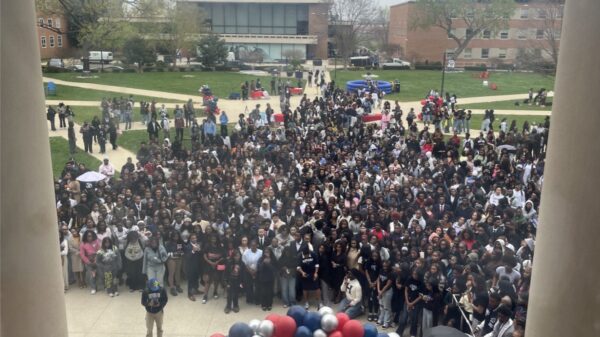
Tensions between the United States and Iran have escalated into what many experts now describe as an active military conflict, raising concerns among Howard University students about global instability, economic fallout and the human cost of war.
Within the past week, U.S. and Israeli strikes on Iranian targets have intensified as part of a campaign that began on Feb. 28, which has killed Iran’s supreme leader, Ayatollah Ali Khamenei, along with other officials and hit more than 1,250 targets. President Donald Trump stated the attacks were aimed at eliminating “imminent threats” and preventing Iran from developing nuclear weapons.
For students on Howard campus, however, the conflict is not just a geopolitical issue — it is a source of anxiety about potential escalation, regional war and the broader direction of U.S. foreign policy.
Junior English major Ceres Shifrin said the situation feels overwhelming for many students trying to process multiple crises at once.
“It’s scary because it feels like everything is escalating so quickly, and we don’t really know what information to trust,” Shifrin said. “You’re trying to focus on school, but then you see headlines about war, and it just sits in the back of your mind.”
Mazaher Koruzhde, a lecturer of international relations at Howard, said the roots of the conflict extend far beyond recent events.
“Most people understand the conflict as beginning in 1979 with the Islamic Revolution,” Koruzhde said. “But what they don’t know is that tensions go back to 1953.”
Koruzhde said the 1953 U.S.-backed coup that overthrew Prime Minister Mohammad Mossadegh, who attempted to nationalize Iran’s oil, created long-term resentment that still shapes relations today.
Since then, he said, what appears to be an ideological conflict is more accurately a geopolitical struggle involving the United States, its allies and Iran’s regional network.
While U.S. officials frame the conflict around nuclear threats, Koruzhde believes that explanation is incomplete.
“It’s naïve to accept a single explanation like nuclear weapons as the sole cause,” he said, pointing instead to economic factors such as oil, defense spending and the role of the military-industrial complex.
He said military action could ultimately strengthen the Iranian government rather than weaken it.
“If anything, attacking Iran may make the situation worse,” Koruzhde said. “It strengthens the regime’s incentive to pursue nuclear weapons as a deterrent, pushing it toward more defensive measures — even though it does not currently possess such capabilities.”
At the same time, conditions within Iran remain deeply strained, contributing to internal unrest.
Tobias Raphael, who has familial ties to Iran, said decades of political repression and economic hardship have created an environment where many citizens desire change.
He said the current government has prioritized military development over improving citizens’ lives, leading to widespread poverty, infrastructure issues and limited freedoms.
“There has been severe repression,” Raphael said. “Women’s rights are extremely limited, and dissent is punished harshly.”
According to Raphael, these conditions help explain why some Iranians may want to challenge their leadership, though doing so remains dangerous.
“Without protection on the ground, regime change is unlikely,” he said. “People are still being shot at. It’s not safe for them to organize or revolt.”
Whether Iran is actively developing nuclear weapons is highly contested, but the question remains central to the conflict.
Raphael said Iran claims its nuclear program is for medical and industrial purposes, though enrichment levels have raised international concerns in Western powers.
Raphael pointed to the Strait of Hormuz, a critical shipping route for global oil, as a major economic pressure point.
“This conflict is also affecting global economics,” he said. “There’s concern about recession.”
For students, these broader stakes are contributing to unease, particularly as the conflict unfolds alongside domestic political tensions.
Jayden Reynolds, a junior film and television production major, said the possibility of a larger war weighs heavily on students who are already navigating uncertainty.
“It feels like we’re constantly being pulled into global conflicts that could spiral at any moment,” Reynolds said. “There’s this fear that it won’t stay contained and that it could impact people here in ways we don’t fully understand yet.”
Koruzhde said the human cost remains the most important consideration.
“At the end of the day, civilians suffer the most,” he said. “Whether through repression at home or violence from war, ordinary people bear the consequences.”
He said many in the Iranian diaspora are divided, with some viewing the conflict as an opportunity for change and others fearing further destruction — a tension Raphael echoed, describing the moment as both a potential turning point and a dangerous escalation.
“I think this is a real opportunity to make Iran a free country,” Raphael said. “But without proper support for the people on the ground, real change won’t happen.”
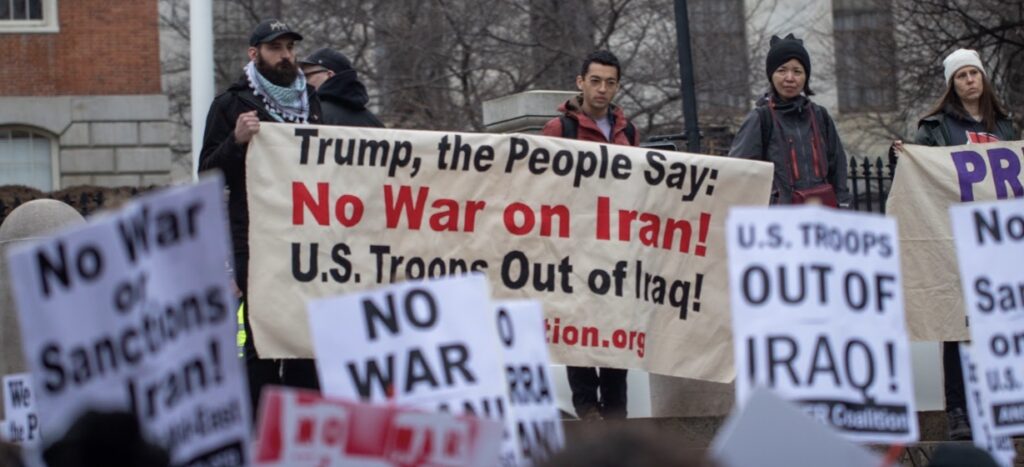
As the conflict continues, Koruzhde and Raphael emphasized the importance of informed discussion and civic engagement.
Koruzhde said students should not disengage from the issue despite its complexity.
“They should use the power they have — protest and civic engagement — to push for change,” he said.
For many at Howard, the situation remains uncertain, but the stakes, both global and personal, are becoming increasingly clear.
Copy Edited by Kennedi Bryant