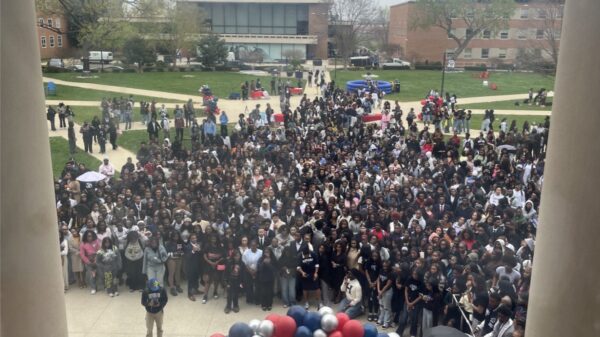
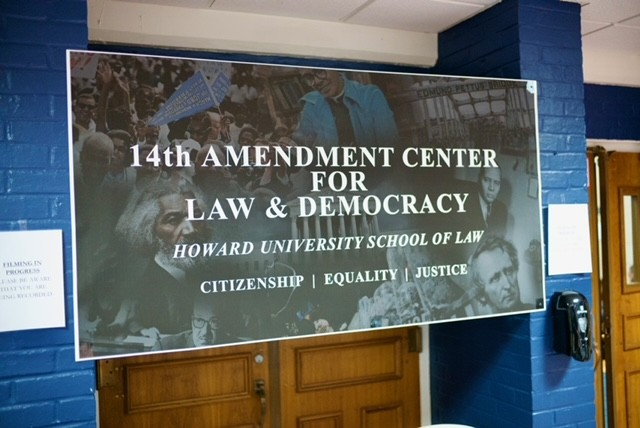
Howard University School of Law officially launched its 14th Amendment Center for Law & Democracy with an opening reception and inaugural symposium. Law students, faculty and guests gathered to celebrate the new center, which is dedicated to exploring and promoting the democratic principles embedded in the 14th Amendment.
The center aims to serve as a multidisciplinary hub for research, discussion and action on the 14th Amendment, with a focus on strengthening democracy through the principles of equality and justice. Its work will encompass four key sections: Law and Policy, Education and Curriculum, Art, Narrative, Imagination and Democratic Institutions.
Sherilynn Ifill, the Vernon Jordan Jr. distinguished professor of civil rights at Howard Law and former president of the NAACP Legal Defense Fund, leads the center.
She began this journey because she was concerned about “how we have allowed the conversation about race and rights to become one about feelings and morality rather than the Constitution.” Part of why she created the center is to demand that Americans talk about the right to equality in constitutional terms.
The center will hold strategic conversations and collaborations like the ones held at their inaugural symposium. It will also educate by telling historical stories in the law school and the community, filing amicus briefs in important cases, supporting the strategy of lawyers and supporting policy initiatives but it will not be taking on litigation.
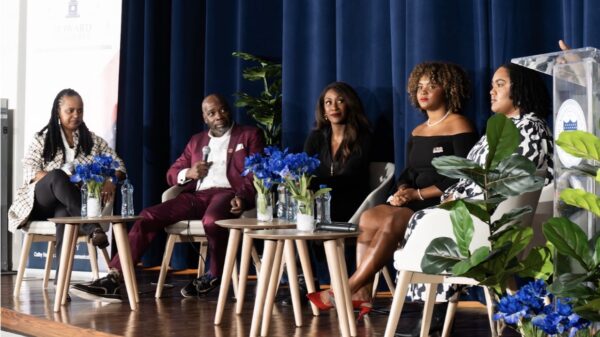
The symposium featured a series of panels with esteemed guests, discussing the role of various fields such as art, film, law, technology and journalism in upholding the 14th Amendment and democracy.
“The symposium feels like that first big step for the new center,” Ifill said.
Ifill spoke about the 14th Amendment as a blueprint for a new nation, emphasizing its role in the “refounding” of the U.S. After the Civil War, the country “had to be stitched back together.” This was done through the establishment of the 13th, 14th and 15th amendments.
The 14th Amendment, which consists of five sections, grants citizenship to all persons born or naturalized in the U.S., including formerly enslaved individuals and ensures “equal protection under the laws” and “due process” for all citizens.
Keynote speaker Ava DuVernay addressed the intersection of law and film, highlighting her work as a filmmaker, screenwriter and producer. Through films like “13th,” “Selma” and “When They See Us,” DuVernay has used storytelling to simplify legal arguments and foster public understanding of social justice issues.
“Storytelling is important to sit side-by-side with the law so that the law comes alive,” DuVernay said.
Another panel focused on the importance of art in inspiring democratic imagination. Leah Dickerman, director of research programs at the Museum of Modern Art, Saeed Jones, poet, author and artist-in-residence at Harvard Medical School and Carrie Mae Weems spoke about cultural activism through art.
Art is not bureaucratic, and they are inventive, expressive, resourceful, engaging and provocative. Every organization should have an artist on their team to move ideas about social justice and change, Weems said.
Weems is an award-winning visual artist, dancer and artist-in-residence at Syracuse University.
“We counter [Donald Trump’s messaging] by being organized, we counter them by bringing forth incredible messaging. And we do that through the engagement of extraordinary artists who are in your communities,” Weems said.
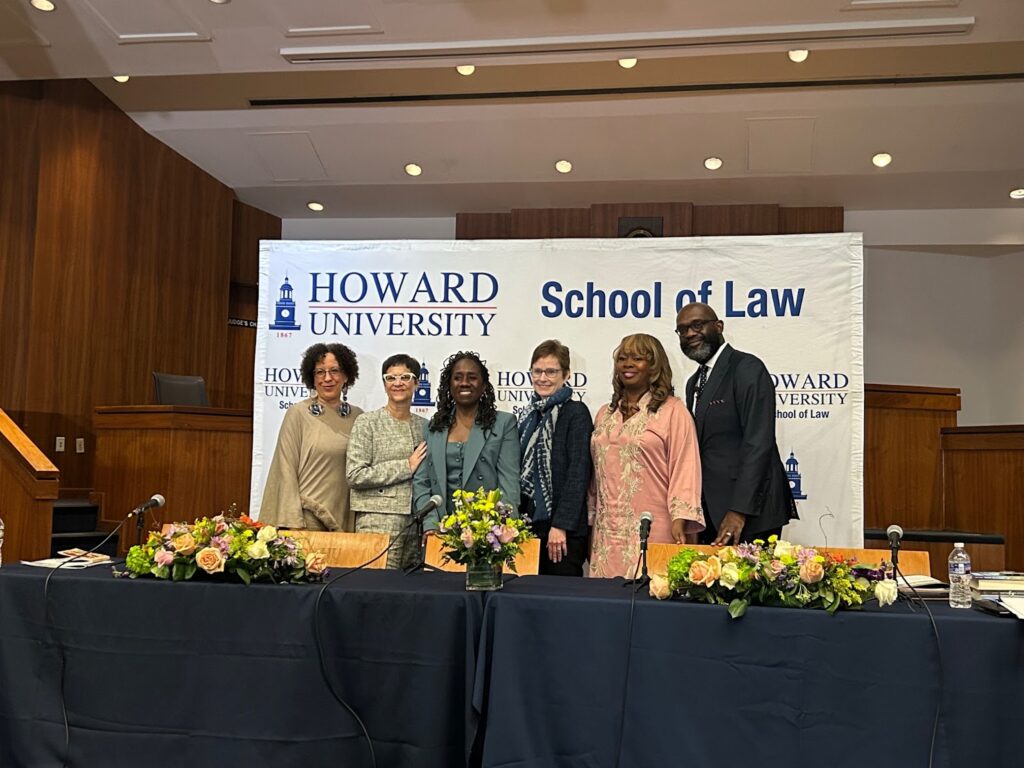
Law students attended the symposium, including Ariauna Range, who noted the importance of understanding the relationship between law and society.
“The interaction between the law and everything else in society was my biggest takeaway,” Range said. “It’s important to simplify legal arguments so more people can understand and take collective action.”
Third-year law student William Reese, from Detroit, expressed optimism about the center’s role in preserving civil rights amid political and societal challenges.
“The center will be significant in preserving civil rights, especially in times when we are facing political pushback,” Reese said.
Akira Reid, a third-year student, is excited about the future of the center and its work in advancing civil rights.
“It’s important to have Professor Ifill here now, and I’m just looking forward to seeing all the work we’ll do to progress as a whole,” Reid said, adding that the 14th Amendment is “the basis of our rights and everything for Black people.”
Copy edited by Camiryn Stepteau