

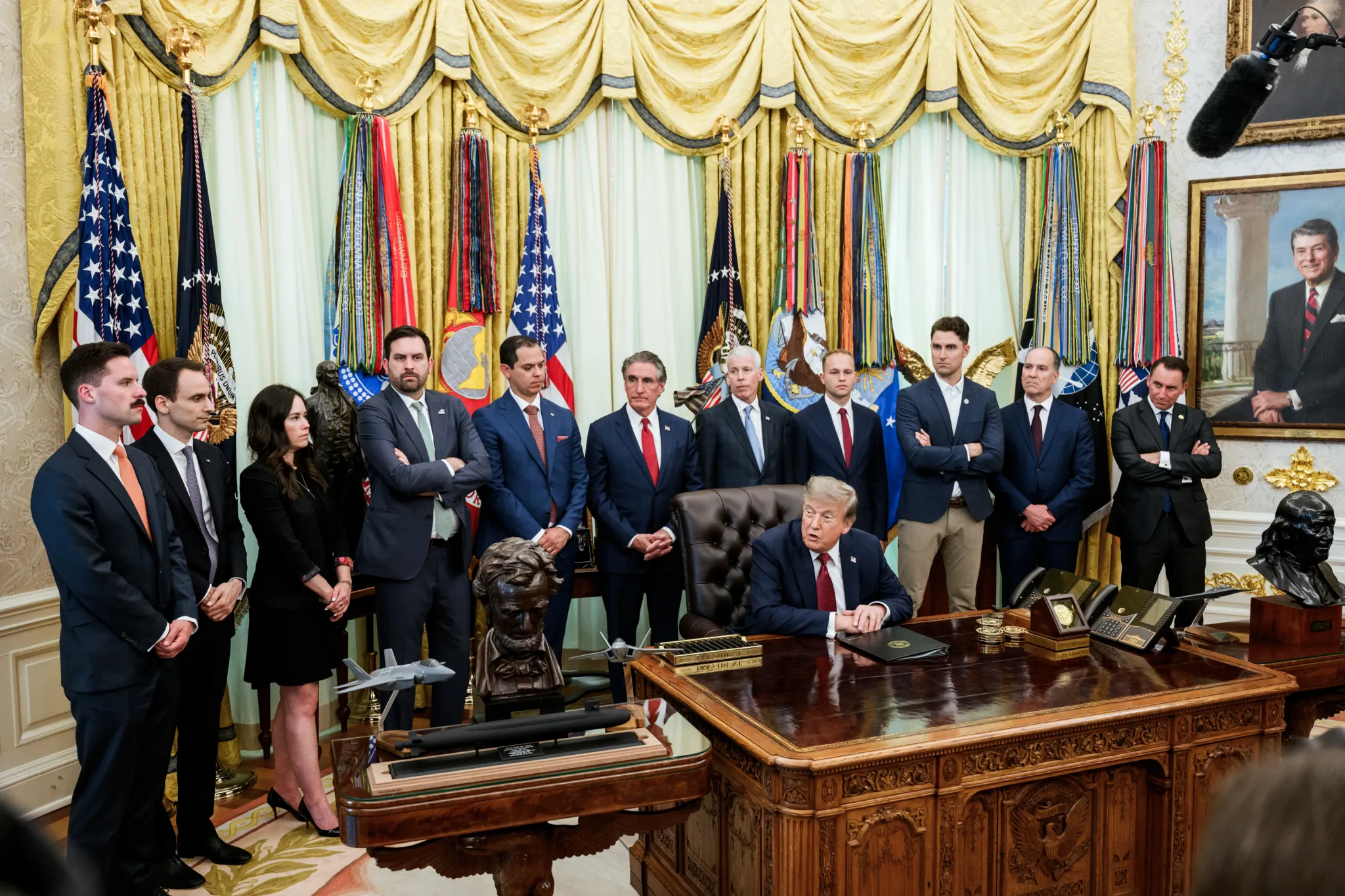
The U.S. Department of Energy (DOE) said that an American nuclear “renaissance” is underway. This comes after a series of four nuclear-related executive orders since President Donald Trump took office for the second time. The goal, as stated by DOE, is to have four times as much nuclear capacity by 2050. However, the industry that has to build it says that it lacks the workers and factories to get there.
Jake Kincer, senior program manager for nuclear at ClearPath, leads the group’s work on nuclear export policy, development finance and energy markets to advance the U.S. role as a global nuclear energy leader. He highlighted that the policy environment is now the “most supportive” it has been in decades.
For more than 40 years, the Nuclear Regulatory Commission (NRC) did not issue a construction permit for a commercial reactor that departed from the light-water designs powering America’s existing plants. This changed in March 2026.
TerraPower announced that the NRC approved a construction permit for its first Natrium plant, a sodium-cooled fast reactor in Kemmerer, Wyoming. This is the first ever issued for a commercial non-light-water power reactor. TerraPower expects this project to be completed by 2030.
On May 18, about two months after TerraPower received its NRC permit, X-energy announced that the NRC completed its environmental review of the Long Mott Generating Station, a four-reactor project that would supply power and industrial steam to Dow’s chemical manufacturing site in Seadrift, Texas.
The optimism in this industry is not new. Vogtle Units 3 and 4 in Georgia became the most recent large reactors built in the United States. The project started in 2013, originally planned to finish in 2016 and 2017. However, they came online seven years late and at a cost of $35 billion, which is more than double its original estimate. To date, this project remains the most expensive infrastructure project of any kind in American history.
After the Fukushima Daiichi disaster in Japan, the delay and increased cost of Vogtle and the abandoned 2017 Virgil C. Summer plant expansion in South Carolina, the momentum and push to build more nuclear reactors came to a standstill in the previous decade.
“Since 2018, every year, either Congress or the White House has taken significant action in support of rebuilding America’s nuclear industry,” Kincer said. “This concerted, bipartisan effort is starting to translate into real milestones.”
Currently, 94 reactors across 28 states in the U.S. supply roughly one-fifth of the total electricity demand of the country. Much of the current nuclear reactor fleet is aging, and many plants are operating near full capacity. This leaves two options for the U.S.: either to start new projects or restart the older ones, considering how fast the electricity demand is climbing due to data centers and increased consumer demand.
“Nuclear is one of the very few ways to get large amounts of clean, extremely reliable electricity, which is why we’ve seen companies like Dow, Nucor and Amazon investing in new nuclear power,” Kincer said.
But Kincer also said that financing is one of the major challenges because it reflects several uncertainties at once, including “construction risk, licensing schedules, fuel availability and overall costs.”
However, Kincer said the industry itself remains the biggest roadblock.
“America simply hasn’t built many nuclear reactors in recent decades, and so the skilled workforce and manufacturing required for these reactors are either very thin or, in some cases, simply don’t exist in the country,” Kincer said. “As more companies move toward deployment and then deployment at scale, solving this issue is going to be of primary concern.”
In September 2024, the DOE pointed out that the U.S. has to grow its nuclear workforce by approximately 375,000 to provide the skillsets that are required by the industry.
Kincer stated the prospect of the first commercial advanced reactors beginning operations in the early 2030s is “not guaranteed, but it’s credible.”
Smaller designs could arrive even sooner than gigawatt-scale plants. For example, microreactors produce only a few megawatts, which is enough for a military base, a remote town or a factory. How it differs from larger reactors is that they can be first built in a factory and then shipped to a site rather than assembled on-site for several years.
“We’ve also seen that microreactor developers can move surprisingly quickly when technology and regulatory pathways are aligned appropriately,” Kincer said, adding that new regulatory pathways at the NRC “could see microreactors deployed before 2030.”
On the federal government side, the Trump administration has begun placing larger bets. Last year in October, the Department of Commerce entered an $80 billion partnership with Westinghouse and its owners to deploy a fleet of new large reactors, part of a stated national goal of quadrupling U.S. nuclear capacity to 400 gigawatts by 2050.
Kincer said that goal, set by two consecutive presidential administrations, the Biden and the Trump administrations, would mean hundreds of new gigawatts and potentially as many as a thousand new reactors.

“Obviously, we won’t build 15 GW a year starting today,” Kincer said. “The next decade is about laying the right groundwork for that kind of rapid deployment the decade after.”
Copy edited by Sydney Middleton