

A facility with rows of powerful computers used to answer questions at lightning speeds is now making a generation-old power system to answer a more difficult one. While artificial intelligence firms race to create massive infrastructure to train and run their machine models, the U.S. electric grid faces an increase in demand which it has not experienced for a whole decade. Now, regulators, grid operators and Congress have to step up to decide who pays for it.
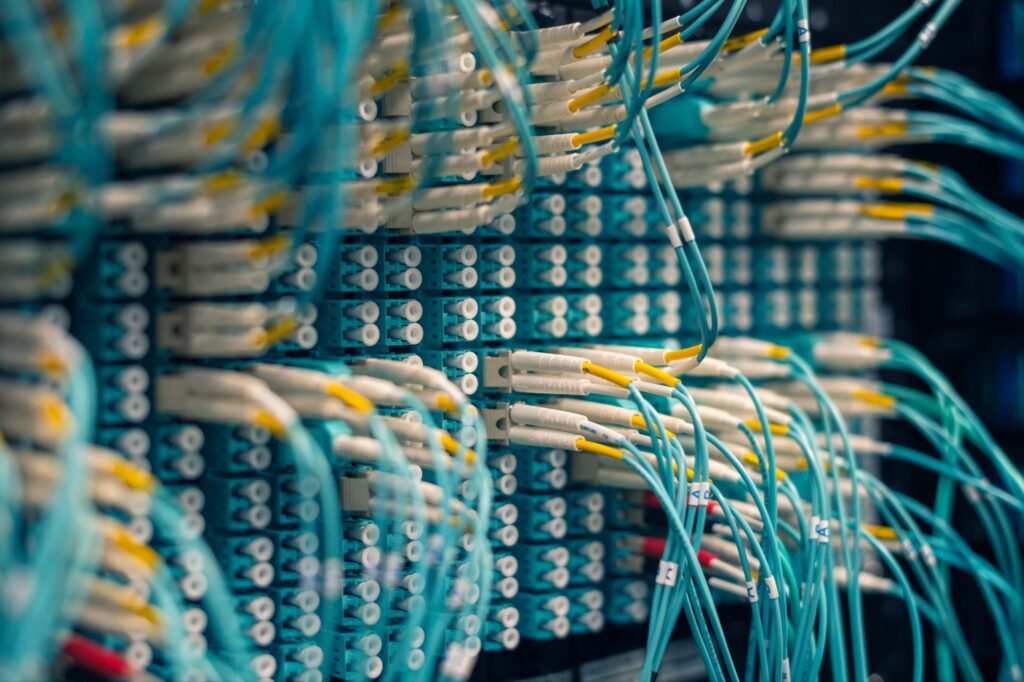
Data centers are giant, secure warehouses filled with rows of powerful computers to process, store and transmit data. More than half of their electricity demand comes from operating them, with much of the rest going toward cooling, according to the Congressional Research Service. The largest facilities, which are also known as hyperscales, can draw hundreds of megawatts each which can be compared to the electricity demand load of a small city.
On Dec. 20, 2024, the Department of Energy quoted a Lawrence Berkeley National Laboratory report that found that data centers consumed about 4.4 percent of U.S. electricity in 2023 and is on track to consume 6.7 to 12% by 2028. The total use is projected to roughly double or triple.
The North American Electric Reliability Corporation, which assesses the reliability of the North American grid, released its 2025 Long-Term Reliability Assessment on Jan. 29, projecting summer peak demand to grow by 224 gigawatts over the next 10 years, 69% more than the previous forecast and identifying new data center loads as the largest driver. Grid Strategies, a transmission and wholesale markets consulting firm, found in a report for four environmental groups that the assessment pairs a high-demand forecast with low assumptions for new generation, making margins look tighter than they may prove to be.
Doug Sheridan, managing director and founder of EnergyPoint Research, a Houston-based energy research firm whose work has been cited in the Wall Street Journal, the New York Times and Fortune, explained that the grid strain is real, but its origins predate the AI boom.
“There’s no question the potential strain on our grids from AI and data center development is significant,” Sheridan said. “The truth is we now have a political class that has been misled into believing that intermittent energy, in the form of wind and solar, was just as good as the baseload energy that it sought to replace.”
Baseload refers to power sources that run continuously, such as nuclear, coal and natural gas plants, while intermittent sources such as wind and solar generate only when conditions allow. Sheridan said politicians, not data center developers, placed the grid in its current position, building a system that is strained when large baseload demand attaches rather than one capable of accommodating it.
“It’s the exact opposite of what should be,” he said.
The clearest documented link between data centers and consumer bills runs through PJM Interconnection, the grid operator serving 13 states and Washington, D.C. PJM released the results of its latest capacity auction on July 14, producing $16.4 billion in charges for the delivery year beginning in June 2028.
Monitoring Analytics, PJM’s independent market monitor, attributed $6.3 billion of those charges to data center demand, $29.4 billion across the last four auctions and called the price impacts on customers “very large” and irreversible.
National research complicates that picture. Lawrence Berkeley National Laboratory and the Brattle Group found that retail electricity prices have largely tracked inflation, that states with the fastest demand growth saw lower inflation-adjusted prices between 2019 and 2024 and that spending on poles, wires and weather hardening drove most increases. An industry-commissioned review of 11 studies by the consulting firm Energy and Environmental Economics likewise found no historical evidence that data centers have shifted costs onto residential ratepayers.
Sheridan said large baseload customers were once a tool for keeping electricity prices down for all users of electricity.
“We were able to use large baseload demand customers as ‘anchor tenants’ to underwrite the large capital expenditures needed to provide electricity to all types of power customers,” he said, adding that the ability to add baseload power has since been undermined in states with large amounts of installed wind and solar generation, including Texas, Oklahoma, California and Iowa.
Chipmakers and hyperscalers have argued that the answer runs through siting and efficiency. Nvidia CEO Jensen Huang said during a Bipartisan Policy Center webinar that data centers should be built where energy is already abundant.
That migration is documented. A white paper prepared by CGCN Analytics for the Gulf South Business Roundtable, an executive-led nonprofit spanning Alabama, Arkansas, Louisiana, Mississippi and Texas, found the region holds 30.6% of planned U.S. data center capacity and offers industrial electricity prices about 29% below the national average, drawing more than $627 billion in disclosed capital commitments since January 2024.
Sheridan said moving off the grid is the right answer for data centers given the state of the grids, but that the economy will lose the ability to use those large loads to underwrite a future grid.
“More and more data centers and AI developers are going to power their operations outside of the grid,” he said. “The upshot is that power prices in America are likely going up significantly this decade, especially when you include the hidden costs of subsidies and mandates that politicians are so good at adding to legislation.”
The buildout faces measurable local resistance. A Quinnipiac University poll conducted in March found that 65 percent of Americans oppose an AI data center in their community, citing electricity costs, water use and noise; a July Quinnipiac poll of Pennsylvania voters recorded opposition rising to 74 percent from 68 percent in Feb.
Washington has moved on multiple fronts. The Department of Energy directed the Federal Energy Regulatory Commission on Oct. 23, 2025, to accelerate the interconnection of large loads, and FERC issued show cause orders on June 18 directing all six regional grid operators to justify or reform how data centers connect to the grid.
In Congress, the House Energy and Commerce Committee advanced the bipartisan Ratepayer Protection Act in a 52-0 vote this month, requiring state regulators to consider standards ensuring large data centers pay for the new power their demand requires, and Sens. Josh Hawley, R-Mo., and Richard Blumenthal, D-Conn., introduced a bill on Feb. 11 that would require new data centers to power themselves off-grid.
Major technology companies including Amazon, Google, Meta and Microsoft have signed a White House pledge to pay for the energy infrastructure their facilities require rather than shifting those expenses onto consumers.
Sheridan said the effects of the intermittent generation already on the grids cannot be reversed, and that the smart policy going forward would be to discontinue the incentives and laws that led to those additions.

“This has not been a good era for American energy policy,” he said. “We are now paying the price.”
The six grid operators must file responses to FERC’s orders within 60 days. No floor vote has been scheduled for the Ratepayer Protection Act.
Copy edited by Daryl R. Thomas Jr.