

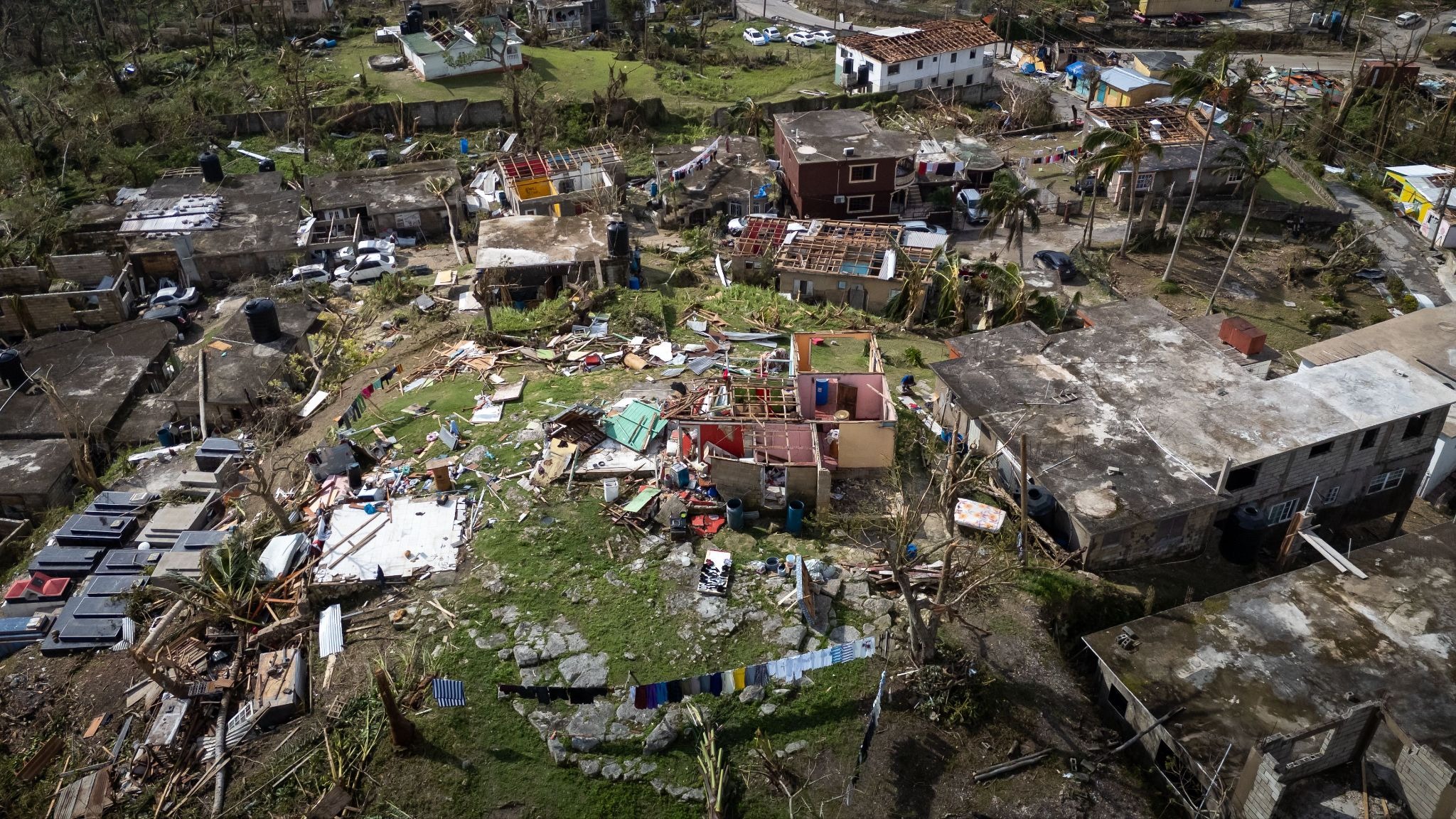
In 2017, Hurricane Maria devastated Puerto Rico. The Category 4 storm caused widespread destruction across the island, alongside an estimated additional 2,975 deaths six months following the hurricane. Beyond the devastation to Puerto Rico, Hurricane Maria exposed questions about the U.S. government’s response to a disaster in a long-neglected American territory.
Shortly after Hurricane Maria, President Donald Trump took to social media to insensitively criticize Puerto Rico’s disaster response, writing that Puerto Rican residents “want everything to be done for them.” And unsurprisingly, it was found that in the devastating aftermath of Hurricane Maria, the Trump administration withheld about $20 billion in hurricane relief for Puerto Rico.
Nearly a decade later, Puerto Rico continues to be overlooked in the mainstream media narrative and, at times, treated by some conservative critics as though it were a foreign entity rather than a U.S. territory whose residents are American citizens. This raises a bigger conversation about who gets treated and represented fairly as an American, with marginalized, minority communities oftentimes being disregarded as outsiders within the nation.
The controversy surrounding Puerto Rican artist Bad Bunny’s 2026 Super Bowl halftime performance offered a recent example of this tension. Before and after the performance, conservative critics questioned whether Bad Bunny was “American” enough to represent the country’s biggest sporting event. Some even falsely questioned his citizenship despite the fact that Puerto Ricans are U.S. citizens.
That same disregard continues today, as Puerto Rico faces a severe water crisis, due to a historic drought.
Puerto Rican native Catalina Villar, a senior lecturer of Spanish at Howard University, stressed that while she migrated from Puerto Rico in pursuit of higher education in the 1990s, many people on the island now are migrating out of desperation.
“Electricity is unreliable…the situation is dire and unsustainable,” Villar said. “The most concerning thing to me is that many in the United States don’t know this is happening to millions of fellow American citizens.”
Puerto Rico’s political status makes this lack of attention especially significant. The territory is represented by a resident commissioner who cannot vote on final legislation, leaving the territory with limited influence over the federal decisions that directly affect its residents.
To understand the current crisis, we must first ask: How did Puerto Rico get here?
In 2015, Puerto Rico’s former governor, Alejandro García Padilla, declared the island’s roughly $72 billion public debt “unpayable,” as its financial obligations had become unsustainable.
In response, Congress passed the Puerto Rico Oversight, Management and Economic Stability Act, which established the financial oversight and management board for Puerto Rico, commonly known as “La Junta,” to oversee the territory’s finances, restructure its debt and guide Puerto Rico toward fiscal stability.
Amid an expanded federal disaster declaration and rising fuel costs, Puerto Rico’s current crisis has renewed debates over the role of the unelected Financial Oversight and Management Board, a federal entity that controls the island’s budget and public debt. These issues have also resulted in growing concerns that failures in public services could be used to justify the privatization of essential utilities.
Are these cuts, changes and reductions effective when the island lacks reliable access to water and education?
Many Puerto Rican residents view the unelected board as an undemocratic and colonial authority, and the island has seen massive public protests demanding the removal of the board due to economic hardship and cuts to essential services.
It is crucial to remember that democracy dies in darkness. And this darkness: the lack of public awareness of the issues happening right at home, is how most of those in power continue to get away with disenfranchising communities.
The treatment of Puerto Rico, from disaster response and federal oversight to the way its residents are represented in the media and public discourse, raises a larger question about who gets to be an American.
Copy edited by Jori Johnson