

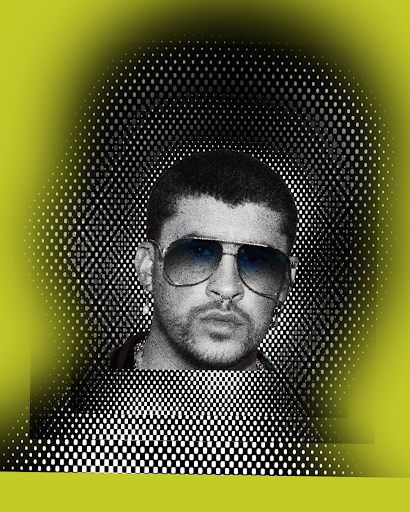
The Super Bowl, one of America’s most-watched televised event, aired on Sunday, Feb. 8 at Levi Stadium in Santa Clara, California, drawing millions of viewers. Superstar Bad Bunny performed amid conservative backlash for his Puerto Rican identity and criticism of the presidential administration.
In recent years, the Super Bowl halftime show sponsored by Apple Music has become a stage not only for artists to showcase their performance capabilities, but to send societal or cultural messages. Last year, Kendrick Lamar headlined with performances that gained over 130 million viewers, using performers, lyrics and script to critique society.
As Bad Bunny took the stage this year, Howard University students weighed in on what they looked forward to.
“Seeing somebody that I’ve idolized for so long be on a stage as American as the Super Bowl is insane. Especially in our current anti-immigrant, specifically anti-Latino political climate,” said Gabby De Lima, a sophomore mechanical engineering major from Kansas City.
Anti-immigrant rhetoric has continued to escalate in the wake of Bad Bunny’s announcement as the Super Bowl halftime headliner. Conservative group Turning Point USA responded by unveiling an alternative halftime event, naming Kid Rock as its headliner in direct contrast to the NFL’s official performance led by the Puerto Rican superstar.
Branded the “All American Halftime Show,” the event was marketed as a celebration of “faith, family and freedom” and streamed live Sunday evening across Turning Point USA’s digital platforms. Kid Rock, a vocal supporter of President Donald Trump, was joined by country artists Brantley Gilbert, Lee Brice and Gabby Barrett.
“There have been mainstream Latino artists before, but having a Puerto Rican activist on a stage like this is different,” De Lima said, “Puerto Rico’s status as a U.S. territory is political in itself. Bad Bunny isn’t just breaking records, he’s drawing attention to issues impacting the island and marginalized communities throughout the country.”
Following his recent Grammy Awards speech condemning U.S. Immigrations and Customs Enforcement (ICE), Bad Bunny’s Super Bowl appearance ignited debate over the role of political expression in entertainment and what his visibility means for marginalized communities.
“The fact that he is performing is already a political statement. I expect nothing less than an amazing show and message that I want every single person watching to internalize,” De Lima said.
Meilani Barcinas-Dixon, a sophomore psychology major from Long Beach, California, shared her perspective on Bad Bunny’s performance.
“His trailer with people dancing with him was heartwarming and centered in cultural pride and love, which is radical in a time where hate is the status quo,” Barcinas-Dixon said.
Bad Bunny’s halftime trailer posted to YouTube depicted him dancing to his songs with individuals of different genders, ages and races. This sense of unity was reflected in his 13-minute half-time showcase, where he performed 14 songs.
“I just want people to have fun. It’s going to be a huge party; people only need to worry about dancing. There’s no better dance than the one that comes from the heart,” Bad Bunny said in a recent interview preceding his performance.
Barcinas-Dixon also spoke about the pride she feels as Bad Bunny uses his platform to oppose harmful anti-immigration policies.
“Him being so outspoken against ICE fills me with so much pride and hope.” Barcinas-Dixon adds, “I feel like a lot of the Latine community is quick to try and not question the white status quo or just put their heads down. But those of us who can, we need to be loud and proud.”
As the second quarter of the Super Bowl ended, Bad Bunny’s performance began with his hit song “Tití Me Preguntó,” which he sang as he walked through a maze of sugarcane, passing by hard-working field workers, taco stands, women painting their nails, and men selling “coco frios” and “piraguas.”
Standing on top of a pink house, his concert-goers know as “La Casita,” he transitioned into his next song, “Yo Perrero Solo,” with attendees and high-profile guests like Cardi B dancing below him. While he sang, dancers in white tank tops and khaki tennis skirts performed, showcasing a mix of salsa-style, hip-hop and reggaeton movements.
Bad Bunny welcomed Lady Gaga to the stage, where she performed a salsa-inspired version of her single “Die With A Smile” as a wedding commenced. Her voice captivated the crowd as dancers swarmed the stage in white and red garments, while others began cutting the wedding cake and fell asleep on plastic chairs.
The halftime show featured other standout moments, including Bad Bunny handing a younger version of himself his recent Grammy, the star carrying a giant Puerto Rican Flag on his shoulder and a surprise guest appearance by musician Ricky Martin.
While the crowd cheered, the show concluded with “Debi Tirar mas Fotos” as dozens of performers flooded the field, waving the flags from around the world. The flags vibrantly surrounded Bad Bunny, who held a football inscribed with, “Together, We are America.”
“I think his song choice was political. He could have went with more mainstream, dance-heavy tracks, but he intentionally included songs like ‘Cafe con Ron’ rooted in history and resistance,” said Ginayah Baptiz, a junior psychology major from New York City, by way of the Dominican Republic.

“Bad Bunny showed the truth of our lives reminding everyone of our humanity, not just our pain. It felt good to see our cultures celebrated during such a heavy moment in time,” Baptiz said.
“God Bless America!” Bad Bunny yelled, behind him on a projector, the words, “The only thing more powerful than hate is love,” stood tall in black letters, a nod to the unity and humanity Bad Bunny is putting on display in the current political climate.
Copy edited by D’Nyah Jefferson – Philmore