

“I stopped eating at the cafeteria because it just wasn’t safe,” Maya Rose said.
Rose attended Howard University for her freshman year of college, but said she had to leave due to a lack of food allergy accommodations.
Rose is allergic to dairy, soy and has an anaphylactic allergy to all nuts. She also has Celiac disease, which is an immune system reaction to gluten, along with another deficiency that restricts her from digesting carbs, sugars and natural sugars.
Anaphylaxis describes a severe allergic reaction and can potentially be life-threatening. According to Food Allergy Research and Education, symptoms can affect breathing, blood circulation and other parts of the body. Reactions can occur within minutes of food consumption, hours later and in some cases days after.
Each day, Rose reached out to the chef-on-duty to see which foods were safe to eat – this was advised after having a meeting with the campus dietitian. While Rose was in contact with chefs, she recalled not having enough food options that were safe to consume.
French fries and salads were the primary foods she could eat in the dining halls, and even with these foods she still faced issues with cross-contamination. Rose said that there was a cabinet in the dining halls with gluten-free options; however, whenever she reached into the cabinet, it was empty.
“Every time I went to go get one [gluten-free option], it was empty. Everyone had already taken it. So it was free for all and not safe for the people actually allergic,” Rose said.
Eventually, Rose was able to opt-out of her meal plan and stop eating in the cafeteria. In the interim, she resorted to cooking food in the dorm. She said this too, was difficult for her, because she could no longer hang out with friends in the cafeteria.
Before arriving at Howard, Rose provided documentation from the doctor of her allergens and restrictions, including requiring a dorm with a kitchen and minimal roommates. Prior to starting her sophomore year, Rose was given five roommates in Howard Plaza Towers. After speaking with the Office of Residence Life about her accommodations, Rose was told that the doctor’s note provided did not state this accommodation. If she were placed in a dorm with a large group of people, the risk of cross-contamination would be higher.
“I obviously couldn’t go back to Howard,” Rose said.
Before classes started her sophomore year, Rose decided to transfer to the University of Arizona in Tucson.
Limited Food Options in the Dining Hall
According to Food Allergy Research and Education, a food allergy is classified as “an adverse health effect” that occurs due to exposure of a given food. In America, more than 33 million people have food allergies that could cause an anaphylaxis reaction.
Last summer, Howard University switched its dining services from Sodexo to Aramark. In an Aramark press release, the assistant vice president of Auxiliary Services, LaNiece Tyree, said she was excited to “elevate and innovate” the dining experience on campus through this partnership. However, some students say that one thing has remained the same since the switch — the limited food options available to those with food allergies or restrictions.
Henna Lopez-Spears, a sophomore international affairs major from Los Angeles, is a pescatarian, and her allergies include dairy, gluten, sesame, soy and egg. A pescatarian diet is when a person only eats seafood as their main source of meat.
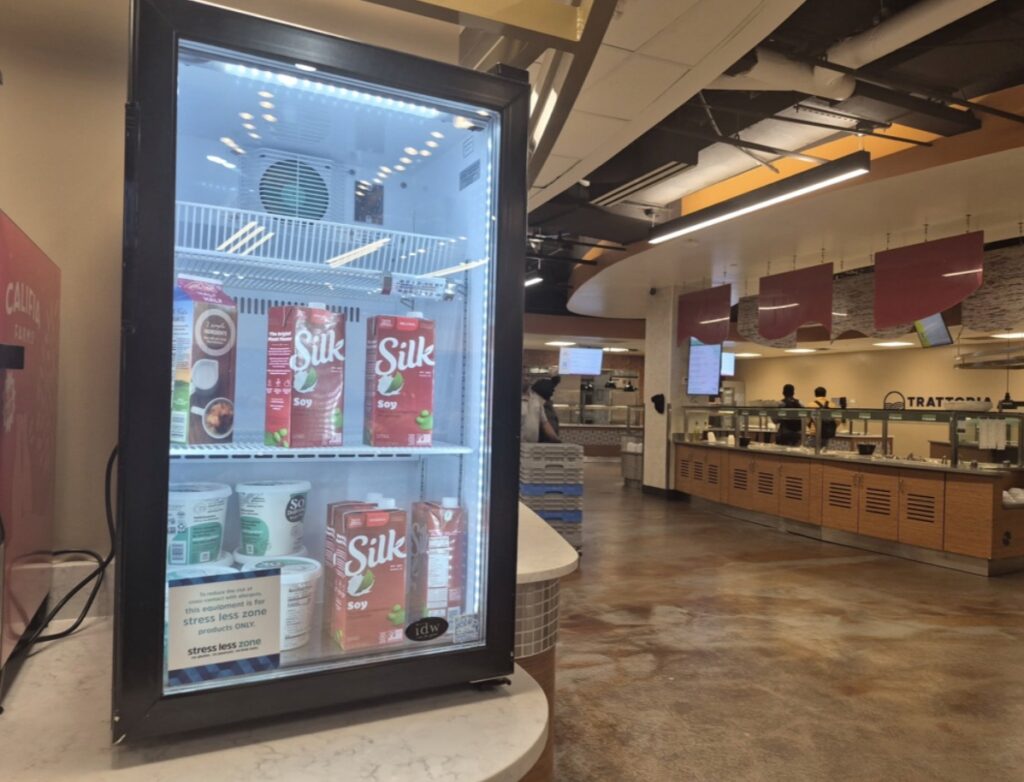
During her freshman year, she said she was impressed to see that the university had a vegan station in the dining halls, but she noticed that this was one of the only stations that catered to those with allergens.
For students with allergies and food sensitivities like Lopez-Spears, the options made available to students were unclear. She said that the vegan options were not properly advertised to students at the vegan station; some did not know that options like dairy-free milk, gluten-free bread and dairy-free cheese were available.
“Not a lot of people knew that they had to ask for it, because we didn’t even know that they were there,” Lopez-Spears says.
The executive director of Auxiliary Enterprises, LeVita Basset, said that the university offers dedicated vegan and vegetarian options at the PlantForward station in Bethune Annex Cafe and at the Root station located in Blackburn Café. Basset says that stations are routinely monitored to ensure accuracy for each meal period.
“In a dynamic dining environment, menu changes and human error can occur, which is why we are continuously improving our verification processes,” Basset said in a written statement to The Hilltop.
At Howard, first and second-year students who live on-campus are required to have a meal plan.
For the current school year, there are four residential dining plans and two commuter dining plans. A residential dining plan is a requirement for students living on-campus, though it is also open to off-campus students, while commuter dining plans are open to students with kitchens in on-campus dorms or those living off-campus.

Some students with food allergies and restrictions said that the meal plans were not optional unless they went through a long process to get the plan removed. Lopez-Spears said she has noticed multiple potential areas of improvement in the dining halls.
“I’ve just been working towards fixing it and finding a solution where we could feel heard and seen at a school that we’re paying for–for meal plans that we’re paying for,” Lopez-Spears says.
Lopez-Spears has been in contact with the dietitian and chefs about which foods she would like to see in the café and how dining on-campus could improve.
Howard has two major on-campus dining halls that provide breakfast, lunch and dinner — Bethune Annex Café and Blackburn Café. Lopez-Spears said in these dining halls, options for those with food restrictions have continued to decrease.
“The vegan station in Annex isn’t fully vegan. The only thing that was vegan was the rice; they had regular cheese, regular eggs, they had regular meat — I had to ask for vegan meat. And it wasn’t even accessible, they had to run to the kitchen for it,” she says.
Basset said that the university is developing a “comprehensive dining guide” to assist students with finding available options. The university also hosts biweekly food advisory committee meetings to get feedback.
“Students can also provide real‑time input through the Voice of the Consumer platform,” Basset said.
Cross Contamination
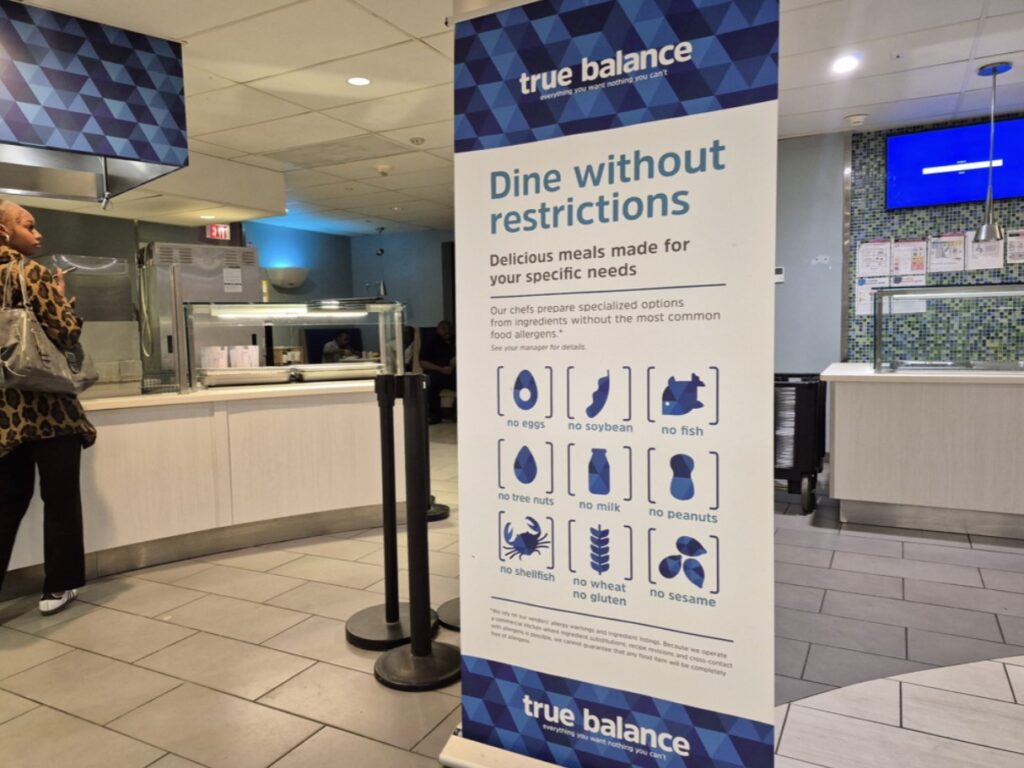
In the dining halls, Howard now offers stations dedicated to avoiding top allergens like milk, eggs, wheat, soy, shellfish, fish, tree nuts, peanuts and sesame. The station in Bethune Annex Cafe is named ‘True Balance,’ and is AllerCheck certified, meaning that the service follows procedures and processes that “minimize any risk of cross-contact.”
AllerCheck works with food service professionals to ensure allergy-friendly dining spaces. They do not guarantee allergen-free spaces, but instead AllerCheck focuses on the process and procedures in place to prevent cross-contamination.
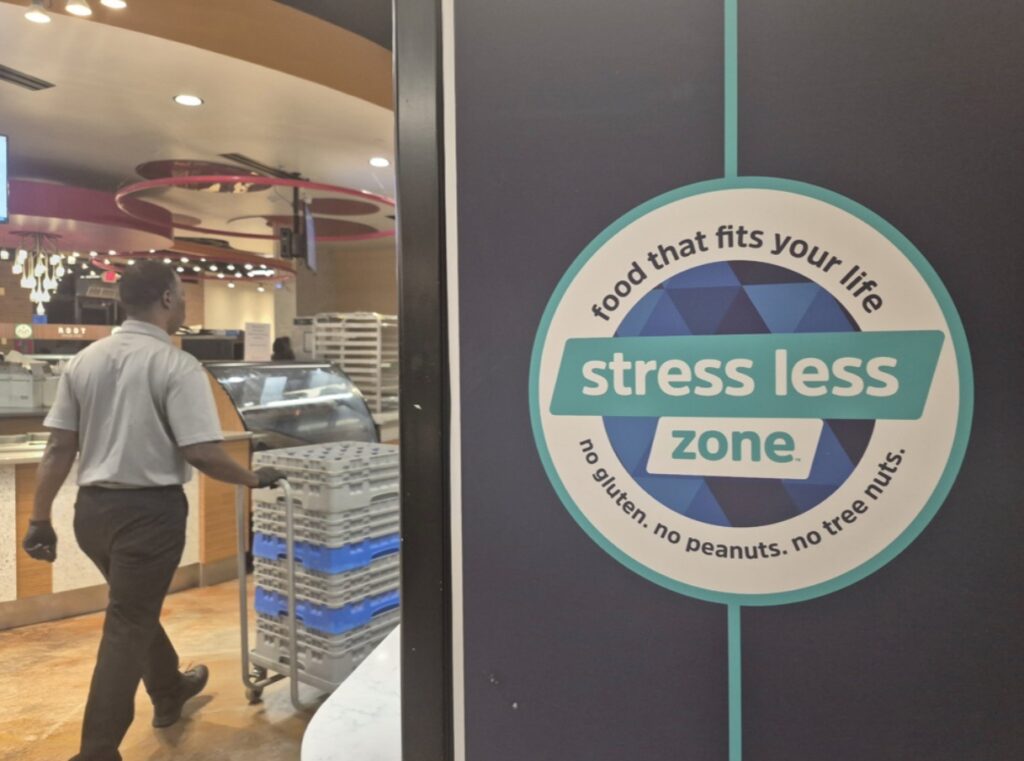
The “Stress Less Zone,” located in Blackburn Café, offers options free of peanuts, tree nuts and gluten while also prioritizing the prevention of cross-contamination. However, not all students have noticed the prevention of cross-contamination.
Basset says that the dining halls “maintain robust cross‑contact prevention protocols across dining operations.” In the event of an allergic reaction, staff are trained to activate emergency response procedures — this includes contacting emergency services and campus police.
“We also encourage students with allergies to proactively engage with the dietitian to establish individualized dining plans that help minimize risk,” she said in the written statement.
In the case of dining halls, some students have also remained vigilant of potential encounters with their allergens or restrictions.
Kaaria Lopez-Spears, Henna Lopez-Spears’ sister, is a freshman acting major from Los Angeles, who also has allergies. She is severely allergic to dairy, soy, eggs, gluten, all nuts, oranges and pineapples. While Lopez-Spears has not had issues with cross-contamination, she said she typically avoids a few areas in the dining halls.
“I try to stay away from those places where they usually always serve an omelet or they always are serving some type of pasta with cheese. I don’t go near the pizza station. I usually try to stay away from those areas which I know usually serve things I can’t have daily,” she said.
The Allergen and Dining Restrictions Process
Violet Spencer, a sophomore African-American studies major from Oklahoma City, described her dining experience at Howard as “bumpy.”
Spencer has multiple food allergies, including shellfish, soy, peppers, broccoli, green beans, spinach, some starchy vegetables, a couple of fruits and all nuts. Some of her most severe allergies are garlic, soy and pears.
Spencer said before her freshman year, she asked about food accommodations during a mandatory housing orientation meeting and was told that accommodations were not done until a student received a room number. Upon arriving on campus, she was given the option to move into a dorm with a kitchen or speak with a dietitian — due to financial concerns regarding groceries, she chose to speak with a dietitian.
The dietitian assessed Spencer’s food allergies and reactions to the allergens. The next day, Spencer went to Blackburn to meet the chef handling her food. This chef assisted with preparing her meals based on the needs of her allergens, but this became a challenge during the weekends.
“I felt very cared for by them, but it was just a little bit difficult when we had days off — Blackburn is closed on weekends, and I was told my freshman year that there weren’t really a lot of options in Annex,” Spencer said.
In her freshman year, on the weekends or when Blackburn was closed, she had to figure out food on her own.
Spencer said that later she learned that this was not the case and there were options in Annex.
Now that Spencer is in her sophomore year, she was advised to switch dining halls and begin eating in the Annex dining hall. She said that when the university switched from Sodexo, the allergy stations changed, and Annex became the safer dining option.
“I met with the chefs at Annex as well, and I actually have a group chat with the workers and chefs at Annex so that I can text them whenever I need to come in. It works out,” she said.
In a statement to The Hilltop, Basset said the university goes through three key steps for students with dietary restrictions: an initial consultation with a registered dietitian, submission of medical documentation and collaboration with dining services and student accessibility to determine appropriate accommodations and support.
Students Turn to Off-campus Dining
Some students with food allergies or restrictions have turned to off-campus options. They note that grocery stores and restaurants in the Howard area can be expensive and eating out every day is not always feasible.
Destiny Givens, a sophomore honors journalism major and sports administration minor from Merribile, Indiana has a condition that overworks the immune system and causes stomach pain and reactions on the skin — this can be triggered by dairy, processed foods, fried foods or foods high in sodium.
In Givens’ freshman year, she said she typically avoided most of the stations unless options including chicken, rice and vegetables were available. If options avoiding her restrictions were not available, she would go to grocery stores like Whole Foods and restaurants like Chipotle instead.
Now in Givens’ sophomore year, the money spent on groceries or eating out has increased. Consistently paying for groceries became difficult for her. She said that before the switch from Sodexo to Aramark, there were more options available.
After multiple attempts, Aramark did not respond in time for publication.
“This year, I definitely do spend a lot of money on groceries. I would put my grocery spending a month at around $300,” Givens said.
Givens notes that spending money on groceries is not always convenient for students with dietary restrictions — especially if someone is already paying for a meal plan and then has to spend money on groceries.
Copy edited by Daryl R. Thomas Jr.