

This summer, Howard University switched dining service providers from Sodexo to Aramark Collegiate Hospitality, launching a new dining program called HU Hospitality. Although the program aims to enhance students’ dining experience with diverse, quality food options, it falls short.
“Our mission is to provide students, faculty, staff, and guests with fresh, flavorful, and nourishing meals that fuel body and mind,” HU Hospitality states on the Howard website.
In the first few weeks of school, Howard’s new partnership with Aramark seemed promising and aligned with their mission statement. Most notably, the new smoothie stations in Annex and Blackburn were most appealing in a cafeteria dominated by pizzas and burgers. More stations where food was cooked directly in front of diners such as the omelette station, pasta and noodle station, and rice bowl station, also extended their cooking times throughout the day and provided more of a selection.
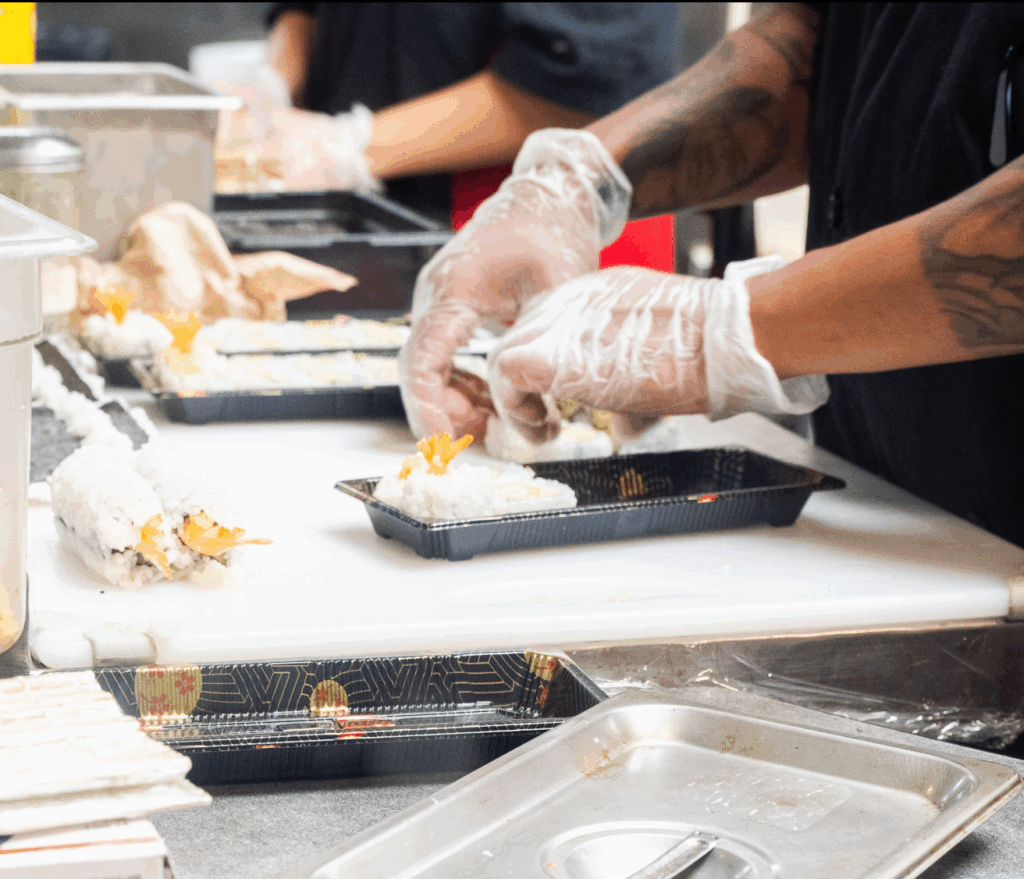
In Punchout, new vendors such as Everbowl and S&T Sushi posed as healthier dining options as well. Everbowl offers Acai bowls and smoothies, and S&T Sushi offers sushi rolls and rice bowls, as well as boba tea. Both food places offer a refreshing break from other food options that may be fried, greasy, or oily. The boba at S&T is also an enjoyable break from the soda machines in both Annex and Blackburn.
At first, the new additions contained food that appeared more favorable in terms of taste, quality, and choice. In particular, the fruit was most promising and not only looked fresher, but tasted like it too. Strawberries and melons were actually sweet and refreshing instead of soggy or reminiscent of some other food around. The meats in the cafeterias were better seasoned and fully cooked all the way through, and sides such as greens weren’t overly salted.
However, as the semester progresses, the changes made don’t seem sustainable in the long run for students. Once surprisingly flavorful meals slowly faltered into the same bland, low effort dishes from last year. Despite the modifications, diners still aren’t given enough options, variety and health-conscious choices on a consistent, daily basis.
Marley Jones, a sophomore Television and Film major from Las Vegas, feels that the dining options are not worth the price of a meal plan. Coming from a city known for its food, hospitality and service, she expressed disappointment in the lack of significant change.
“I think they’re attempting to do something good with the new options, but I don’t think it’s quality food at all, especially for what we pay to go to this school,” she says.
Jones elaborated further on her frustration with Howard’s requirement that all students residing in resident halls have to have a meal plan.
“I’ll have to pay for something I don’t want,” Jones said, “but I don’t want to waste my parents’ money and not go to the dining hall at all.”
Even if students opt for a meal other than from the dining halls, the lines in Punchout are too long to wait in. There have been wait times of over an hour at Punchout stations, including at more nutritious options like Everbowl. Predicaments such as this for students with tight schedules, or even students who just want to eat better, may guide them towards the consistent, quick-grab meals that are always there: burgers, pizza and fries.
The biggest gripe with the dining options is actually the lack of them. While there are new stations, there is no rotation or alteration in their contents, and there is usually only one or two stations that change daily.
Genuine nutrition and variety have taken a backseat to convenience. It has caused Howard students’ diets to suffer, and has hurt their wallets more in attempts to compensate for nutritional deficiencies and obtain actual substance.
Despite the university administration’s claims of a commitment to offering a diverse, nutritious, inclusive, health-conscious dining experience, it fails to give students flexibility and choice. Students are restricted to the stations with the same food every day at Blackburn, Annex and Punchout.
There is little to no rotation or change that constitutes an actual sense of variety and option. Choice is an illusion that quickly dissipates the longer that the semester and school year continue. Food that initially appears enticing quickly becomes boring and unappealing the more it’s consumed.
Ultimately, the only thing that truly changed about the Howard dining experience was the name, and little to nothing else.
Copy edited by Daryl R. Thomas Jr.