

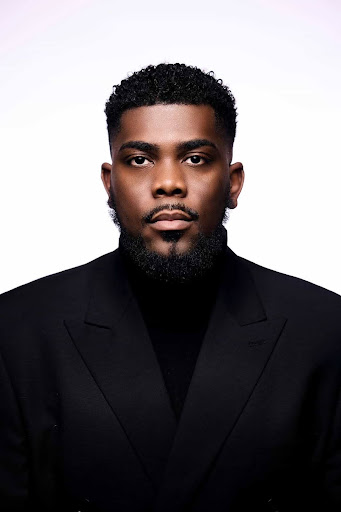
As President Donald Trump asserts a sweeping federal takeover of Washington, D.C.’s public safety, Howard University School of Law graduate Brandon Robert Watts is educating residents, students and immigrants on basic legal know-how to navigate the militarized streets.
Watts launched his “Know Your Rights” training in August , as the Trump administration moved to federalize the city’s Metropolitan Police Department — invoking Section 740 of the Home Rule Act, deploying thousands of National Guard troops and federal law enforcement officers across the capital. He founded the People’s Justice Collective in 2024.
“I’ve seen the power law enforcement has, especially in Black communities,” Watts said. “The impact especially on Howard students is real.”
Born in San Bernardino, California, a city that has historically struggled with poverty, influenced Watts’ goals he said. While the county’s poverty rate fell from over 20 percent in 2014 to 13.1 percent in 2023, challenges remain, with 17.5 percent of children living in poverty.
Raised by a single mother and familiar with the effects of incarceration through his father’s experience, Watts turned his personal collection of the justice system into a legal mission.
At Howard University, his journey deepened. Inspired by the law school’s legacy as an intern working for then-Senator Kamala Harris, from March to December 2017, Watts sharpened his drive for policy change and grassroots empowerment.
During this time, he founded the People’s Justice Collective, a non-profit dedicated to educating communities, from high schools to universities about their legal rights.
Watt’s training sessions are taking place as Washington becomes increasingly militarized. On Aug. 11, the Trump administration declared a public safety emergency in D.C., federalizing the local police department, launching aggressive enforcement campaigns and deploying armed National Guard troops.
Federal law enforcement have been spotted throughout the city, including tourist areas such as Union Station.
Watts’ sessions blend explanation with role-play, students act out possible interactions with police officers, pausing to analyze what rights are enforceable, what protocols apply and how to respond.
“The most important part is to come home alive,” Watts said. “Know your rights, yes but don’t escalate, you can always fight legally afterward.”
Watts is concerned, he said, over the lack of transparency and oversight accompanying the Trump administration’s deployment of federal officers throughout the district. He added that homeland security and ICE officers often operate in plain clothes or military-style uniforms, with little to no clear identification.
Watts questions how officers can be held accountable under these conditions.
“The biggest issue is that I think federal officers are here and operating without communication,” he said. “Like wearing masks and clothes and this ambiguity, how are you supposed to verify legitimacy or really hold agents accountable?”
That ambiguity, he said, presents a heightened risk for students and young people, especially those unfamiliar with how policing works in Washington or in the political context of the city.
“It just doesn’t make sense to me. Especially if you’re a student, and again, being new to how it is since you’re new to the real world and now somebody popping out of nowhere asking for your ID,” Watts said.
Watts described how young people unfamiliar with D.C’s political geography can suddenly find themselves stopped by unidentified, militarized officers in areas they didn’t realize were under heightened surveillance.
Howard University students echoed Watts’ concerns describing the federal presence not as proactive but as invasive, excessive and often racial charged.
“As a student, it hasn’t affected me personally yet but I don’t think it’s about if it will. It’s when,” said Aishat Salami, a sophomore electrical engineering major from Philadelphia by way of Nigeria. “It’s not really about safety. It’s about control.”
“I feel more overwhelmed than protected, You’re guilty before you’re proven innocent especially when you’re Black. It’s excessive.” added Avani Harrison , a sophomore supply chain management major from Shreveport, Louisiana by way of Italy.
Both students described a heightened state of hyperawareness, especially when moving through areas like Columbia Heights and U street. “We went to a party once, and it got shut down. Suddenly, like 2 cops cars showed up, some in uniform, and some not. It was excessive for something so small,” Salami stated.

Salami continued to note that despite their roles as law-abiding students, the fair of misidentification, especially ad Black or immigrant students, adds another layer of stress.
“Even if you’re a straight-A student, with a job and no record, you’re still afraid. They see a crowd of us and assume the worst.” Salami and Harrison also expressed frustration with Howard University’s lack of communication regarding safety or legal education training in the face of this federal occupation.
“If rights training exists, we haven’t seen it,” Salami said. “At an HBCU, that’s a problem. We promote celebrities and events, why not student safety?”
Both students voiced their support for Brandon Robert Watts’ “Know Your Rights” initiative: “It’s so needed,” said Harrison. “People don’t know their rights, and that’s dangerous when power gets abused.”
They emphasized that the training should be standard for all students, especially international ones. Both Salami and Harrison shared the same sentiments that international students are especially vulnerable, noting that many are unfamiliar with how policing and legal systems operate in the U.S.
They urged Howard’s leadership and student government to take proper action. “Our safety should be a community effort, we can’t rely on broken systems to protect us.” Harrison stated.
Since Trump signed the executive order transferring control of the Metropolitan Police Department to the federal government, both property and violent crime have declined citywide, according to MPD’s most recent public data.
In the week following the Aug. 11 transition, property crimes fell by approximately 19 percent, while violent crimes have dropped around 17 percent compared to the week prior. However, the data revealed increases for some offenses.
Robberies and car break-ins saw the steepest declines, each down over 40 percent week-to-week, but burglaries rose by roughly 6 percent and assaults involving dangerous weapons increased by 14 percent during the same period.
Two homicides occurred in the first few days after the executive order was signed, a figure in line with the city’s recent weekly average, though no new murders were reported after Aug. 13.
Despite these crime statistics, Watts said the core of his work goes beyond numbers; it’s about empowering communities to understand their rights and navigate encounters with law enforcement safety.
“Building trust within the community is key,” Watts said. It’s about showing up consistently, being a resource, and talking to people about how the law impacts them in so many ways.”
Recalling his graduation from Howard Law in May 2025, Watts said his newly acquired legal knowledge was a “superpower,” one he intends to wield in service of the people.
“I call myself the people’s lawyer,” Watts said, “because criminal justice isn’t the only issue. There are housing challenges and countless other struggles people face daily.”
His training is not limited to formal sessions; Watts also uses social media platforms to share practical tips and encourage people to reach out for help when they encounter legal problems.
“Even if it’s just commenting on Instagram to provide basic ‘know your rights’ advice, being accessible matters,” he explained.
Looking ahead, Watts plans to expand his work after passing the bar exam by starting his own law firm focused on criminal defense and civil rights while supporting Black communities.
To young advocates and law students inspired by his example, Watts offers simple advice: “Just do it. Find your community, no matter how small and show up consistently. Passion attracts support.”
Watts said policing is a critical area needing a change. He believes that this is not just a Black issue but rather a class and immigrant issue.
More police does not make communities safer, he said.
“The criminal justice system is broken. Policing, in particular, has been allowed to operate without accountability for too long,” Watts added.
He also critiqued political leadership on both sides of the aisle, calling out democrats and republicans; “You can’t just blame one party. This problem is entrenched across the board and until we confront it honestly, real reform won’t happen.”
As the people of Washington, D.C., navigate the federal occupation, Watts’ said his mission is clear: equip communities with the tools to protect themselves legally and fight for a more just system, one empowered citizen at a time.
Copy edited by Damenica Ellis