By Arelia Johnson, Contributing Writer
Posted 10:00 PM EST, Sun., Jan. 29, 2017
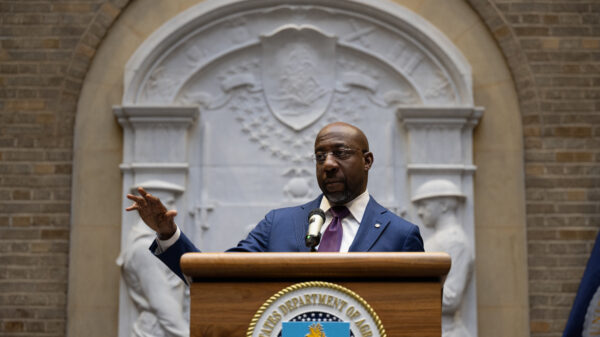
Kevin Judd, a 1992 graduate of Howard University’s School of Law and president of the National Bar Association, gave an impressive keynote address during the Howard Human and Civil Right Law Review’s 2017 C. Clyde Ferguson Jr. Annual Lecture Thurs., Jan. 19, at Howard Law School’s Moot Court Room.
Unlike many speakers, Judd did not just outline the issues facing black America, but was poignant and cavalier in delivering solutions to a captivated audience at the 2017 C. Clyde Ferguson Jr. Annual Lecture.
Clyde Ferguson, former dean of the school of law, continues to be a beacon of light and hope for students like Joshua Allen, who gave the opening address, and Selena Motley, the solicitations and submissions editor for the Howard Human & Civil Rights Law Review – the organization responsible for the event.
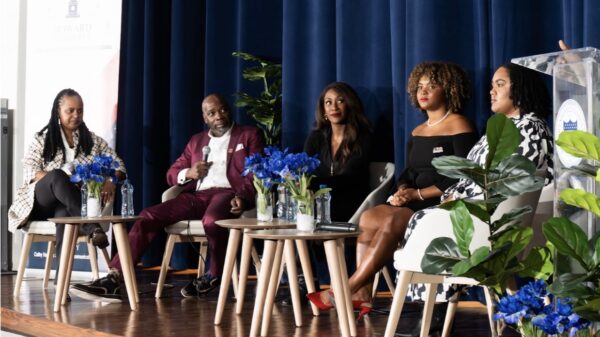
Moderated by W. Sherman Rogers, Professor of Law at Howard University, panelists incuded Alicia Pherpholes, a professor of Law at Georgetown Law School and Kikolo Kijakazi from The Urban Institute, to which both spoke from the same desire of creating a “Black community with no social ills.”
“I think that it is important to understand the source of the problem in order to really fully grasp the kinds of solutions that we need to engage in,” said Kijakazi.
Judd, a former Wall Street businessman, prefaced his address with Dr. Martin Luther King, Jr.’s “I’ve Been to the Mountaintop” speech and explained that wealth disparities are the direct consequence of governmental and racial structures.
“Legally allowed discrimination limits the wealth and skills acquisition of generations,” Judd said.
Judd also said that in order to create wealth, one must look at the mechanics of economic development of the African-American community through the following: Cooperative ownership model, venture capital model, the small business administration, building alliances with African and Caribbean nations and reparations.
Pherpholes expressed that with Donald Trump becoming president of the United States, African-Americans must look in all areas to better the Black economy.
“With the incoming administration, we have to look to our localities, our states and make sure that they are helping to bolster wealth opportunities for Black people,” said Pherpholes.
Have a reaction, thought, or response to this article? Submit a letter to the editor.