

In Billboard’s initial review of Beyoncé’s sophomore album, “B’day,” they wrote this of her artistry: “Throughout, she romps with creative abandon, thankfully unafraid of stretching the boundaries lyrically and musically.”
Released in September 2006, Beyoncé’s “B’Day” performed exceptionally well. The album debuted at No. 1 on Billboard 200 and contained iconic songs including “Irreplacable,” “Deja Vu,” “Get Me Bodied” and “Ring the Alarm.” The songs not only topped the charts and received critical acclaim, but became defining parts of her legacy.
In honor of its 20th anniversary, Beyoncé released a 30-track deluxe version of the hit record, including limited-edition and previously unreleased songs as well as brand-new tracks and mixes.
Of course, as always, people are going to have a lot of strong opinions about a new Beyoncé release.
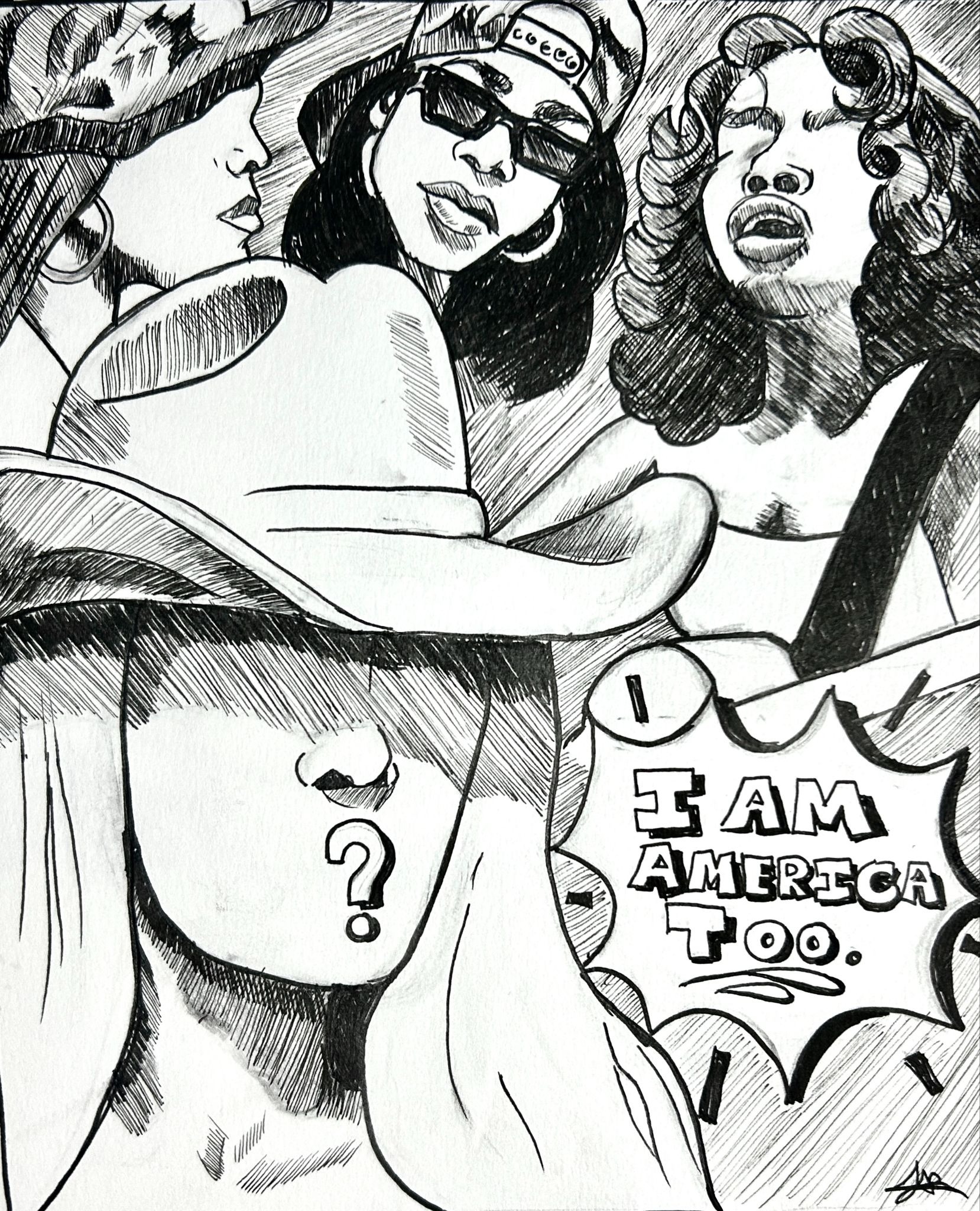
However, the biggest controversy from the new “B’Day” deluxe comes from Beyoncé’s collaborations with Latin American artists on two of the new tracks: “CUERPO (TUMBAO),” which features Maluma and samples Celia Cruz’s song “La Negra Tiene Tumbao” and “IRREEMPLAZABLE (COMO LA FLOR),” a mix featuring the late iconic Tejano singer Selena.
Many have taken to social media to accuse Beyoncé of releasing the songs as cultural-appropriating “cash grabs,” and say that she should have “stayed in her lane.”
This is not the first time Beyoncé has received backlash for experimenting with her sound. Her last album, “COWBOY CARTER,” sparked controversy from country artists and fans who claimed she co-opted the genre and southern culture for sales and awards.
These reactions have two major similarities.
The first is that Beyoncé’s interest in both genres predates recent controversies. In 2007, she released her EP “Irreemplazable,” containing Spanish versions of “B’Day” tracks and collaborations with Latin artists like Shakira and Alejandro Fernández.
Beyoncé has also proudly repped her Texan heritage since her days in Destiny’s Child and released the country track “Daddy Lessons” on her 2016 album “Lemonade.” The racist response to her performance of the song at the Country Music Awards inspired her to create “COWBOY CARTER” in the first place.
The second similarity is that both of these controversies happened in the 2020s, a decade in which the general public has increasingly disapproved of Black women in the music industry who experiment sonically. The reaction to Beyoncé’s most recent experiments points to a larger shift in how audiences respond to Black women who refuse to stay within the boundaries of what they are expected to sound like.
Even before Beyoncé, the most popular Black women in music similarly established themselves through genre fusion and experimentation.
Diana Ross crossed over from Motown’s iconic brand of soulful pop as the leader of The Supremes in the ‘60s to disco in the ‘70s. Donna Summer used her powerful gospel choir-trained voice and stellar songwriting skills to give us dance tracks including “Love to Love You Baby,” “Hot Stuff” and “I Feel Love,” a song that set the foundation for genres like house and techno. Tina Turner completely reinvented herself and her music in the ‘80s, to become the “Queen of Rock and Roll.”
Whitney Houston, Janet Jackson, Aaliyah, the list of Black women who built careers by taking risks and incorporating different influences into their music goes on.
After Beyoncé’s solo debut, the trend of experimentation continued. Rihanna brought Bajan flair to pop in the late 2000s and later expanded to rock, electronica, R&B and hip-hop, becoming one of the most versatile pop stars of the 2010s. Nicki Minaj, though currently a symbol of conservative conformity, uniquely combined hard-hitting bars with bubblegum pop to become the defining female rapper of the 2010s.
These women deserve their success and credit for their own artistry and innovation. However, in order to become superstars, the public had to respond positively to their creativity, buying their records and selling out their tours. They had to be fascinated by Black women’s ability to dominate across genres and styles, and they were.
Nowadays, however, when Black women experiment, they are met with pushback.
After the release of her 2024 chart-topping pop hit “Love Me Not,” Ravyn Lenae was met with a wave of social media discourse about her Blackness because some users thought the song didn’t fit the R&B sound of what a Black woman “should” be releasing.
Then, in May, when Lenae posted a TikTok with a snippet of her song “Handle,” from her album “Blue Island,” she received the comment, “Omg do not forget rnb sis please,” and others requesting she go back to the sounds of her previous projects.
Unfortunately, it’s not just Lenae being told by social media users to stay in a box. In February, indie rock singer and songwriter Momo Boyd was featured on “Good Flirts,” a song from Baby Keem’s latest album “Ca$ino,” which exposed her to a wider audience. However, when she released her genre-bending EP “Miss Michigan” in April, a project that mostly contained a vintage alternative rock and country sound, many similar comments rolled in. People were disappointed that her solo career didn’t have the same hip-hop/R&B sound as her collaboration with Baby Keem.

Black women in music once benefited from a culture that celebrated their ability to cross genres, but today’s audiences increasingly treat that same experimentation as evidence that they are abandoning what makes them “Black.”
I have to ask, what happened in the 2020s that made people so resistant to Black women who break the mold?
It could be the growing wave of conservative values and the fact that society is sick of seeing us succeed. After all, in just over half a decade, we’ve already witnessed a Black woman become the vice president of the United States, a Black woman break the record for the most Grammy wins and nominations of all time, a Black woman be sworn in as a Supreme Court Justice and so much more.
Perhaps the world has grown fatigued by our talent and our ability to take what we’re given and make it better, and because of that, the next “B’Day” or the next Beyoncé may remain hidden and underrated for years to come.
Copy edited by Jori Johnson