

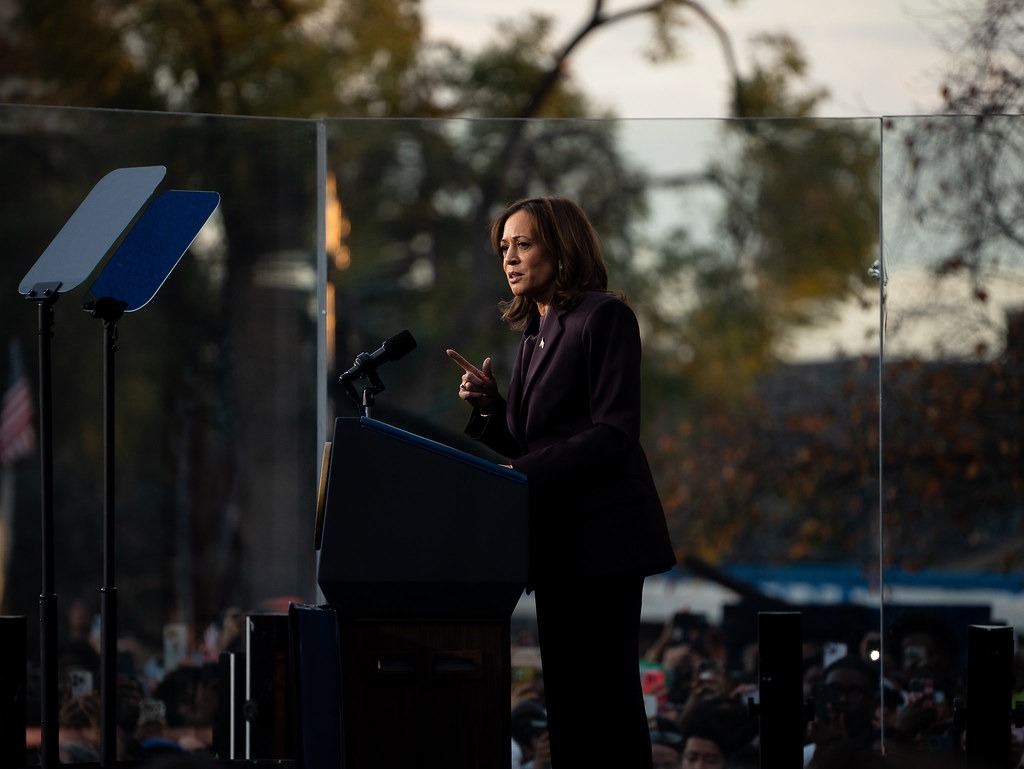
Maybe the worst-kept secret in national politics is that former Vice President Kamala Harris is considering a political comeback and weighing another run for president in 2028.
In late-July, Harris revealed she had “not made a decision” about a potential 2028 presidential bid. Instead, she said she is “fully, sincerely” focused on the midterm elections this November.
As a Howard University alumna, Harris occupies a unique place in the university’s history. She launched her 2024 presidential campaign from Howard’s campus, making the institution both a symbolic and literal backdrop to one of the most consequential moments in modern American politics. Because of this connection, the Howard community has a perspective on her future candidacy that is distinct from the broader public.
The million-dollar question isn’t simply whether Howard wants to see Kamala Harris make a political comeback, it’s whether a second Harris campaign would learn from the lessons of 2024. So, I asked.
“The basis of my answer lies in what Kamala Harris feels is best for her,” Sonia Pruitt, a criminal justice professor said. “As a Black woman, I know the toll that such weighted decisions take on our souls.”
Pruitt expressed strong support for Harris, telling me that she felt Harris was “connected to the humanity of people” while praising the way she navigated the gendered and racial attacks she faced during her presidential campaign.
A retired police captain, Pruitt even led a “Black Cops for Kamala” campaign to counter misinformation surrounding Harris’ record as California attorney general.
I asked others whether they believed the majority of Americans were ready to elect a Black woman as president, and the majority of responses were either “probably not” or “definitely not.”
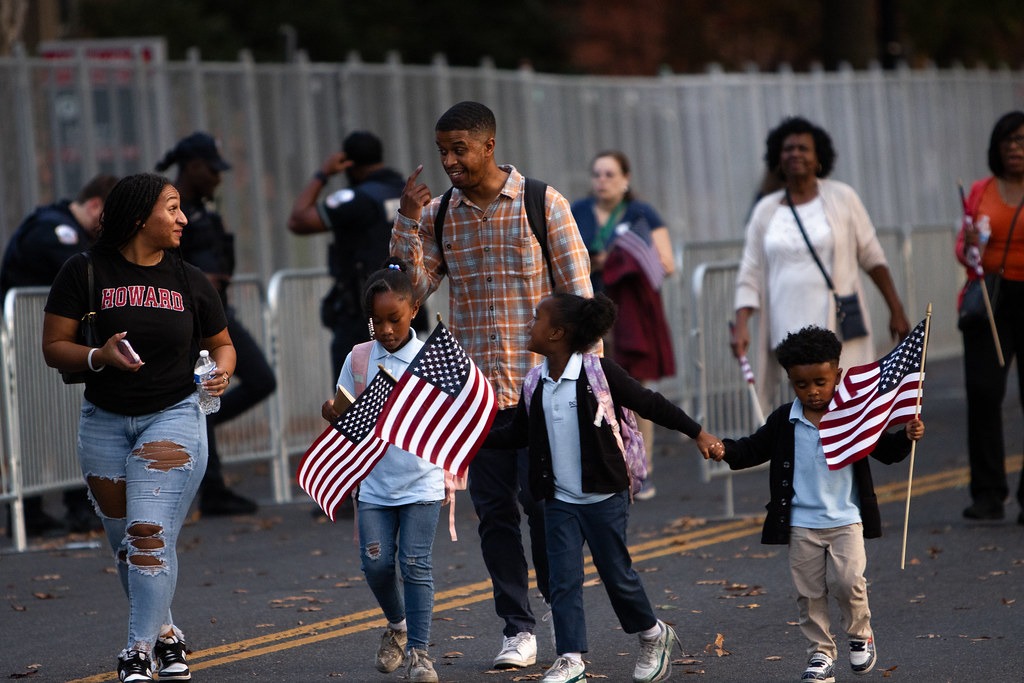
“I feel like if America wasn’t ready to elect a white woman in 2016, then they unfortunately probably wouldn’t be ready for a woman of color,” said Niah Cadet, a freshman human performance major from Atlanta.
I completely agree with Jokim Bryant, a 2026 Howard graduate and current first year law student at Boston University School of Law.
“The United States is stuck within a ‘woke enough’ mindset. They are ‘woke enough’ to let her run, but not enough to allow her to win,” he said. “Our society as a whole was built on the backs of Black women, yet fails to recognize their strength and power to build a new world.”
Since Harris’ unsuccessful 2024 presidential campaign, she has remained active in Democratic politics. She embarked on a book tour through key Democratic primary states, met with New York City Mayor Zohran Mamdani and has reached out to pro-Palestinian activists to gauge their support and interest in a potential future campaign. Most notably, however, she is leading early polls, placing ahead of prominent Democratic figures.
Harris also maintains a significant advantage among Black voters, a crucial constituency in Democratic presidential primaries. Her allies argue that few potential contenders are as prepared to mount a national campaign. They contend that Harris was a stronger candidate in 2024 than she was in 2020 and that she is using the years ahead to become a more experienced and authentic candidate in 2028.
But those potential strengths exist alongside a very different conversation within the Democratic Party. Virtually all of the recent press about Harris has actually been about the unease Democrats feel about the prospect of her mounting another campaign, especially given the growing division within the Party, particularly over the U.S.’s continued military and financial support of Israel’s war in Gaza.
Based on Harris’ previous campaigns, I initially believed she had a realistic chance of winning the presidency. However, Stanley Scott III, a junior economics major from Atlanta, argued that Harris struggled to take firm positions on several key issues, making it difficult for the average American to distinguish her political platform from the broader political landscape.
“I wanted [Harris] to win, but I did not see it being possible looking at the campaign that was ran,” Scott said.
Indeed, early within Harris’s improbable run for president, she allowed Democrats’ enthusiasm about finally having a credible opponent to Trump to define her candidacy. Once former President Joe Biden left the race and Harris let her intentions be known, the excitement vastly outweighed the need to know precisely what policies she was running on.
The contrast with Trump’s freewheeling interviews, sometimes lasting hours, on anything and everything could hardly be starker. And because Harris couldn’t articulate her own vision, she allowed the Trump campaign to define her for voters: “Kamala is for they/them, President Trump is for you.”
Harris had 107 days to present a compelling vision for the country, but offered few new ideas and ultimately fell short of being a candidate Democrats needed. Despite her historic significance and extraordinary career, she struggled to rise to the moment, and against Trump’s polarizing political presence, she ultimately proved unable to secure the presidency.
I would love to see another Harris candidacy and, ultimately, see her in the White House. But after reading Harris’ day-by-day chronicle of her presidential campaign in “107 Days” it seems that the inner workings of her campaign were filled with little room for respite or reflection.

As the days counted down to the election, it became clear that Harris was unable to properly conduct her presidential campaign in the timeframe allotted.
In the end, it may not have mattered whether Harris had 107 days. Time does not equate to direction, nor does it extend backwards to mend what has already been broken. That is a tough pill for Harris and the Democratic Party to swallow, but it is a necessary one in order to move forward.
Copy edited by Jori Johnson