

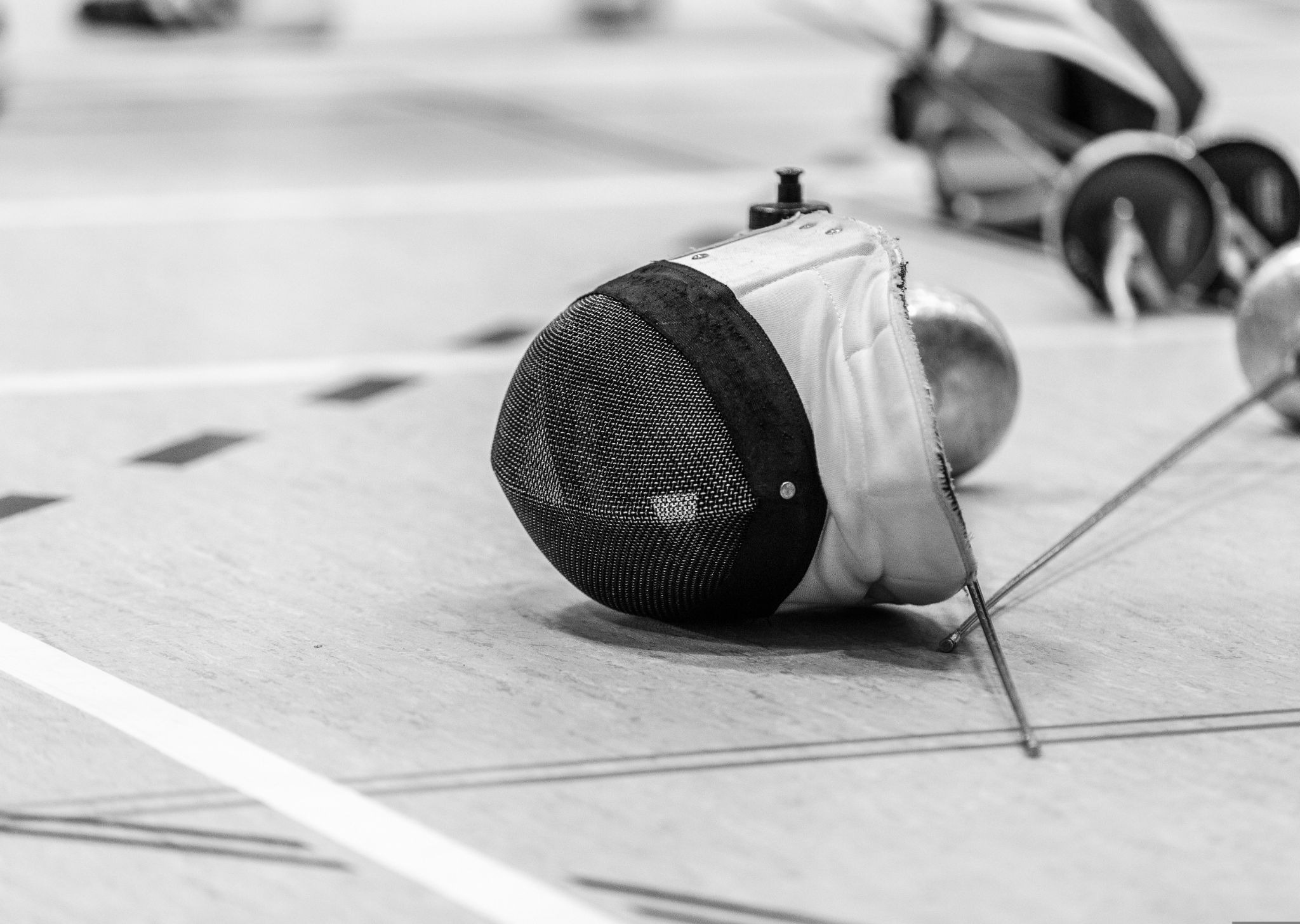
Two weeks ago, junior Kanaan Celestine, an avid fencer, was encouraged by a coworker to start a fencing club at Howard University.
Celestine, an international business major from Jersey City, New Jersey, even caught the attention of Olympic fencing champions Daryl Homer, Nzingha Prescod and Lauren Scruggs. What may seem like a stroke of luck by the Instagram algorithm, for Celestine and many others, it was a long time coming.
“I have been extremely fortunate in running into people in the fencing community who just want to see this happen so badly,” Celestine said about the many excited athletes who have reached out with offers to coach, donate equipment and sponsor the team.
Betelhem Petersson, a senior international affairs major from Manhattan, New York and fencer of nine years, couldn’t contain her excitement when she saw Celestine’s announcement, she said. One of the post’s images featured the legendary Olympic fencer Peter Westbrook, whom Petersson knew personally.
Every Saturday for nearly a decade of her childhood, a young Petersson fenced at the Peter Westbrook Foundation (PWF) in New York City. The nonprofit, aiming to expose underrepresented and underserved city youth to fencing at little-to-no cost, was “a community more than it was a fencing club,” she said.
Petersson’s childhood mentors at PWF included the highly decorated Scruggs and Prescod, and the iconic Westbrook himself. The program charges an enrollment fee, then provides its student-athletes with all the necessary gear at no additional cost.
Despite fencing’s historically low visibility for athletes of color, the club was overwhelmingly Black, according to Petersson.
“It was like our mini Mecca before I went to Howard,” Petersson said. “And I was just like, ‘Yeah, fencers are Black.’”
Archival evidence shows students fencing on Howard’s campus as early as the 1930s. Though the program was ultimately not maintained, its existence affirms the sport’s rich but undersung Black history.
Fencing’s elitist and exclusive connotation has long soured its public image to prospective players who diverge from the sport’s traditionally narrow archetype.
“Going to the Mecca, I feel like it teaches you how to go back into the world in predominantly white spaces and be confident in that,” Petersson said.
While barrier-breaking is vital and powerful, so is belonging effortlessly, said Zoie Prandy, a junior film and TV production major from Bowie, Maryland. She underscored the value of seeing oneself represented in one’s sport, particularly as a woman in a male-dominated arena: “I like that the club is open to everyone, because even in fencing, I’ve never really seen women represented and Howard is a school with a bunch of women. So it’s about showing that it’s an open space… showing that we do have women here, and we do have people from underrepresented backgrounds.”
Although feeling affirmed and represented in one’s identity eliminates one of the expressed barriers to fencing, financial and geographical constraints remain. These concerns are at the forefront of Celestine’s mind, he said, as he wants to build the most inclusive, accessible space he can for both competitive fencers and those merely interested in practicing recreationally.
On the interest form, Celestine asked if students were willing to pay dues, to which many indicated they wouldn’t mind. But in his ideal scenario, there would be no dues required.
“My biggest goal when speaking to everyone I’ve made contact with is letting them know I want this to be accessible to as many people as possible,” Celestine said. He imagines a club with a reach beyond the Howard campus, even envisioning hosting expos at local D.C. schools to introduce youth to the sport’s legacy and culture of discipline.
“Just the fact that I was able to start this is directly correlated to the fact that I do have a level of privilege,” Celestine said. “I also think that it is the responsibility of people who have privilege to help those who may not.”
In Celestine’s words, prospective Howard students shouldn’t have to choose between their sport and their dream school.
“Fencing is something that a lot of students who are looking to go to [historically Black colleges or universities (HBCUs)] participate in,” he said. “I think that it’s unfortunate that there are a lot of students who have to pick between attending an HBCU and prolonging their fencing career.”
While the HU Fencing Club is not yet officially recognized by the university, its high initial interest has left its founder optimistic.
“Nothing is currently secured, but the leads are strong and the future is bright,” Celestine said.

Copy edited by Jori Johnson