

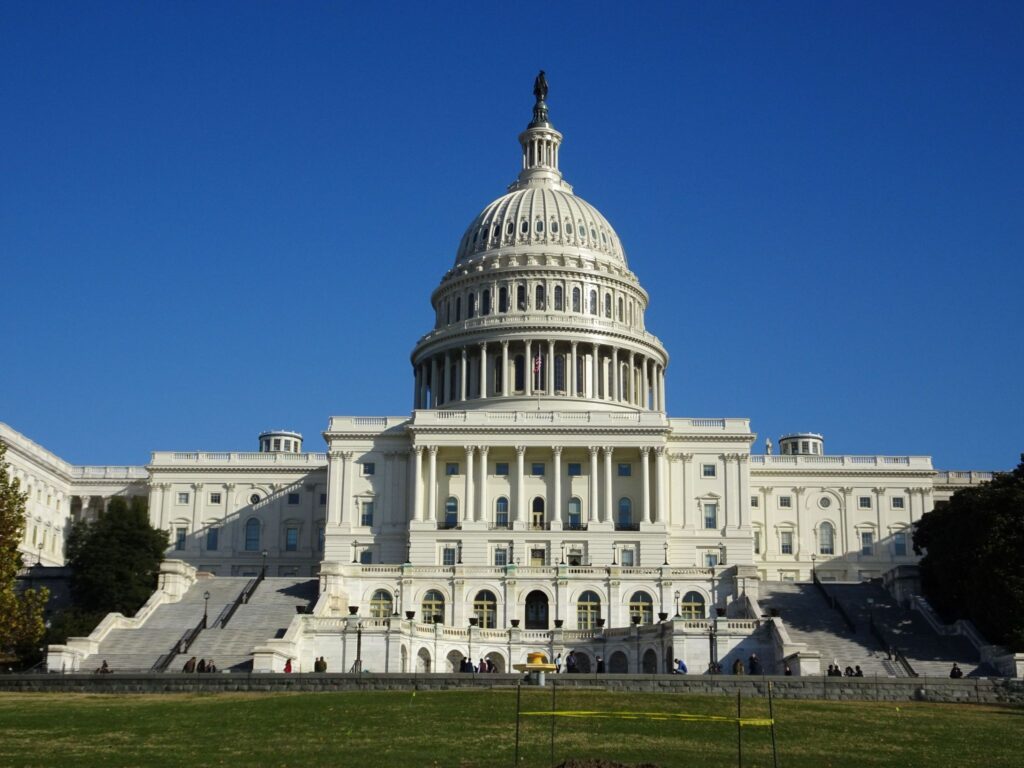
From the public school gymnasium to the Haitian American household, Supreme Court decisions issued this summer have immediate consequences for transgender athletes, immigrant families and the rights afforded to people living in the United States. Beyond the direct effects of the rulings, questions about how their consequences will unfold remain unanswered.
Transgender Athletes Face New Restrictions
On June 30, the Supreme Court upheld state bans on transgender women in women’s sports. In West Virginia v. B.P.J., the plaintiffs argued that state laws banning biological males from female sports were a violation of transgender athletes’ rights under the 14th Amendment and Title IX of the Civil Rights Act.
In the majority opinion authored by Justice Brett Kavanaugh, the court decided such bans may discriminate based on sex so long as it’s in the interest of solving an issue a government seeks to correct. In this case, the issue cited is safety and fairness for cisgender female competitors.
“Allowing a biological male athlete to compete on a girls’ team necessarily displaces or disadvantages a female athlete,” Kavanaugh wrote.
Elijah White, the national organizer for the Gender and Sexuality Alliance Network (GSAN), believes that such decisions will negatively affect all women athletes.
“It’s about all student athlete rights, and an institution’s right to surveil and scrutinize all students,” White explained, referencing how most bans require all athletes to submit private information like birth certificates, hormonal testing or genital verification.
White, a transgender man, aspired to play team sports growing up, but couldn’t on the teams his gender aligned with.
“I wish I had that opportunity, and in lieu of that, I fight for the young people who now are,” White said.
GSAN is fighting the decision by informing transgender youth of their rights and how the decision applies where they live.
“It is vital that young people understand and fight for their rights to self-determination, bodily autonomy and being seen and protected as their whole selves,” said White. Currently, laws in 27 states prevent transgender women from participating in female sports.
All justices agreed that the state bans are legally permissible under Title IX. However, Justices Ketanji Brown Jackson, Elana Kagan, and Sonia Sotomayor dissented from the majority’s holding that bans weren’t in violation of the 14th Amendment.
“This litigation implicates deeply sensitive, contentious and evolving issues,” Justice Sotomayor wrote in her dissenting opinion, reasoning that the effects of gender affirming care on athleticism have not been researched enough to conclude that play becomes innately unfair for cisgender women.
TPS Protections for Haitians at Risk
On June 25, the Supreme Court ruled 6-3 that the Trump administration could end Temporary Protected Status (TPS) for more than 350,000 Haitians and 6,100 Syrians living in the United States. TPS allowed immigrants from countries experiencing war, natural disasters or other dangerous conditions to live and work legally in the United States for a limited period.
The ruling does not require the immediate deportation of every affected person, but removes protections that prevented TPS holders from such acts.
Justice Samuel Alito wrote that the Court considered whether Haitian and Syrian TPS holders were entitled to remain protected while their lawsuits continued.
“We hold that they are not,” Alito wrote. The majority concluded that the TPS statute generally prevents federal courts from reviewing the Department of Homeland Security’s decisions on TPS for a country.
The Court also rejected the Haitian plaintiffs’ claim that the administration ended Haiti’s TPS designation because of racial discrimination.
Alito wrote that the plaintiffs had not shown they were likely to succeed on that claim, finding there was “a strong, race-neutral explanation for Haiti’s termination.” The majority pointed to the administration’s broader efforts to end TPS designations for multiple countries, rather than Haiti alone.

Justices Kagan, Sotomayor and Brown Jackson once again dissented. Kagan argued that courts should be able to review whether the Department of Homeland Security TPS actions were federally lawful.
She also disagreed with the majority’s conclusion on the plaintiffs’ racial discrimination claim, writing that “the evidence is there, plain to see.”
The ruling carries significant consequences for Haitian families, because conditions in Haiti remain unstable, with economic crisis, government corruption and criminal monopoly.
Professor Nicole Dillard, an immigration attorney and professor at Howard University, said the decision will affect many Haitian families who have lived in the United States for years and have established lives in the country.
“Those people have babies. They have children who’ve been born here who are U.S. citizens,” she said. “Now the question is…what about the parents?”
She added that many TPS recipients could also lose their legal authorizations.
Kagan warned about the immediate consequences for Haitian and Syrian families who have built their lives in the United States. She wrote that “hundreds of thousands of lives will be uprooted” while the lawsuits continue, leaving many at risk of losing work authorization and facing detention or deportation.
While the Trump administration acknowledged Haiti’s instability, it argued that conditions had improved enough to end the protections.
Dillard highlights how quickly immigration policy can change from one administration to the next.
“Policy is not permanent,” Dillard said. “We can have a certain policy that’s good for now, and then when we have a different administration, that policy can shift. And it can be a considerable shift.”
Many Haitian TPS holders who have built lives in the United States face uncertainty about their ability to remain in the country.
Copy edited by Sydney Middleton