

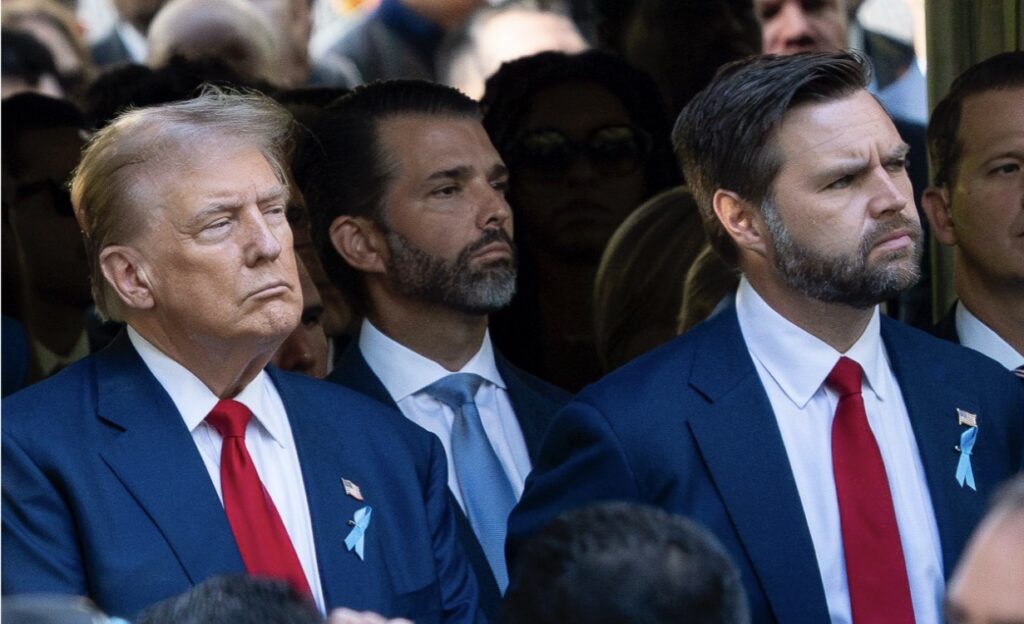
Young people are experiencing low morale in the state of the American government and continue to express concern about the issues impacting them the most. About 15 months into his presidency, President Trump’s approval ratings hit a second-term low, with polls revealing increasing distrust and disconnect amongst young people in America’s political leadership.
Across topics like the economy, foreign policy, crime, immigration and inflation, the Economist’s poll tracker found that Trump has become increasingly unpopular in his second presidential term. A recent poll by Harvard University found that 13 percent of young people believe that America is on the right track and 26 percent feel hopeful about the future of America.
Attending school in the District, Howard University students are privy to witnessing the government’s actions firsthand. Luke Pierre, an honors economics and political science double major and treasurer of Howard University College Democrats, described the American government as “broken,” pointing to issues pertaining to democracy, the economy and Congress.
“Living in Washington, D.C., we see the news alerts literally every day. We discuss it in class, it’s something our professors talk about and it’s just really sad,” Pierre said.
For many students, frustration goes beyond policy disagreements and reflects a deeper sense of institutional failure. Kennedy Dobson, an economics and philosophy double minor and President of Howard University College Democrats, described the current system as a “hypocritical mess,” citing what she sees as a breakdown in accountability and fairness.
“We are taught that our system is built on checks and balances, yet we are watching those very guardrails fail in real time,” Dobson said.
She added that repeated impeachment efforts and political controversies with little tangible consequence have contributed to a growing sense of exhaustion among young people, who increasingly question whether the system applies equally to everyone.
At the same time, trust in the federal government continues to decline. Long-term trends identified by organizations like the Pew Research Center show that confidence in government institutions, particularly among younger generations, remains near historic lows. The Harvard poll similarly found that trust in the federal government dropped to only 15 percent this year.
The Federal occupation of Washington, D.C. was one point of polarization between Americans and the government. In August of 2025, eight out of 10 Washington DC residents opposed Trump’s deployment of the national guard and federal takeover.
Dobson, a D.C. native, described the experience as a surreal and unsettling part of daily life. She spoke about the ‘normality’ to not being able to grab groceries or walk down the street without seeing the National Guard.
“We are just trying to go to class and exist in our neighborhood without becoming another headline or a statistic in a federal ‘crackdown,’” Dobson said.
She believes that while many students do not blame individual service members, the broader use of military presence in civilian spaces contributes to fear and alienation, making it difficult to maintain trust in the government.
“We are just trying to go to class, and exist in our neighborhood without becoming another headline or a statistic in the federal ‘crackdown,’” Dobson said. “This environment makes it incredibly difficult to maintain a positive outlook on a government that treats its own capital like occupied territory.”
Paired with this distrust in the federal government is a disconnect between young people and political parties. According to Harvard’s poll, young people believe that Democrats and Republicans politicians prioritize the elite class. Up 15 points from 2017, 50 percent of young Americans agree that people ‘like them’ don’t have a say in what the government does.
Pierre expressed his concern about the future for students under Trump.
“If you look at the things he is doing with education, the national parks and the EPA, these will have long term consequences. I don’t think he cares about that, I think he just cares about making rich people richer,” Pierre said.
To bridge the disconnect between politicians and everyday people, some young people are opting for candidates who are younger and align more with their values.
Dobson believes both parties are guilty of assuming what young people want rather than allowing them to represent themselves. She spoke about campaigns such as former Vice President Kamala Harris and New York City Mayor Zorhan Mamdani.
“We’ve seen that campaigns with cultural resonance — like Kamala Harris’s ‘Brat summer’ or Zorhan Mamdani’s race in New York — actually bring young people out,” Dobson said.
Both Pierre and Dobson believe that other Howard students share the same sentiments about the American government. They both agree that there needs to be a change in political leadership in order to shift student perspectives.
“Morale is low but motivation is there to get Trump out of office,” Pierre said. “The only way to get morale up is if we start electing Democrats into office.”

While Dobson expressed concern about the future, she trusts that Howard students will be at the forefront of political and social change.
“While I am concerned for this generation as a whole, I am never worried about Bison. We see everything for what it is, and we aren’t waiting for permission to change it,” Dobson said.
Copy edited by Daryl R. Thomas Jr.