

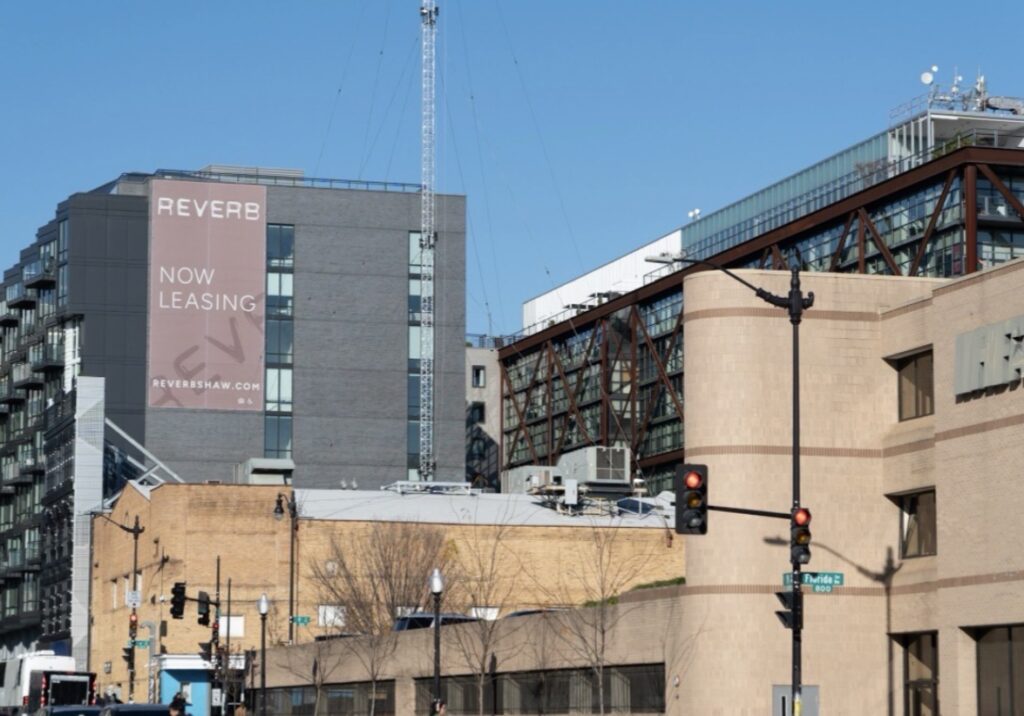
Unlike freshman and sophomore years, housing is not guaranteed for juniors and seniors, leading many upperclassmen to resort to renting houses or apartments.
The median monthly rent for Howard University students sits at $1,400. Upfront costs like the median one-time move-in cost are $1,892; the average is over $2,100.
“…A lot of sophomores got displaced and [Howard] over-accepted students,” said Jamone Small, a sophomore acting major, playwriting minor from Brooklyn, New York. “I think it’s an issue that is going to continue to follow Howard.”
Small said he feels Howard hasn’t provided students with resources to find housing that is not affiliated with the university. Howard offers some support, notably the Off-Campus Housing Portal and partnerships with complexes like The Lanes at Union Market and Vie Towers.
“The University is always searching for collaborative housing opportunities for our Bison, and we will keep you apprised of any upcoming new housing opportunities,” said the University Office of Communications (OUC) in a written statement to The Hilltop.
The university’s rules explicitly state Howard “holds no jurisdiction” over private leases. Small noted that Howard students have provided a bit of help for those seeking non-affiliated housing.
“I think the student organizations do a great job at providing those resources and helping out everybody,” he added.
Amidst these challenges, some students are finding relief through emerging and targeted support initiatives. Payton Garcia, a junior honors economics major and mathematics minor from Chicago, recently emailed all students in the College of Arts and Sciences (COAS) about a new financial resource.
The Howard University Housing Relief Fund Survey, currently sponsored by the Robert F. Kennedy Human Rights Organization, is a pilot program that assists students with the financial burdens associated with off-campus living.
“This is a critical moment for our peers,” the email said, highlighting that the initiative is specifically aimed at assisting those who are most vulnerable to housing troubles, particularly graduating seniors and current juniors.
The program is currently offering financial aid awards, though the window of opportunity is narrow. With only a couple of spots remaining, the fund serves as a temporary aid for those struggling to secure or maintain stables as the semester concludes. Students who meet the criteria are encouraged to complete the respondent form linked in the email.
Garcia advised students navigating the D.C. housing market.
“Find your people before you find your unit,” he said.
He implores students to build a buffer fund of “$3000 to $4000” to guard against the financial “shocks” people can’t plan for, like job loss. He also said the search is not always difficult because of a lack of units, but because of unresponsive landlords.
While student-led organizations and fellowship initiatives continue to provide support, the broader conversation regarding housing security at Howard remains ongoing.
Some off-campus apartments that are not affiliated with Howard include Trellis, the Wren, the Shay and Reverb. These apartments range from 1,600 to 2,000 dollars for a studio, which is more expensive than on-campus housing options and not a viable alternative for many students.
This year, new housing options for upperclassmen include Carver & Slowe Apartments, located in the Shaw neighborhood near the university. This joins the Lanes at Union Market, Vie Towers and Clover at the Parks, according to OUC.
“These collaborations will provide students with more accessible, comfortable and connected living environments that help them thrive both inside and outside the classroom,” said OUC’s statement. “A dedicated shuttle service operates for every community, providing transportation to campus.”
In the statement, OUC also said students can use their financial aid and scholarships to pay for housing at these places because costs are charged to student accounts. These off campus housing options are equipped with resident advisors (RAs) employed by the university.
Copy edited by Daryl R. Thomas Jr.