

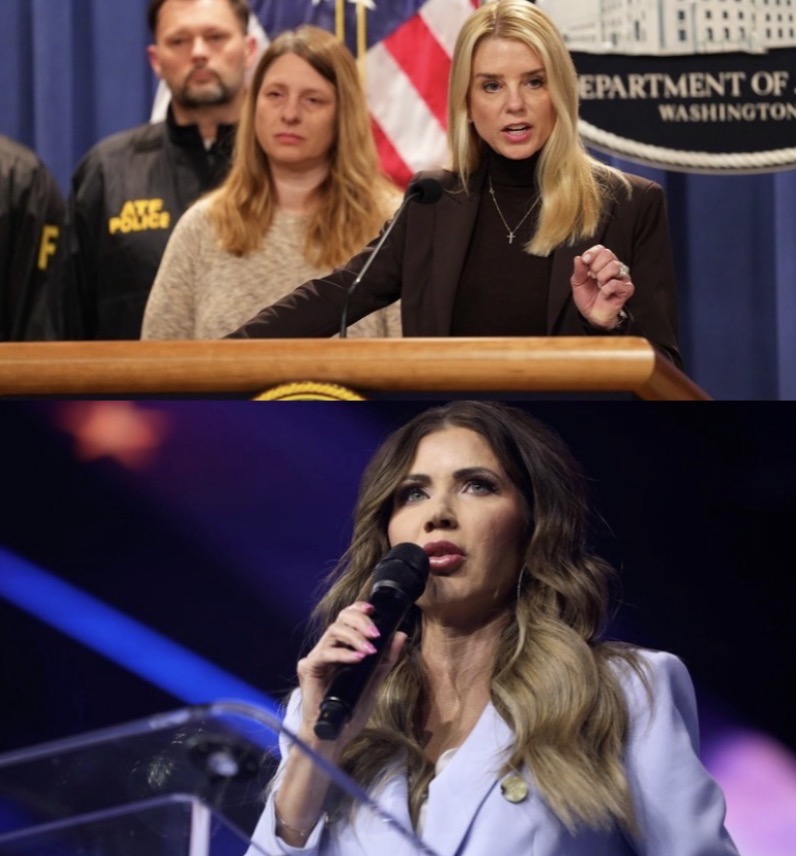
Former Attorney General Pam Bondi and Homeland Security Secretary Kristi Noem are the latest in a long list of fired personnel in President Donald Trump’s administration. This is part of a broader pattern of high turnover and restructuring in Trump’s second term, stirring distrust and confusion from Americans on who to look to for clarity in times of uncertainty.
According to analysis by TIME, the administration saw multiple high-level departures in its early months, including Cabinet-level shakeups and the replacement of senior agency leadership in regulatory agencies, the Department of Homeland Security (DHS) and the Department of Justice (DOJ) in particular.
Reporting from Associated Press and other outlets documented the removal of multiple federal prosecutors tied to politically sensitive cases, including staff involved in investigations related to the Jan. 6 Capitol attack and Trump-related legal proceedings.
These firings were described by DOJ leadership as part of an effort to address perceived “selective prosecution” and internal bias concerns, while critics argued they reflected political retaliation against career attorneys.
This follows earlier reporting that DOJ leadership, including Bondi during her tenure, oversaw internal reviews and personnel changes targeting attorneys involved in Trump-related prosecutions — moves that further contributed to concerns about politicization of traditionally independent legal offices.
In April 2026, the acting director of U.S. Immigration and Customs Enforcement (ICE), Todd Lyons, resigned after a year overseeing expanded deportation operations and increased enforcement capacity.
His departure came during a period of intensified immigration enforcement, including expanded detention operations and high-profile raids in major cities. While officially framed as a voluntary resignation, the timing followed internal disputes and broader leadership changes within the DHS during Noem’s tenure.
At the Centers for Disease Control and Prevention (CDC), reporting from The Guardian in April described widespread leadership vacancies, with roughly 80 percent of senior positions unfilled and thousands of staff departures or dismissals contributing to operational disruption.
Although not all of these departures are classified as firings, the cumulative effect has resulted in agencies operating with acting leadership, delayed policy implementation and reduced institutional continuity.
Across departments, reporting suggests a consistent theme — personnel decisions are increasingly tied not only to performance but also to political alignment and policy loyalty.
Sources, including CNN, have described a “recalibration” within the Cabinet following the removals of Bondi and Noem, with remaining officials reportedly uncertain about job security amid heightened expectations from the White House.
This environment has contributed to what some analysts describe as a “high-accountability, high-volatility” leadership model — where officials are expected to rapidly execute presidential priorities but face swift removal if they fall out of alignment or become politically costly.
Taken together, these firings and resignations point to a broader structural dynamic in the administration: a preference for rapid personnel turnover as a tool of governance.
Supporters often interpret this as decisiveness — an effort to remove underperforming officials and ensure alignment with the president’s agenda.
“The president has a right to have people who actually agree with his agenda and are going to help him implement it,” said Vice President JD Vance. “If you have career bureaucrats who are actively trying to undermine the president, they should be fired and replaced with people who will actually do their jobs.”
Critics, however, argue that the frequency and visibility of these changes risk undermining institutional stability and weakening public confidence in the neutrality of federal agencies.
Politicians such as Sen. Alex Padilla emphasize that public trust in government is shaped less by policy alone and more by perceptions of fairness, stability and independence of institutions. When leadership changes appear driven by political loyalty or internal disagreement rather than standardized performance metrics, it can blur those perceptions.
“Pam Bondi’s disastrous tenure as Attorney General has come to an end, but the consequences of her weaponization of the Justice Department will reverberate for years to come,” said Padilla in a statement following Bondi’s firing.
The firings of Bondi and Noem sit within a larger pattern of personnel volatility across federal agencies — from DOJ prosecutors to immigration enforcement leadership and public health institutions.
While each individual case has its own stated rationale, the cumulative effect is a governing environment defined by rapid turnover and high political sensitivity.
The Howard University School of Law Leadership Conference on Civil and Human Rights issued a statement regarding the constitutional and ethical responsibilities of those in the legal system.

“Our federal government and its leaders should be in the business of recognizing and protecting rights and freedoms rather than attacking civil rights with the full force and resources of federal agencies.”
Copy edited by Daryl R. Thomas Jr.