

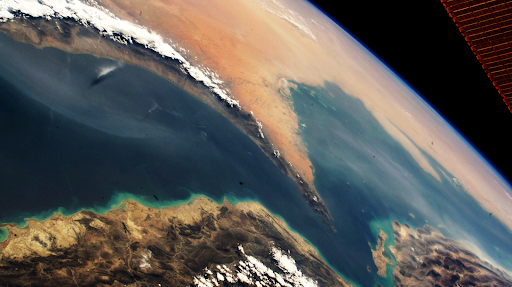
Iran’s effective closure of the Strait of Hormuz following joint U.S.-Israeli strikes have triggered the largest disruption to global energy supplies since the 1973 oil embargo. This move sent Brent crude, crude oil from the North Sea used as a global benchmark for oil prices, above $100 per barrel for the first time in four years and stranded more than 150 tankers outside the waterway.
Roughly 20 percent of the world’s oil and liquefied natural gas (LNG) transits the strait, a narrow passage between Iran and Oman. Since the Islamic Revolutionary Guard Corps declared the waterway closed on Mar. 2, tanker traffic has plunged by more than 90 percent, according to ship-tracking data. Gulf oil exports have fallen by roughly 60 percent, and attacks on vessels have continued, with at least 21 confirmed strikes on merchant ships as of Mar. 12.
Anna Mikulska, Ph.D., Senior Vice President at CGCN Group and a nonresident fellow at Rice University’s Baker Institute for Public Policy, said refineries dependent on Gulf crude face imminent pressure.
“At some point refinery runs will need to be reduced. In fact, in Asia some refineries have already been doing so, to conserve the available oil,” Mikulska said. “The price of available oil will decide who can afford it: not only which country but which industries within countries may need to conserve energy and decrease production.”
California refineries have historically imported a significant portion of their crude oil from Iraq (and other Middle Eastern sources), which transits the Strait of Hormuz. These facilities are configured to process heavier, higher-sulfur crude grades typical of those imports as indicated by Marketplace.
In contrast, heavier crude from Canada faces logistical constraints for West Coast delivery (limited pipeline access via routes like Trans Mountain) and requires different processing infrastructure that many California refineries are not fully equipped to handle efficiently or at scale in the short term.
Asian economies rely more heavily on crude oil and petroleum products from the Persian Gulf region, with a large share of their imports passing through the Strait of Hormuz.
In 2024, an estimated 84 percent of crude oil and condensate shipments through the strait were destined for Asian markets, according to the U.S. Energy Information Administration. Japan imports 93 percent of its oil through the strait, and South Korea channels roughly 68 percent of its crude imports through the passage.
India, which sources roughly 53 percent of its oil imports and between 40 percent and 47 percent of its LNG imports from the Middle East, faces direct exposure to the blockade. Qatar alone accounts for a significant share of India’s LNG supply, and roughly 50 percent to 65 percent of total LNG transits the Strait of Hormuz under normal conditions.
Iran granted rare exceptions for select Indian-flagged vessels amid the closure. Two LPG carriers, Shivalik and Nanda Devi, chartered by Indian Oil Corp and operated by Shipping Corporation of India, transited the strait around Mar. 13 and Mar. 14 after diplomatic engagements between New Delhi and Tehran.
Iran’s ambassador to India Mohammad Fathali confirmed the allowances as exceptions. Indian shipping ministry officials said the government was working to secure passage for 22 additional stranded vessels, including six LPG carriers, one LNG carrier and four crude oil tankers, as of mid-March.
Saudi Arabia and the United Arab Emirates have attempted to reroute oil through pipelines that bypass the strait. Saudi Aramco’s East-West Pipeline can move crude to the Red Sea port of Yanbu, and the UAE has diverted some exports to the port of Fujairah on the Gulf of Oman.
Mikulska said the diversions are not large enough to make a material difference.
“The East-West Pipeline in Saudi Arabia is capped at 5.5 million barrels a day and has been operating at maximum throughput anyways,” she said. “And Yanbu port where it leads has also been the target of attacks which even stopped loading activity there for some time. More damaging attacks on Fujairah have limited any cargo coming from there.”
The International Energy Agency on Mar. 11 announced a coordinated release of 400 million barrels from member nations’ emergency reserves, the largest such deployment in the agency’s 52-year history. The United States committed to releasing 172 million barrels from its Strategic Petroleum Reserve over 120 days, the Department of Energy said.
The SPR’s maximum drawdown capacity is 4.4 million barrels per day, and oil requires about 13 days to reach U.S. markets after a presidential release order, according to the U.S. Energy Information Administration. Macquarie analysts estimated that the 400 million barrels amount to roughly 16 days of normal Gulf transit volume.
Mikulska said the reserves serve as a short-term buffer rather than a solution.
“Releases of SPR are usually shown in the literature as moderating swings of prices rather than effectively capping those prices,” she said. “The current release is substantial but with short-term impact as analysts believe the oil released would only provide some relief until the end of March.”
Refining margins have already risen sharply. According to Mikulska, the increase would eventually be checked by demand destruction, as industries and consumers reduce consumption in response to higher prices.
The Federal Reserve Bank of Dallas estimated on Mar. 20 that a one-quarter closure of the strait would raise average West Texas Intermediate prices to $98 per barrel and lower global GDP growth by an annualized 2.9 percentage points in the second quarter of 2026. A disruption lasting three quarters could reduce fourth-quarter global GDP growth by 1.3 percentage points.
The CSIS Energy Security and Climate Change Program noted that prolonged disruptions to shipping and damage to export facilities could cause lasting price increases beyond the immediate crisis. QatarEnergy has already announced a delay to its North Field East LNG expansion project, originally expected to start by mid-2026.

The LNG market faces particular strain. Qatar, one of the world’s largest LNG exporters, halted production after Iranian drone attacks on its Ras Laffan export terminal. Rapidan Energy warned that LNG exports from the region are unlikely to resume until there is full certainty that the strait is safe, a process that could take weeks after hostilities end.
Mikulska said the United States is positioned to benefit from the shift in perceptions of supply security, particularly for natural gas.
“For natural gas, especially liquefied natural gas in the U.S., there will be some upside,” she said. “Significant supply is off the market in at least medium-term and security of supply from the U.S. will be considered as much stronger than its main competitor’s, Qatar, going forward.”
Mikulska noted that the benefit would not necessarily help current U.S. LNG suppliers, since U.S. contracts are priced based on the Henry Hub benchmark, which has not moved significantly. But the crisis could accelerate proposed LNG projects to final investment decisions, expanding U.S. export capacity at the expense of suppliers now seen as riskier.
Harrison Prétat, deputy director of the Asia Maritime Transparency Initiative at CSIS, wrote that ship-tracking data shows Chinese tankers and container ships have largely ceased transits since the conflict began, despite Beijing’s public calls to keep the strait open. On Mar. 5, Beijing directed its oil refiners to halt fuel exports, a sign of growing concern over supply constraints.
As of Mar. 21, Brent crude was trading near $107 per barrel, more than 50 percent above its pre-war level. Brent surged to a peak of $126 per barrel on Mar. 8 before moderating following the IEA reserve announcement and intermittent signals of diplomatic engagement.
Mikulska said the crisis exposes fundamental vulnerabilities in the global energy system that are difficult to plan for.
“The world’s energy markets are highly interconnected and it is hard to prepare for all possibilities,” she said, adding that diversity of supply is important and increasing redundancy is crucial. Rather than relying on a single solution, she said countries and regions should adopt an “all of the above” approach tailored to their specific needs, with significant redundancy helping strengthen resilience.
Copy edited by Kennedi Bryant