

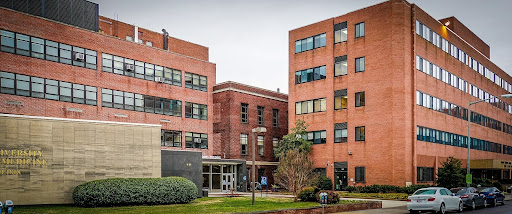
The Howard University College of Medicine has received probationary accreditation for the first time in the school’s history.
The designation was issued by the Liaison Committee on Medical Education (LCME). The LCME granted the college full accreditation but placed it on probationary status due to the need for additional documentation demonstrating measurable outcomes for certain compliance standards. The status will remain in place until the college’s next review in February 2028.
President Wayne A. I. Frederick, M.D., addressed the College of Medicine’s recent accreditation at the Charter Day convocation on Friday, March 6.
“The College will receive close monitoring to address compliance on specific standards,” Frederick said.
Frederick emphasized that while the college remains fully accredited, there is work to be done. He then apologized to the crowd, taking responsibility for the circumstances.
“I want to assure you that I take full responsibility and assure you that we will be back here in 2028 with a fully accredited school without any probation,” he said.
On Feb. 27, the university put out a statement by Andrea A. Hayes-Dixon, the dean of the College of Medicine.
In the statement, she clarified that the college received notification from the LCME stating that it “has been granted full accreditation and will remain fully accredited.”
Hayes-Dixon further explained that the probationary status means the college will be closely monitored until February 2028, which is the next review period.
“I have full faith in the school’s leadership and faculty under Dean Andrea Hayes-Dixon and their steadfast commitment to academic rigor, continuous improvement and institutional integrity,” Frederick said in his speech.
According to Hayes-Dixon, the status reflects the areas where the LCME deemed there needs to be “additional documentation and information regarding measurable outcomes” to show ongoing compliance with their standards.
Hayes-Dixon also wrote that at the 2017 LCME survey, there were two elements deemed “unsatisfactory”.
She assured that initiative was taken immediately, including tasks such as hiring new staff and faculty, enhancing curriculum and student support systems and overall upgrading facilities.
Hayes-Dixon also explained that the status “does not change our accreditation, diminish our authority to educate and graduate physicians, nor does it alter the validity of our students’ degrees.”
Copy edited by Daryl R. Thomas Jr.