

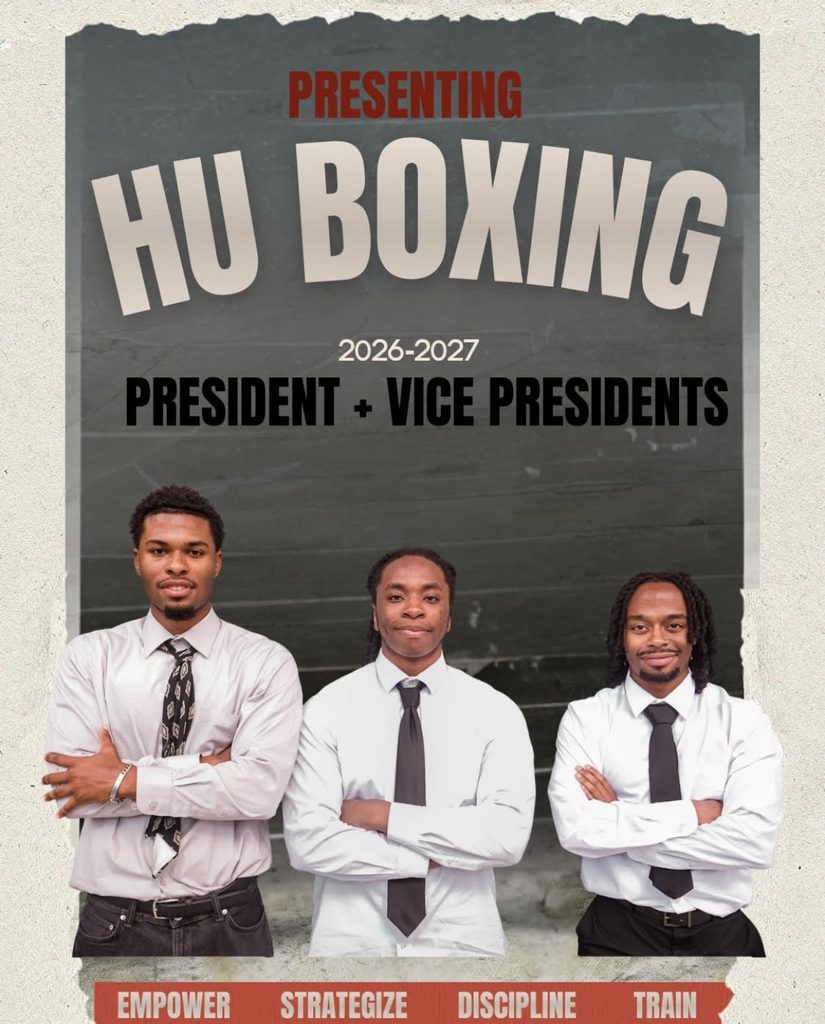
It started as a group chat of three guys with a fighting background with a simple question: If you and your friends can box, why not start a club? And that’s exactly what they did.
The Howard Boxing Club is an unofficial organization at Howard University whose mission is to empower the community and build a legacy on campus.
Brian Jenkins, who is on the club’s executive board marketing team, said that the prevalence of violence across Washington, D.C., Maryland and Virginia was one of the inspirations behind the creation of the club.
“This is how we are choosing to empower our community,” said Jenkins, a junior international business major from Oakland, California. “…This is us being able to provide a healthy escape for people to have energy and impress into healthy habits.”
The Howard Boxing Club began when Timilton Ingram, the club’s External Vice President, gathered now-President Jarell Mitchell and internal vice-president Xavier Anyaoha into a group text in early July. Ingram said the idea was originally his and he got his friends on board fairly quickly.
“We weren’t official; we were just like a little group chat,” said Anayaoha, a junior mechanical engineering major from Oakland, California. “Then [Ingram] asked to get this club situated, so I went ahead and made a constitution for our organization.”
So far the club’s workouts have stayed consistent with the flow. They start off each training session outside the Banneker Recreation Center or in front of John H. Burr Gymnasium with stretching and a warm-up. After that, they work on cardio for 10 minutes.
Next, they get into the actual boxing — footwork, pad work, partner drills and basic fundamentals. Following this, they do some strength training and end with more cardio and a final group picture.
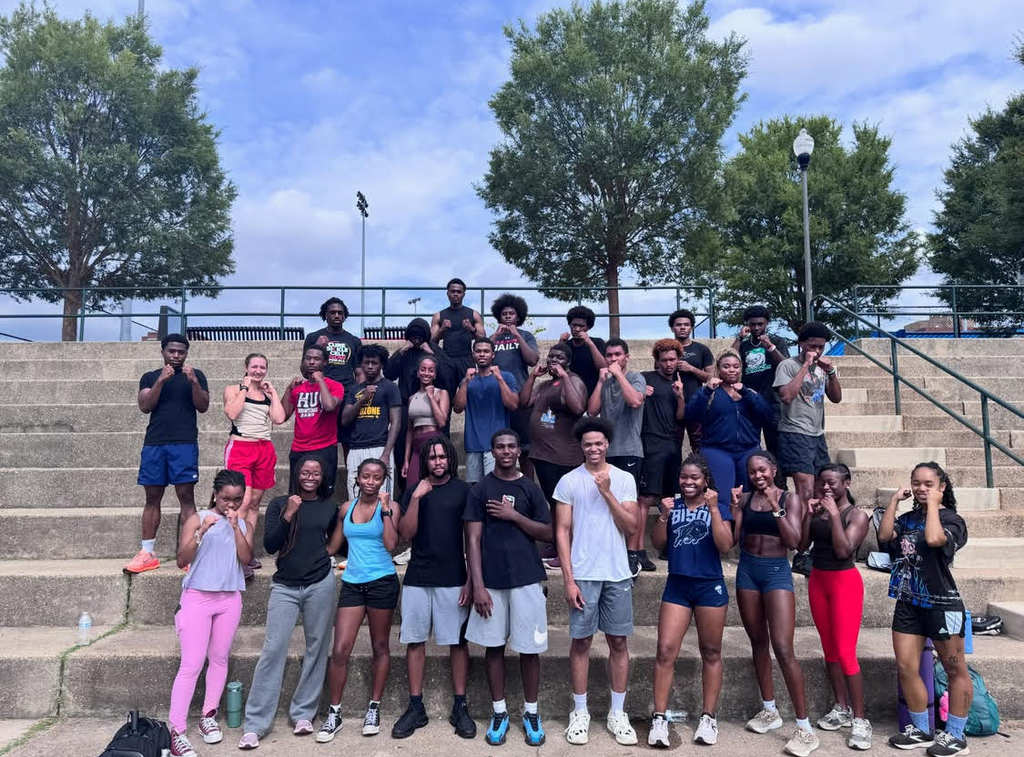
According to Anayaoha, there are big plans for the future of this club and the possibility of even expanding into something more. They are looking to start an official team and send potential team members to actual trainers.
Currently, the club does not spar; they prioritize fundamentals and cardio. Anayaoha said they cannot have full-on matches or tournaments because they would have to get licenses and have official collegiate affiliation, which is “a whole process in its own.”
“We’re working on training the team for [competition], and what that looks like is sending the team boxers to an actual gym versus the club,” Anayaoha said.
There is still a major difference between the club and the eventual team. Mitchell said that even once they get the team officiated, the club will still exist on its own.
“The club is just fundamentals [and] fitness,” Mitchell, a junior business major from Birmingham, Alabama said. “The team will be the one actually competing. That’s two separate entities.”
Though they are still unofficial and establishing a name for themselves, the club is growing in popularity quickly. They held their first event on Aug. 29 and are gaining new members every week. They have already managed to gain over 100 members in their GroupMe and over 300 Instagram followers.
Copy edited by Daryl R. Thomas Jr.