

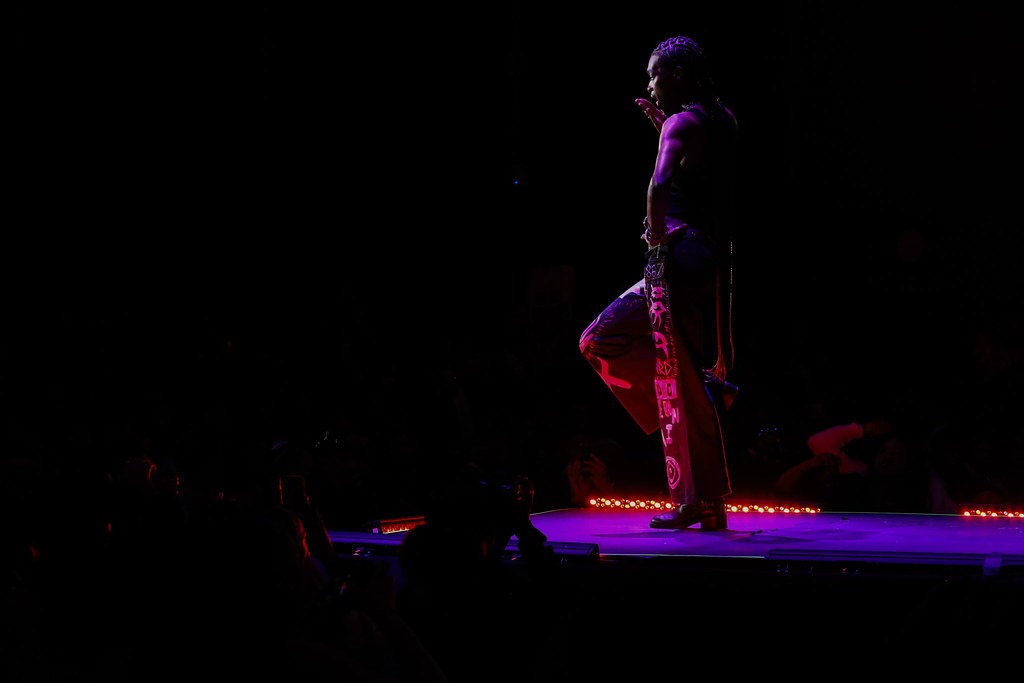
It was no fluke when a single photograph at Howard’s 2017 Homecoming launched then-19-year-old Anok Yai’s generational run. “The Yard is a runway,” said Alexandria Fuller, executive vice president of HU ELITE Models and a senior biology major from Atlanta. Howard modeling is an industry-level creative laboratory.
Every year, hundreds of model hopefuls line the university’s halls waiting to audition for one of its four modeling organizations — HU ELITE Models, Models of the Mecca, The GENESIS Models or HU Models Inc.
The selection process is rigorous and competitive across the board, but just two things are demanded of applicants: the dress code (traditionally all-black), and enough audacity to imagine themselves on the catwalk. Experience is not.
Kingsley Appiah, a sophomore strategic, legal and management communications major from New York City, said he was quickly welcomed to Models Inc. as a freshman despite having no prior experience.
“The only thing you really need is the confidence to believe that you’re capable of making it,” Appiah said.
Jamone Small, a junior acting major from New York City, said the same about The GENESIS Models, where he serves as head of creatives.
“It’s ‘come as you are, and we’ll help you grow,’” Small said.
While confidence appears to be the key to being selected to join, advancing in modeling requires diligence, humility and hard work, said Ayana Townsend, a member of HU Models Inc. and a senior biology major from Fayetteville, North Carolina.
“You have to be receptive, open to critiques and willing to put in time outside of practice,” she said.
Before joining HU Models Inc., Townsend had no modeling experience and “just always loved wearing heels.” Since then, she has walked the runway for HU Models Inc.’s 2026 LEGACY fashion show and modeled for the sustainable fashion brand Delikado.
Other students share similar stories to Townsend’s of entering their modeling organization and coming out transformed in confidence, style and experience.
Angel Murillo Lorenzo, a junior marketing major from Prince George’s County, Maryland, considers fashion “the core of his identity.”
He said he came to Howard with a modeling background, but realized he had barely tapped his stylistic potential before joining HU Models Inc.
“I really thought I was doing it before I got to Howard,” Murillo Lorenzo joked, “but my view of fashion was so shallow compared to what it is now.”
He views Howard’s fashion scene as a cultural incubator with the power to mold the zeitgeist.
“People say they’re worried about the next generation and what the future holds,” Murillo Lorenzo said. “Fashion is in such safe hands because of people at Howard.”
But no one is just a fashionista. Small emphasized that The GENESIS Models strives to develop its members holistically, beyond technique alone.
They want their members to be self-actualized, empowered, multi-dimensional individuals before they are models, he said.
“We’re not building models,” Small said. “We’re building people who model, who style, who do makeup, who do hair.”
Howard’s modeling organizations are also sites of resistance to Eurocentrism and erasure. Small said that The GENESIS Models is a countercultural space that celebrates Afrocentric beauty, in contrast to the oft-exclusionary high fashion archetype.

Fuller said that ELITE’s members represent a plethora of ethnic backgrounds, physiques, heights and hair textures.
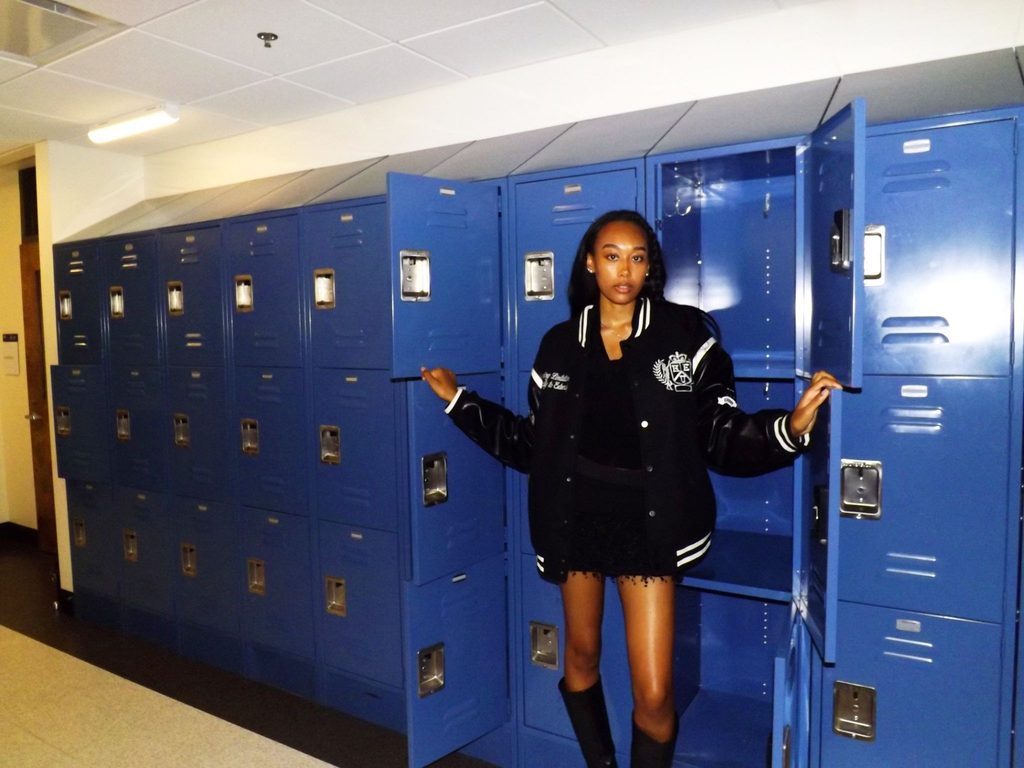
At Howard, an environment where they feel their identities affirmed, students feel liberated to dress to stand out rather than shrink.
“I’m definitely given the space to be as big and loud as possible,” Small said. “That’s really the essence of urban modeling.”
Murillo Lorenzo agreed that respectability politics limit Black creativity, but also argued that Howard students should be their whole selves in every space.
“We need to be authentically ourselves everywhere we go,” he said. “Dimming your light is so boring. My goal is always to be completely undeniable.”
With four modeling organizations occupying Howard’s campus, people often attribute a culture of ruthless competition to the school’s fashion scene. But some of those on the inside say this is not their reality.
“I have friends from every fashion org,” Murillo Lorenzo said. “There’s a misconception that we’re cutthroat to each other. Art is meant to unite people, not divide them.”
Fuller agreed that she has not observed any competition internally or between the organizations.
She said that events including the annual Springfest and Homecoming fashion shows are so vibrant because they allow all of the groups to come together.
Jaleen Kairys, a member of Models of the Mecca and junior honors TV and film major from Miami, highlighted that Howard is big enough for every organization to thrive.
“There are clear differences in each org’s aesthetic, how they present themselves, the way they walk,” Kairys said. “They’re all uniquely beautiful, and I think everyone can find their place in one of them.”
Copy edited by Jori Johnson