

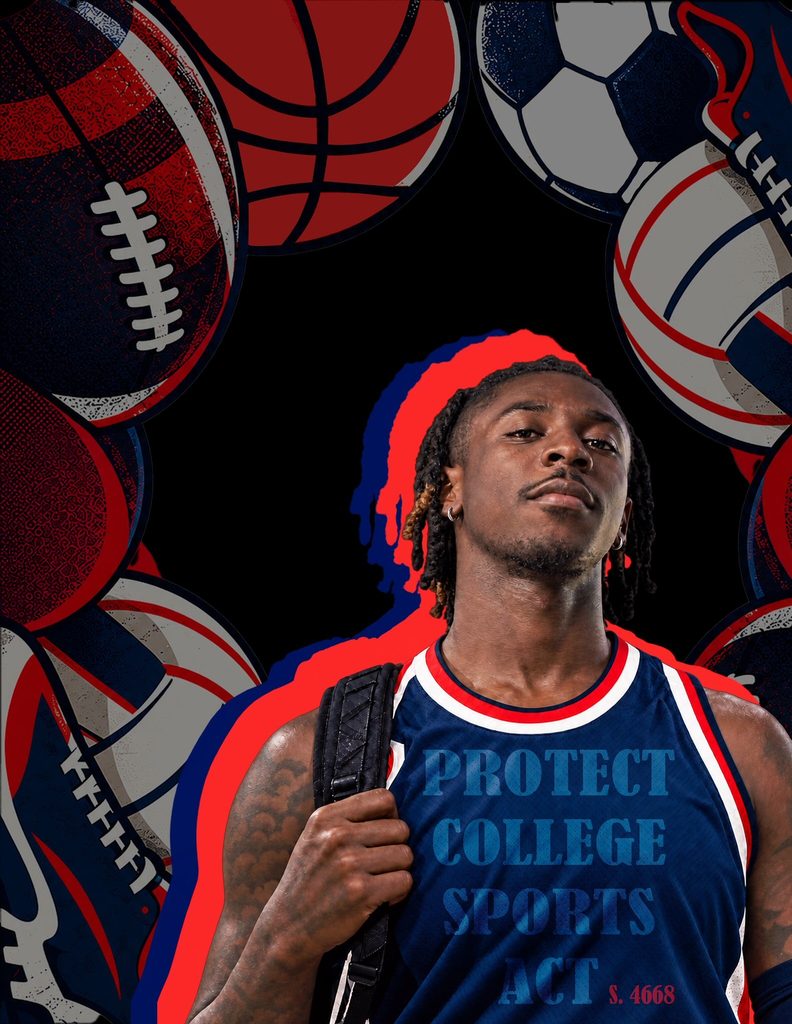
The Protect College Sports Act (PCSA) is set to move to a final Senate vote Sept. 28, and is expected to pass with majority approval due to lopsided decisions in previous rounds.
The PCSA has garnered support from numerous student-athletes, coaches and lawmakers including President Donald Trump, Arkansas head men’s basketball coach John Calipari, Colorado head football coach Deion Sanders and even Howard University defensive back Kedrick Green.
“For HBCU students like myself at Howard University and conferences like the [Mid-Eastern Athletic Conference], stability matters,” Green said in a press conference. “We need a system that gives us an opportunity to compete and grow, not where the rules constantly change depending on where you play. So, I hope Congress [passes] this act.”
The PSCA is a bipartisan antitrust exemption bill that would allow the NCAA to establish new rules regarding player eligibility, the transfer portal and name, image and likeness (NIL). Authored by U.S. Senator Ted Cruz and U.S. Senator Maria Cantwell, they said they see the bill as helpful for the athletes and institutions, as there is not enough regulation in the NCAA.
NCAA player rules have changed tremendously throughout the years. If passed by the House of Representatives, and signed into law by Trump, these new policies will be set in stone.
“What we have right now is chaos,” Cruz said on College GameDay. “If Congress does nothing…we will see hundreds of thousands of scholarship slots and roster slots go away for young kids. Many of them, young African-American and Hispanic.”
As the bill currently states, it would double the amount of money schools could use to pay their players, from approximately $21 million to $48 million. However, there are no restrictions to coaching salaries, facility upgrades and other places where money would otherwise be spent.
The top sports that generate the most revenue for these institutions are dominated by Black student-athletes. Opponents of the bill also argue that it goes beyond providing stability for college sports and raises broader concerns about race, equality and the desire to limit the success of young Black people.
Connecticut Democratic Senator Chris Murphy held a call on Sep. 14 allowing athletes and others to voice their opposition to the bill, including Derrick Johnson, president and CEO of the NAACP.
“The so-called Protect College Sports Act does little to actually protect the student-athletes who make this multi-billion-dollar industry possible,” Johnson said. “We cannot continue to ask Black student-athletes to generate billions in revenue on the field and the court while they shoulder all the risk and receive none of the guaranteed security they deserve.”
Third-party NIL deals will also be overseen by the College Sports Commission for approval if the deal exceeds $600. It also eliminates revenue-sharing cap circumvention being used for NIL deals.
The bill upholds the five-year eligibility model proposed by the NCAA, which gives athletes five-years of eligibility regardless of injuries and transfers. Additionally, athletes would be allowed one transfer without losing eligibility, replacing the current system that permits unlimited transfers while maintaining eligibility.
Abigail Jefferies, a Long Island University track and field athlete, also voiced her concerns during Murphy’s call. She said losing eligibility would also mean losing her scholarship and potentially jeopardizing their ability to finish college and pursue medical school.
“I am part of an antitrust lawsuit against the NCAA to address this profoundly unfair treatment,” Jeffries said. The PCSA would shield the NCAA from being held accountable under the antitrust laws. I urge the Senate to support athletes and reject the PCSA.”
On the other hand, Craig Robison, executive director of the National Association of Basketball Coaches, supports the eligibility aspect because he believes it protects the students.
“We are ecstatic that the players are getting paid; that’s not the issue,” Robinson said. “The issue is [some players are] going to a separate school every year and playing against student-athletes who are 27, 28 years old.”
While some believe it will tame the current landscape of collegiate sports, others see it as a way to suppress college athletes from earning money and going where they see best fit for them.
Some argue that these issues should be in the hands of the athletes through collective bargaining agreements, not fully in the hands of the U.S. government.
Oluchi Okananwa, a University of Maryland women’s basketball player and the United College Athletes Association interim president, said the athletes who make college sports possible deserve a seat at the table.
“If college sports wants a professional structure when it comes to controlling athlete compensation and regulating our careers, then athletes deserve a professional structure when it comes to our rights,” Okananwa said during Murphy’s call. “A union, collective bargaining and a legally enforceable agreement. There is a real difference between being heard and having power.”
As the bill moves through the process and contrasting opinions continue to arise, questions remain about its potential impact on college athletes and universities.

Copy edited by Daryl R. Thomas Jr.