

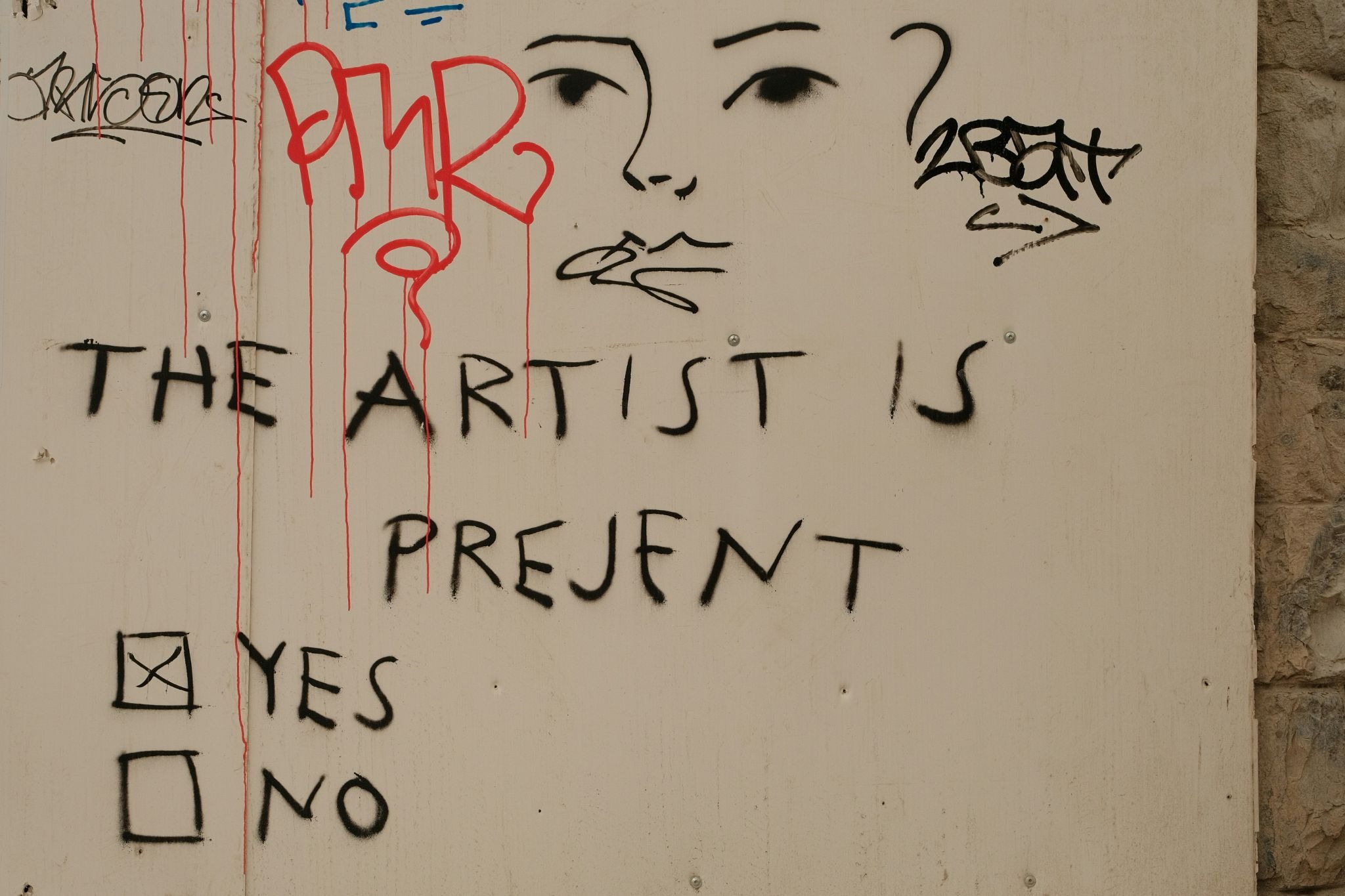
It’s common for musicians to disappear for months or even years to create a new album. We accept it without a second thought because we understand that they’re pouring their time, energy and soul into their art. Creation requires space, care and patience, so we give musicians the freedom to step away and work.
Now apply that same logic to visual artists.
Social media has made constant creation and visibility a way to measure how legitimate visual artists are, but the same can’t be said for musicians.
This July, Steve Lacy released his latest album, “Oh Yeah?” He released his previous album, “Gemini Rights,” in July 2022. In the four years between the two projects, few people questioned whether Lacy was still a musician simply because he wasn’t releasing music. His identity as a musician made his absence feel intentional; naturally, people assumed he had stepped away to work on his next project.
Visual artists deserve the same consideration, as their work can provoke deeper reflection and interpretation. Musicians disappearing signals that something meaningful and thoughtful is coming. For visual artists, audiences see it as they’ve stopped having a passion for creating. The validity of a visual artist’s passion should not be measured by their visibility on social media.
Visual artists who post one-off, filler-type posts, do it more often than not out of fear that if they don’t post at all, then their engagement will drop on social media, and it’s a valid point. Artists need social media to survive professionally, but social media also pressures them to create constantly. We as a society have mistaken visibility for productivity and productivity for creativity.
Anyone who creates art, whether through fashion, painting, drawing, writing, music, photography, dance or countless other forms, understands how much time, energy and attention to detail goes into the creative process. Those who consume art can only speculate about the work that happens behind the scenes and I think that disconnect is part of why visual artists are often placed in this unfair position.
Kellen Thompson, a sophomore photography major from Silver Spring, Maryland, said others will question whether he still enjoys photography when he posts his work less frequently.
“A lot of people think they can do this and it’s not that hard,” Thompson said. “[They] just don’t really respect it,” Thompson said.
But artists aren’t just artists; they’re people with lives beyond their work. They deserve the freedom to step away every once in a while to simply live, experience the world and exist without feeling pressured to constantly create.
Art provokes thought and emotion, encouraging audiences to see the world differently. Visual artists often leave meanings open to interpretation, inviting personal engagement. Unlike music with lyrical narratives, visual art directly confronts viewers. Collections can address broad subjects like politics and human rights, often from previously unexplored perspectives.
One of art’s greatest historical accomplishments is its ability to examine the human condition. Humans are naturally reactive; when we encounter something thought-provoking, provocative or simply different, we want to talk about it. That is part of what makes visual art so powerful: it does not always tell us what to think. Sometimes, it simply gives us something to think about.
Donovan Hayes, a sophomore television and film major from Miami, who works as a videographer for Models of the Mecca, sees a larger declining trend for art that asks him and other artists to think more deeply in their craft.
“The market for intellectual projects is becoming more and more scarce because people tend to just want what’s quick and fun,” Hayes said.
Many people no longer take the time to analyze meaningful art, so visual artists have started sharing one-off posts to remain visible and keep their audiences engaged.
The future of visual art should not be dictated by the demands of social media. If we want artists to continue creating work that challenges us, moves us and gives us new ways to understand the world, we have to give them the time and space to create it.
As social media continues to shape how we discover and consume art, we have to be careful not to let constant visibility become the standard for artistic relevance. Artists are people first. If we give visual artists the same freedom we already extend to musicians, instead of pigeonholing them into some predetermined schedule, we may see an increase in complex art, deeper ideas explored within the art and artwork as a whole that stays with us long after we scroll past it.
Copy edited by Daryl R. Thomas Jr.