

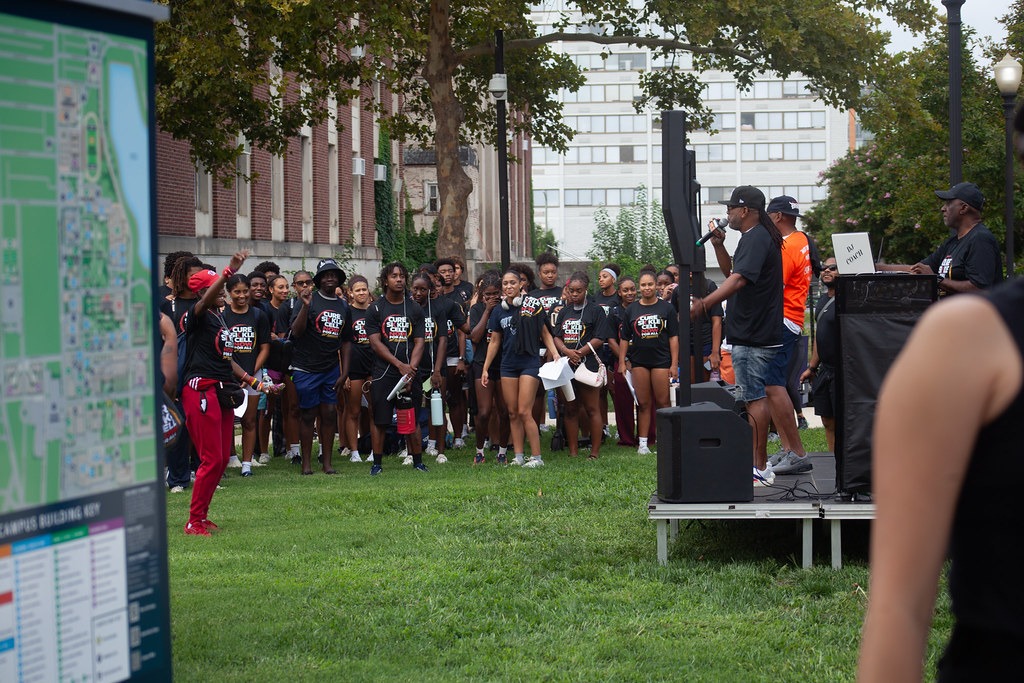
Sickle Cell disease, an inherited blood disorder affecting about 100,000 Americans, has an advocacy community at Howard University. To raise awareness, the Howard University Center for Sickle Cell disease offers free screenings to Howard students and recently hosted their annual sickle cell 5k walk.
The Center for Sickle Cell Disease at Howard University was founded in 1971 by Dr. Ronald Scott. Being the first and the oldest sickle cell center in the country, the center has been at the forefront of advocacy and research for sickle cell disease for over 50 years.
Sickle Cell was the first genetic disease disorder discovered in 1910 in western medicine. It is a blood disorder that affects red blood cells in the body. It causes a blocked blood flow and leads to strong episodes of pain called “pain crises.” With certain treatments such as blood and bone marrow transplants or gene therapy, sickle cell patients can prevent that pain and live long lives.
Scott and Colbert King, a Howard alumnus from the class of 1961, were major advocates for The National Sickle Cell Anemia Control Act of 1972, an act that prompted some of the first sickle cell education programs. It also promoted research, treatments and counseling for sickle cell. This in turn placed federal legislation on sickle cell disease 1972.
Temitope Creppy, a 2024 Howard alumnus, and now a project coordinator at the center said that the screening program has been implemented since the inception.
“Dr. Scott wanted it to be one of the pillars of the center to do outreach, education and awareness,” Creppy said.
He said one of the main reasons why sickle cell disease is important is because it is hereditary. If both parents have the sickle cell trait, there is a 50% chance their child will have the trait and a 25% chance the child will have the sickle cell disease.
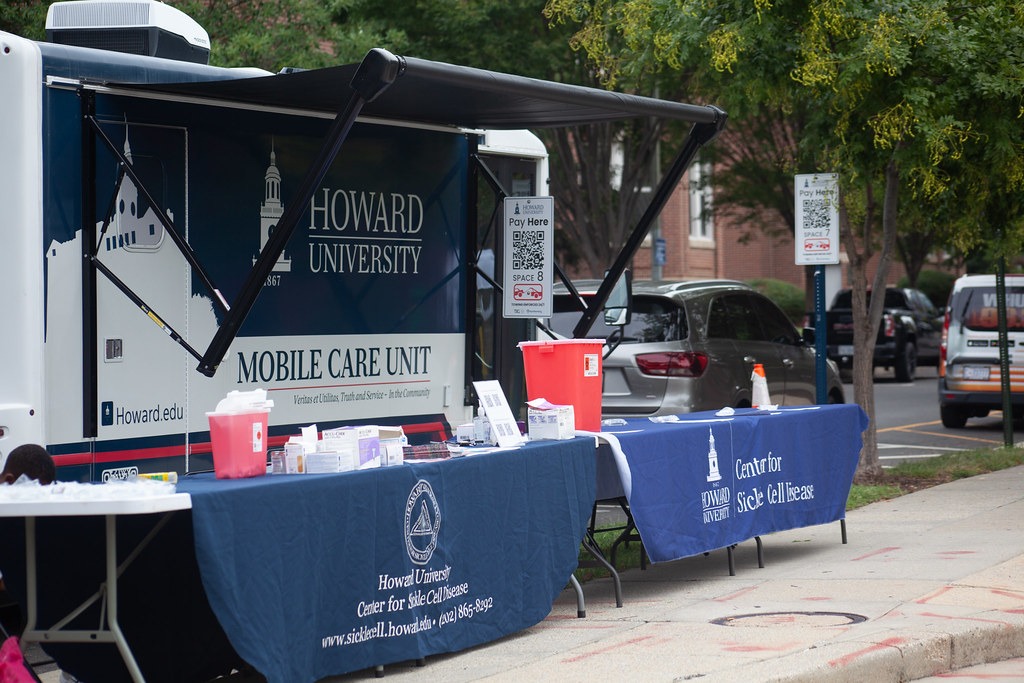
Benjamin Bucholz,the program manager at the center, said that students can visit anytime to get a free screening for the sickle cell trait. Screening for the disease is a two to three minute process where a small sample of blood is taken and sent to the hospital lab. Participants can expect results mailed to them within two to three weeks.
“The purpose of the screening program is to give informed family planning information and then genetic counseling for those who test positive,” said Bucholz.
Bucholz said he believes the most prevalent issue with screening positive for the sickle cell trait is a stigma he notices surrounding it.
“It’s kind of more of an indirect stigma that people don’t really want that [diagnosis] put on them or put on their family,” he said.
Dr. James Taylor, the director of the center, said there should be no stigma around the disease.
“This is the most common genetic disease in the country and in the world,” Taylor said.
Since the program restarted following the COVID-19 pandemic, the center was built in the Howard Hospital in April 2025 and has screened over 500 people. Bucholz said that part of the work that the center does is to make sure that people are informed about the disease.
“It’s good to know your trait status, so you have all the information you need when you’re considering taking that next step in life and planning for potentially having kids,” he said.
Barbara Harrison, the assistant director for community outreach and education at the center, said they make it a priority to let people have the choice on whether to get screened.
“It’s really about people making an informed decision on which way they go,” she said.
Harrison said it’s important to be tested by a center like the one at Howard because they are sensitive to the issues that individuals wanting to get screened may face.
Oma Timothy, a sophomore psychology major from Baltimore, is a volunteer at the center, and she said it’s important for Howard students to take advantage of the free screening because it is something common within the African American community.
Timothy got involved with the center because she noticed there was a big lack of resources that inform people of their trait status.
“It’s been a privilege to be able to be one of the people that are able to spread awareness and provide the screening,” she said.

Sydney Johnson, a fourth year med student at Howard from Montgomery County, Maryland, noted the impactful role Howard has had in the field.
“Howard really has been at the forefront of advocacy and innovation and really the patient-facing side of treating patients with sickle cell disease,” said Johnson.
According to recent research from the Center for Disease Control and Prevention, out of the 100,000 individuals with sickle cell disease in this country more than 90% are Black or African American.
“Esspecially when you look at Black and brown communities at Howard, it really is way more common that it is in the general population,” said Johnson.
The center has provided care for up to about 500 patients, and as of 2026 they have about 350 patients they care for now.
On top of this, many individuals aren’t receiving the attention they need; more than 50% of patients don’t see a hematologist or oncologist for specialised care, according to Taylor. Still, he has hope this will change.
“I am confident that we can find the right treatment to keep people out of the hospital,” he said.
Copy edited by Daryl R. Thomas Jr.