

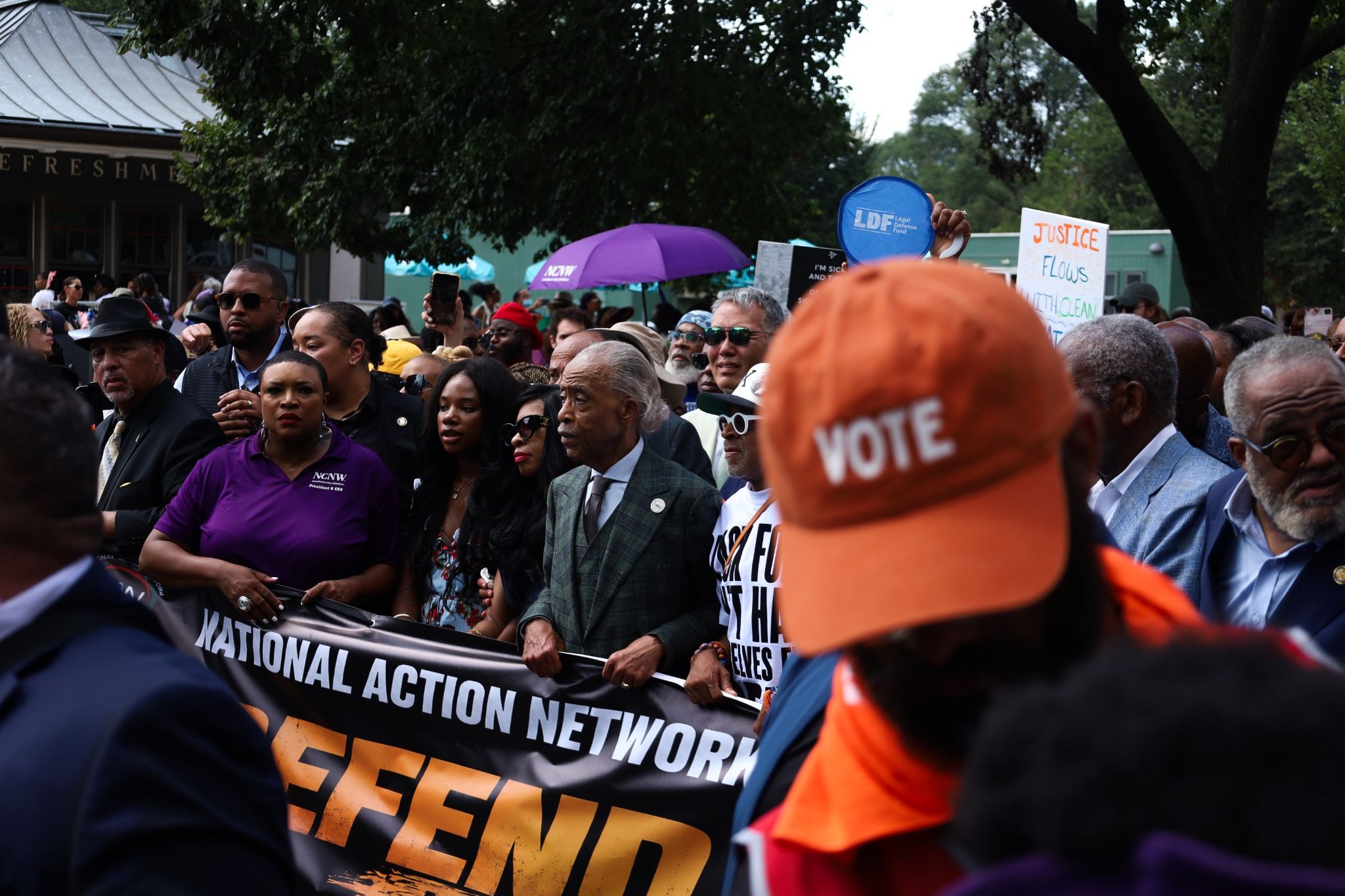
63 years after the historic March on Washington for Jobs and Freedom, thousands returned to the nation’s capital to demand stronger voting rights protections and push back against efforts they said threatened access to the ballot.
On Aug. 28, attendees from across the country gathered at the Lincoln Memorial for the 2026 March on Washington: Defend the Vote. The march was co-convened by the National Action Network and the Drum Major Institute, and co-chaired by Rev. Al Sharpton, Martin Luther King III and Arndrea Waters King, president of the Drum Major Institute. Organizers said the march aimed to defend voting rights, protect equal opportunity and draw attention to economic concerns, including the rising costs of housing, health care and everyday necessities.
Members of Grace Baptist Church traveled from Mount Vernon, New York, to Washington, D.C., to participate in the march. Rev. F. Romall Smalls, international associate pastor for social justice at Grace Baptist Church, said the group came to fight for freedom, justice and voting rights, describing their participation as turning their “prayers into protest.”
“Voting is the first part of being an active citizen,” Smalls said. “You have to show up. You have to make your needs and desires known.”
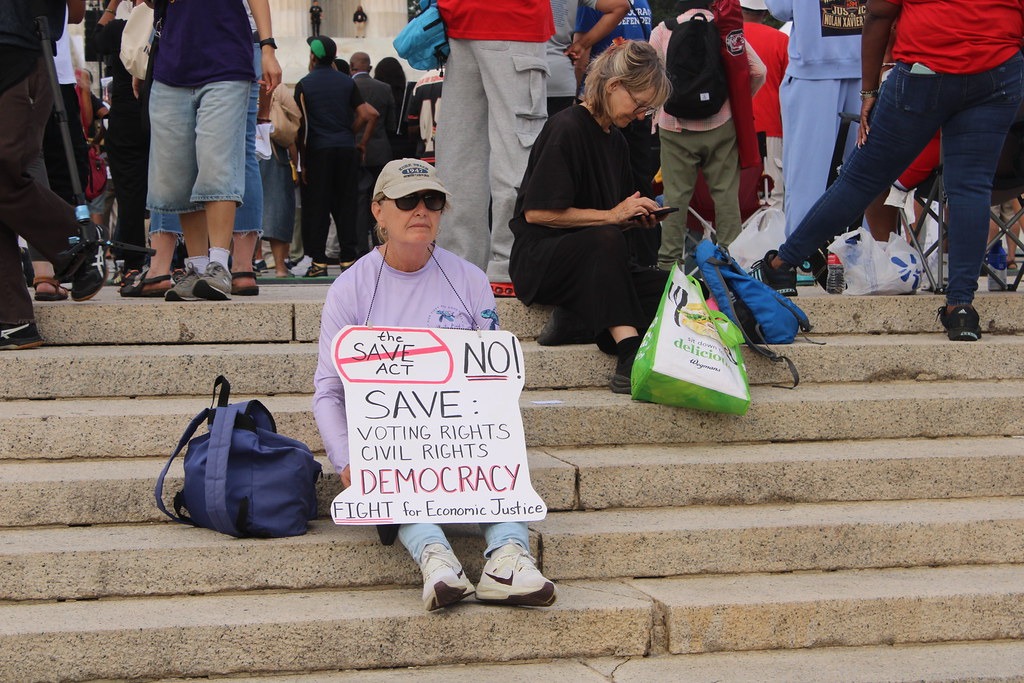
The demonstration drew on the history of the original March on Washington while focusing on current concerns over voting rights. The 1963 march helped build momentum for the Civil Rights Act of 1964. The fight for voting rights continued, with demonstrations in Selma, Alabama, contributing to the passage of the Voting Rights Act of 1965.
More than six decades later, voting rights were again at the center of the demonstration. The march came ahead of 2026 midterm elections as civil rights groups, including the NAACP and Legal Defense Fund, raised concerns about weakened federal voting protections and congressional redistricting.
Those concerns grew after the Supreme Court’s April decision in Louisiana v. Callais, which limited challenges to congressional maps under Section 2 of the Voting Rights Act. The NAACP warned that the ruling would make it harder to challenge maps that disproportionately harm Black voters and other communities of color.
People traveled from across the country to participate, including students, faith groups and members of Divine Nine organizations. The march also drew college students from outside the Washington, D.C. area, many of whom attended with their schools and organizations.
Davina Perry, a third-year political science and African American studies student at Claflin University in Orangeburg, South Carolina, serves as social action chair for the Gamma Chi Chapter of Delta Sigma Theta Sorority, Inc. She said she attended the march to ensure her chapter was represented.
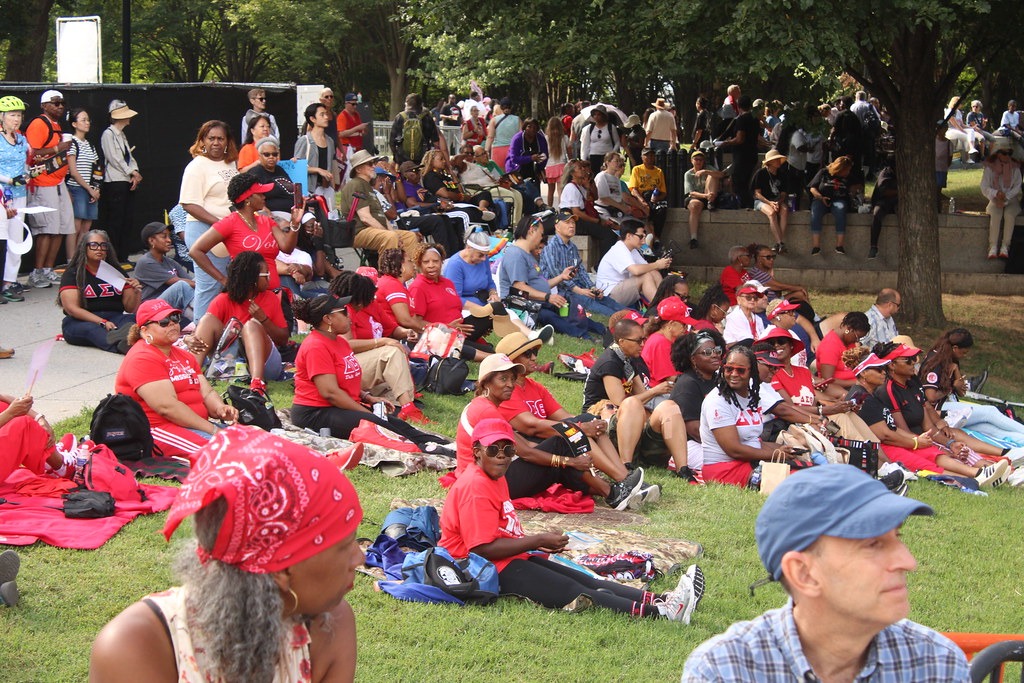
Perry said seeing other young people at the march showed her that Gen Z cares about voting and political participation.
“It really shows our generation, Gen Z, how much we really do care about the vote,” Perry said.
For Perry, defending the vote also means addressing barriers that can make it harder for people to participate in elections. She pointed to a lack of transportation to polling locations and limited access to information about candidates as examples of those barriers.
Other Howard University students were among the young people who attended the march, bringing the event’s message of voting rights and civic engagement back to their own campus community.
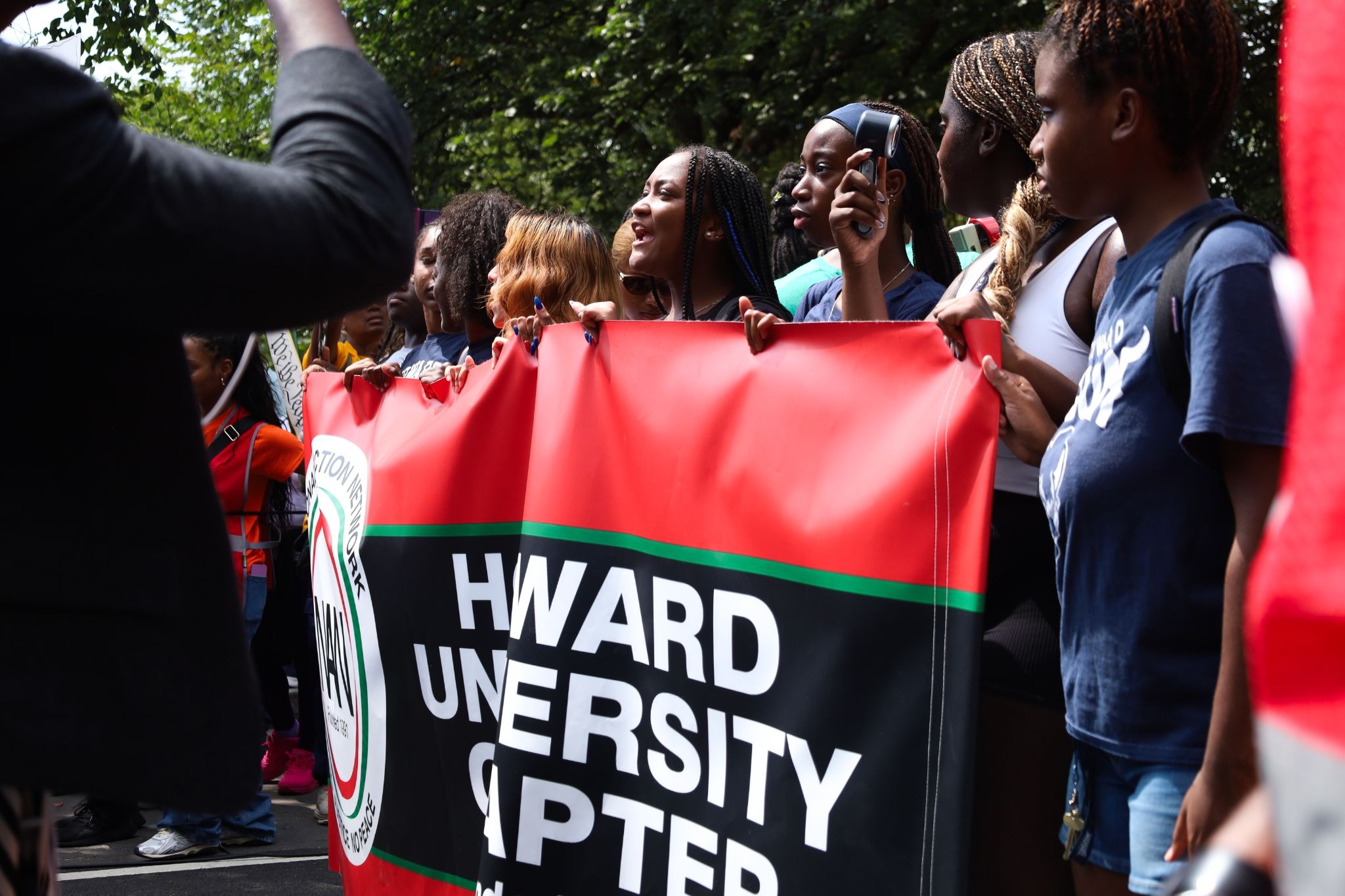
Aaron Simpson, a senior mechanical engineering major from Maryland and member of Phi Beta Sigma Fraternity, Inc.’s Alpha Chapter, said he attended to emphasize the importance of being informed on voting rights and exercising the right to vote.
For Simpson, people should not underestimate the impact their individual participation can have.
“Even the Grand Canyon was carved originally from just a trickle of water,” Simpson said. “No matter how small you believe your voice is, as more and more continues to add onto it, the impact continues to grow.”
For attendees like Perry and Simpson, the march was a reminder that voting rights remain an issue that requires participation across generations. Their presence alongside older activists reflected the organizers’ effort to bring the fight for voting rights to a new generation.
Copy edited by Sydney Middleton