

This year, artists, musicians and talent from all genres have taken the stage while simultaneously erupting chaos in the ticketing world. From BTS and Ariana Grande to Olivia Rodrigo, ticketing for concerts has increasingly gotten more expensive. Most recently, Steve Lacy fans found themselves in another all-out scramble for a spot in the audience.
On Aug. 12, Lacy announced via Instagram the launch of his “Oh Yeah?” Tour, which will take the artist across 27 cities in the United States. With diehard fans gunning for tickets, many were met with long queues, sold-out sections and the possibility of leaving empty-handed.
For Arianna Jahnke, a junior political science and criminology double major from Maplewood, Minnesota, getting a ticket came down to something outside of her control: internet access.
When Lacy’s tickets originally went on sale, Jahnke was overseas without a stable internet connection. She ultimately relied on someone else to purchase a ticket for her during the presale.
“Luckily I knew someone that was planning to buy multiple tickets for them and their friends, so I asked if they could buy one for me and I could pay them back,” Jahnke said. “Needless to say if I didn’t have a connection I wouldn’t have gotten them on pre-sale.”
Jahnke’s experience reflects a larger challenge in the modern concert industry. Getting a ticket is no longer as simple as finding a show, paying the listed price and showing up. Fans must navigate presales, virtual queues, limited ticket availability and, if they miss the initial sale, the secondary market.
“If I wasn’t able to get my hands on a pre-sale ticket, I was mentally prepared to pay an arm and a leg for resale,” Jahnke said. “Steve Lacy is one of my favorite artists, so I was willing to be slightly financially irresponsible for the opportunity to see him again on tour.”
That willingness to pay is one reason the secondary ticket market has become a significant part of concertgoing. Once tickets sell out through the primary seller, fans can turn to platforms such as StubHub, Vivid Seats or at times even GroupMe. However, tickets on the resale market can cost substantially more than their original price.
Currently, on platforms such as VividSeats, Lacy’s general admission tickets are listed at upwards of $216 for one floor ticket, with tickets on StubHub soaring up to $350.
The issue has drawn attention from lawmakers and regulators. The Federal Trade Commission has sued Live Nation and Ticketmaster, alleging that the companies illegally maintained a monopoly over the live entertainment industry. The lawsuit is part of broader scrutiny surrounding the ticketing industry’s pricing and practices.
For the portion of fans who can’t get tickets, some often turn to social media platforms to watch the preformances. Dahnke shares that she would watch videos online if she couldn’t snag tickets to an artists show, “I definitely would use other platforms to watch a concert. I think that’s a common way for people to feel included when they can’t be there physically.”
Cole Broughton, a senior health science major from Syracuse, NY was the friend that scored tickets for Jahnke. Broughton bought a ticket to Lacy’s concert via TicketMaster, and expected to pay $125 for a ticket, but paid $200 instead.
“I mean I like Steve Lacy, but not that much where most of the tickets are over $200. I wish that live music, whether it be Steve’s concert or another artist, was more financially accessible,” Broughton said.
Maya Clayton, a junior psychology major from Los Angeles, California, shared that when purchasing her tickets for concerts, she often finds incorrect ticket prices and high costs that makes her rethink purchasing.
“I find that often the ticket prices are tacked up by different additional fees, and it makes it harder to afford the tickets.” She adds, “I want to support all of my favorite artists but it’s hard being a college student, facing a higher cost of living and trying to decide the necessity of concert tickets.”
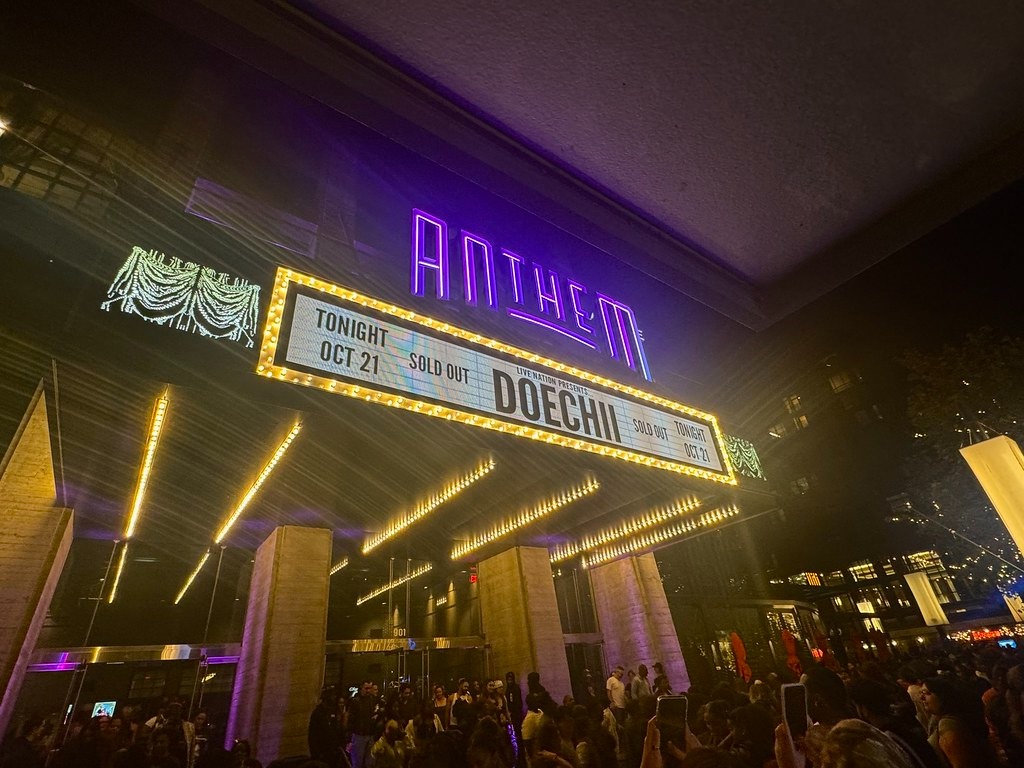
For Aidan Newell, a senior molecular biology major from Fort Pierce, Florida and an avid concertgoer who has attended shows for artists including Doechii and Beyoncé, avoids high prices through presale lines before tickets get resold at significantly higher rates.
“I follow a lot of the artists that I listen to most frequently on social media like Instagram, and I just wait to see if they come out with any tour announcements,“ he adds. “If you’re going to concerts and you don’t want to spend that much money, you have to attend presale because it has the cheapest tickets.”
When presale tickets are gone, Newell takes a different approach: he waits. Buying resale tickets closer to the concert date can sometimes mean finding sellers willing to lower their prices.
“For concerts like Doechii or PinkPantheress that I’ve seen, I honestly am a big fan of resale, specifically buying your tickets a couple of days before the concert,” he said. “There’s people trying to sell their tickets, so they’ll put them for really cheap.”
But waiting for a deal does not always solve the problem. As a college student, Newell still has to decide whether a concert is worth sacrificing money he needs for other expenses.

“Seeing an artist that I really love feels worth spending a lot to me,” Newell said. “However, I am a college student and it is not responsible to spend hundreds and hundreds of dollars on tickets.”
Copy edited by Jori Johnson