

Like many people, I had seen the viral TikToks and Instagram Reels claiming that artificial intelligence (AI) data centers were draining local communities’ water supplies to power AI generated content and chatbots. Those claims were everywhere, and at first glance, they seemed convincing.
One Instagram video alleged that a data center in Fayetteville, Georgia had used an extra 30 million gallons of water without paying for it. Given that parts of Georgia were experiencing drought conditions, folks were infuriated. After watching the video I remember thinking, “How could something like that happen?”
I didn’t expect to find that neither critics nor defenders were technically lying. It’s just that not many people seemed to put those numbers into context. If the decisions we make about this infrastructure will continue to shape the world, context is desperately needed.
My skepticism led me to the official Fayette County website, where county officials had recently issued a statement disputing the online claims. According to the county, the incident was not a case of theft but the result of a water meter transition that caused usage to go unbilled until the error was discovered. Once the issue was identified, the company was billed for the outstanding balance and paid it in full.
What struck me most was how quickly over 100,000 people who liked that video were willing to accept a viral statistic before understanding the context behind it. It is very important to double check any claim you see on the internet. Sometimes it can be as simple as doing a quick Google search to see where the sentiment is coming from.
Statistics can be both intentionally and inadvertently misrepresented. Media influencers aren’t in the business of nuance. They are in the business of reaction. Well-rounded takes with no easy side to choose from doesn’t usually go viral, but a scary number will.
For contextualizations, it’s always best practice to start with definitions.
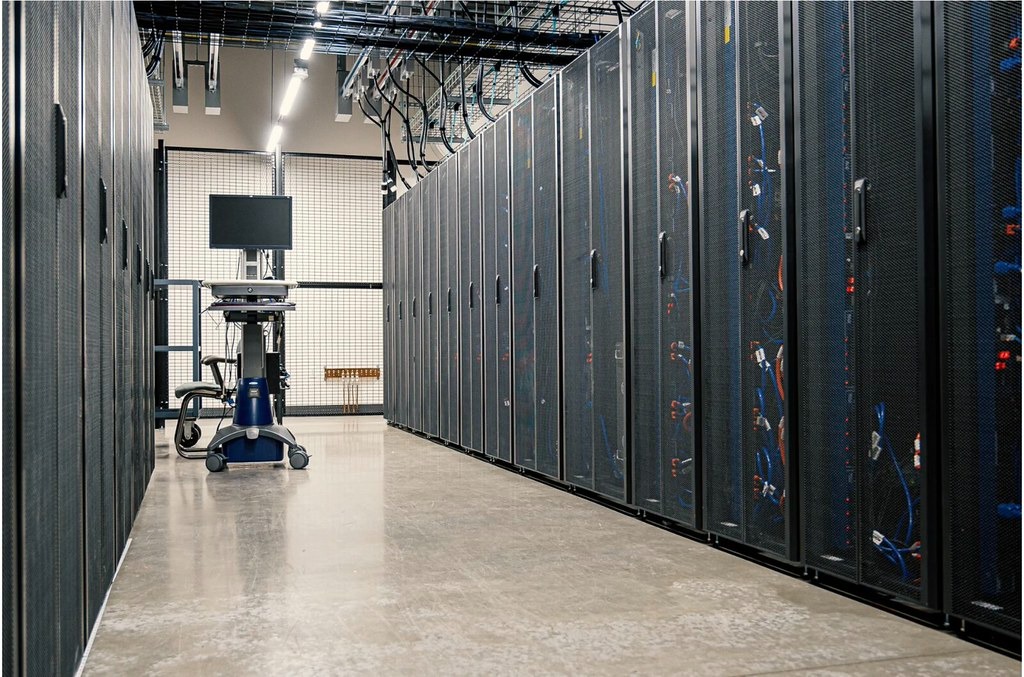
A data center is, in its simplest form, a facility filled with computers and cooling systems needed to cool them. These include the fans or ventilators, chillers and increasingly liquid-cooling which is water piped directly to the computer chips. Data centers perform the countless calculations that power everything from sending emails and streaming Netflix to asking ChatGPT to be your therapist.
An AI data center is a specialized version of a data center facility that does math which requires more specialized computer hardware. More computing power generates more heat, and more heat requires more cooling. It should come as no surprise, then, that rooms full of computers doing significantly more math also need significantly more infrastructure to keep them from overheating.
Although generative AI has a lot of potential, many claims about its value are speculative at best. So what is it actually providing right now? I’ll point to what AI is already making possible: accelerated biomedical research, materials discovery, cybersecurity, logistics and supply chain optimization, and a growing range of scientific computing applications.
Whether these advancements justify AI’s environmental costs is a question worthy of serious debate. But reducing the entire conversation to chatbots and AI-generated “slop” is an oversimplification that obscures the technology’s broader impact.
AI data centers undeniably consume substantial amounts of electricity and water. U.S. data-center servers consumed nearly 100 terawatt-hours of energy in 2023, up from about 30 terawatt-hours in 2014 and is projected to double by 2030. The largest facilities can use as much water each day as about 6,500 households. This all sounds alarming, but as stated before, these numbers don’t exist in a vacuum.
That statistic is accurate, but it lacks important context. Even with that growth, data centers in the U.S. account for only about 4.4% of the nation’s total electricity consumption, up from 1.9% in 2014.
The water figures are similarly easy to misinterpret. Data centers account for roughly 0.3% of total U.S. daily water withdrawals, a fraction of what many other industries consume. For comparison, agriculture, specifically corn production for ethanol, is responsible for a vastly larger share of freshwater use. The numbers themselves haven’t changed; only the way they’re presented has.
Instead of fearmongering the expansion of these facilities with decontextualized statistics, we should ask ourselves tougher questions when we come across these figures. The best way to cut through the noise is to ask one simple question: “Relative to what?”
There is nothing new under the sun. The AI bubble will eventually pop, causing a consolidation around a few successful companies, and the thousands of failed slop apps, websites and products. We saw this in the early 2000s when overvalued internet companies collapsed in what’s now infamously known as the “Dot-com Bubble.” It offers a useful, albeit not direct comparison: billions of dollars were invested in fiber optic infrastructure and many companies failed, but that infrastructure later became the foundation of the modern internet we now rely on everyday.
AI may, or may not, follow a similar trajectory. The outcome remains uncertain, but I remain optimistic about the possibilities. That is precisely why our focus should not be on blindly rejecting the technology, but critically engaging with it so we can make thoughtful decisions about the tradeoffs involved.
Copy edited by Jori Johnson