

Dear Howard University Community,
Howard University was chartered by Congress in 1867 as a national charitable trust, not as a private corporation governed by an insulated elite. Eventually, its by-laws deliberately established shared governance — including mandatory representation of alumni, faculty, and students on the Board of Trustees — as a core constitutional principle, not a courtesy.
Alumni trustees have been a permanent and required part of the board since 1926, following organized alumni advocacy to secure accountability to Howard’s mission of “Truth and Service.” This then-new structure reflected a necessary shared stewardship, which was later expanded upon. Student trustees were formally recognized in 1970 after the historic 1968 student protests, and faculty trustees were likewise incorporated.
Thus, for nearly a century, in the spirit of Truth and Service, this system of shared governance with Affiliate Trustees has been embedded in Howard’s governing bylaws and traditions. It was designed to facilitate accountability and avoid the insularity that often comes with purely self-selected governing bodies. Instead, exactly 100 years later, voting input by alumni, students, and faculty for Affiliate Trustees was abolished.
Between 2020 and 2021, that democratic structure was dismantled without lawful authority. Alumni, faculty and student trustee elections were suspended by memorandum — without a board vote, without the required amendment and in violation of the by-laws. Trustees mandated by the by-laws were excluded, yet the board continued to meet, vote and govern. On Nov. 5, 2021, while unlawfully constituted, the board purported to amend the by-laws to eliminate alumni trustees entirely, but has never produced evidence of the required notice, presence of a quorum or the super-majority vote — all of which were required by the by-laws at that time. The board has further refused to disclose minutes of the meetings at which the amendment was discussed or adopted. In sum, on a transparently ridiculous pretext and citing an undisclosed consultant’s report, our board eliminated shared governance, intentionally and illegally.
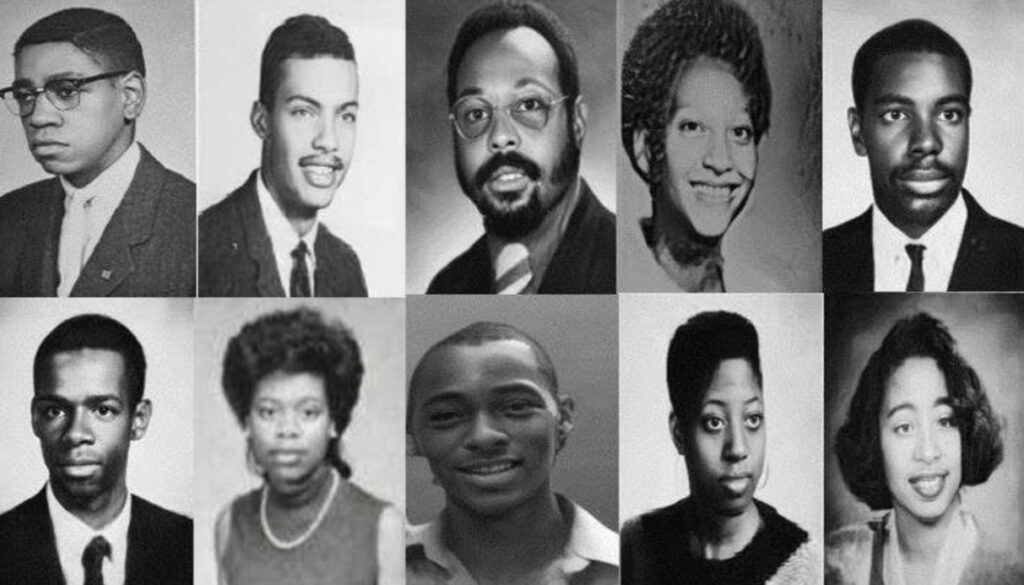
“Concerned Alumni” and separate groups of former student leaders sought but received no satisfactory explanations from the Board. Therefore, a group of alumni, comprising graduating classes from five different decades, and represented by alumnus and Attorney Donald Temple from the class of 1975, filed a suit aimed at reinstating legality and shared governance at Howard University.
The board surreptitiously deprived alumni, faculty and students of legal rights — not privileges — that have defined Howard’s governance for generations. Therefore, our attorney has now filed a new action in D.C. Superior Court seeking declaratory and injunctive relief to finally restore lawful governance and to enforce the charter and by-laws. Under District of Columbia nonprofit and charitable trust law, trustees are generally expected to act in strict obedience to the charter and by-laws. They should not entrench themselves, disenfranchise protected constituencies, or alter governance through secrecy or exclusion. Actions taken without authority may be considered ultra vires (beyond their power) and subject to challenge. A board that excludes by-law-required trustees may lack authority to amend its own governing rules, and especially not to abolish trustee positions designated for those trustees. One individual’s memorandum does not typically suspend elections. A quorum may be called into question where required trustees have been excluded. And governance should not be transformed through deception and secrecy.
No court has upheld the board’s actions on their merits. To the contrary, the U.S. Court of Appeals reversed the federal district court’s dismissal of the alumni lawsuit, leaving the board’s conduct legally unresolved and unratified. We will soon proceed with discovery, depositions and, finally, a trial on the merits.
Our lawsuit is not about personalities or politics. It is about whether Howard University will continue to be governed by its own constitutional instruments — or by administrative fiat. Howard was founded and built to teach democracy to a nation that denied it to Black people. The question now is whether democracy and the rule of law still govern Howard itself.
Respectfully,
The Plaintiffs
Timothy Jenkins, Esq., Class of 1960, BA, Liberal Arts (now Arts and Sciences), former student body president, Yale Law School, co-founder of SNCC, former member of the HU Board of Trustees
Willie-Lloyd Reeves, Esq., Class of 1971, BA, Liberal Arts and Class of 1974 School of Law, and a former student leader in both undergraduate and law school
William “Damani” Keene, Class of 1966, BS, Liberal Arts, a former student leader, former Student Affairs administrator at HU for 32 years, and former Alumni Trustee (2014-2017)
April R. Silver, Class of 1991, BA, Liberal Arts, former President of the Howard University Student Association (HUSA), and co-leader of the 1989 Howard University student protest
Maria P. Jones, Class of 1988, BA, School of Communications, former member of Howard University Showtime Marching Band
Sowande S. Tichawonna, Class of 1985, BA, Liberal Arts, and a 2021 nominee for Alumni Trustee
Angela R. Trapp, Class of 1994, BSEE, Engineering, has held several leadership positions in the Howard University Alumni Association.
Daanen Strachan, PhD, Class of 1988, BS, Liberal Arts, a former student leader and former Howard University staff member in Student Affairs
Alta Jeannette Cannaday, Class of 1991, BS, Liberal Arts, has served in various capacities in HUAA and is a former staff member in the Howard University Department of Development
Stephen D. Jackson, EdD, Class of 1986, BS, Liberal Arts, a former student leader and former Principal of Dunbar High School, Washington, D.C.