

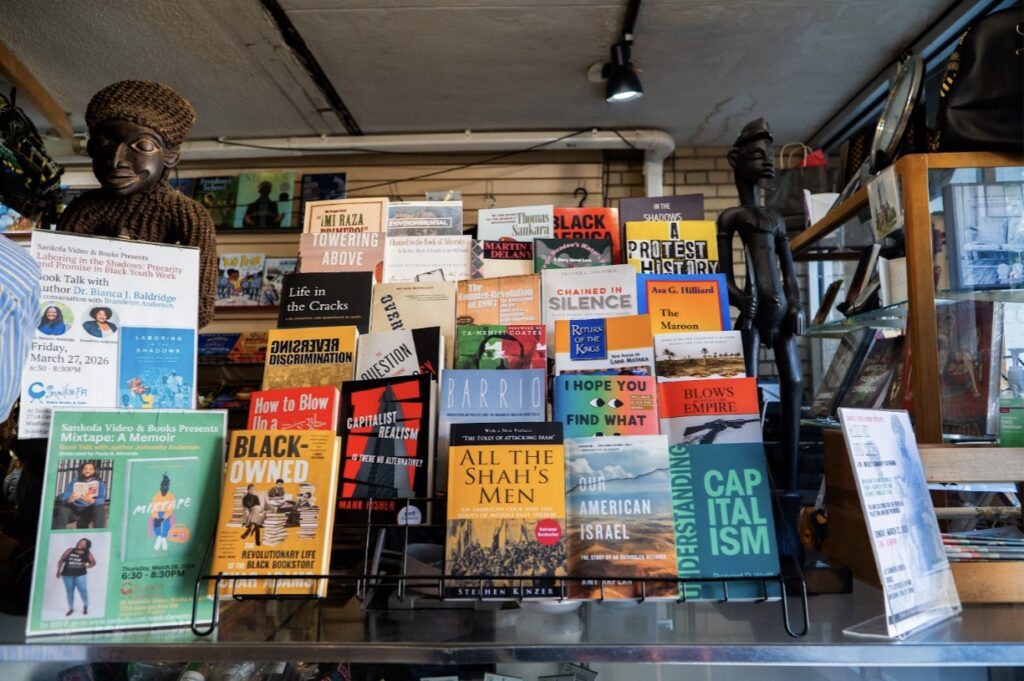
The National Association of Bookstores (NAB2) launched a directory, platforming hundreds of Black-owned bookstores to protect their legacy and support further expansion. Several Black-owned bookstores have successfully provided greater exposure to Black literature, promoting its cultural significance.
Historically, Black-owned bookstores have served hubs for authentic Black expression and literary works. Black bookstore owners have had to face challenges as they adapt to the rise of online retailers, leading to the decline of several locations.
According to the New York Public Library, David Ruggles opened the first Black-owned bookstore in 1864, seeking to further abolition efforts amid Black oppression. Bookstores that center on Black literature hold political and cultural ties to social activism.
Jill Gibson, CEO of the NAB2, said the organization recognized that, while lists of Black-owned bookstores already existed, they wanted to make them more accessible.
“We connected with all these individuals, took all their lists with their permission, compiled them and started seeing where there’s overlap, where there are gaps,” Gibson said. “Then we started doing our own research.”
Gibson said there is a clear demand for supporting Black-owned bookstores and the organization aims to increase their visibility and foot traffic, emphasizing that their mission extends beyond selling books.
“They’re not just selling books. They’re shaping culture and community. They’re curating stories. They’re providing community hubs and introducing readers to new voices,” she said.
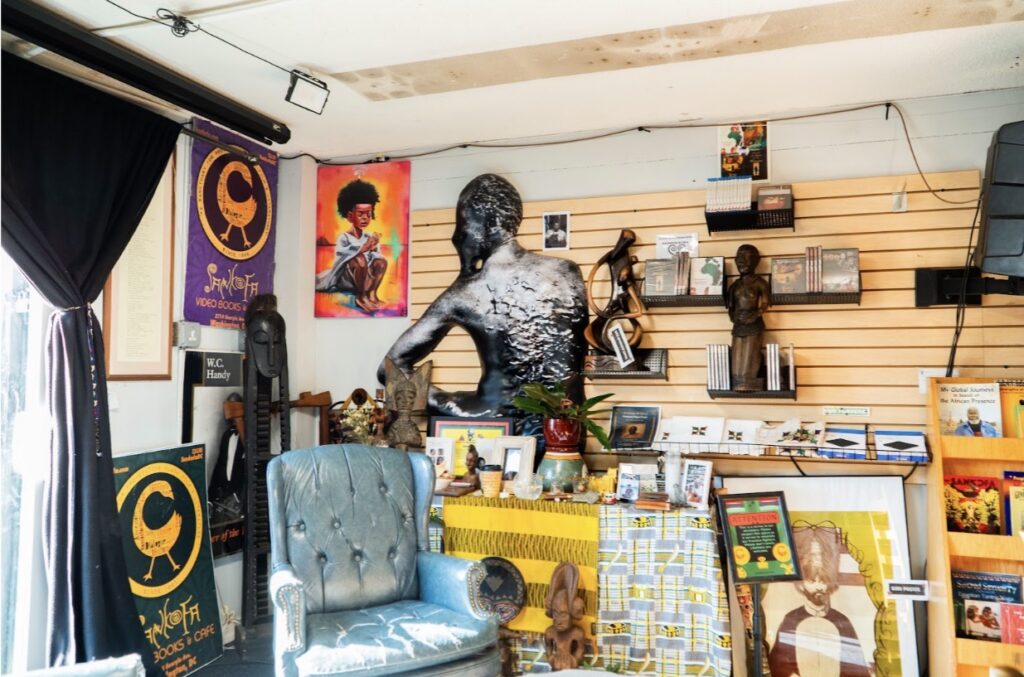
Sankofa Video and Bookstore. (Cole Edmonds/The Hilltop) 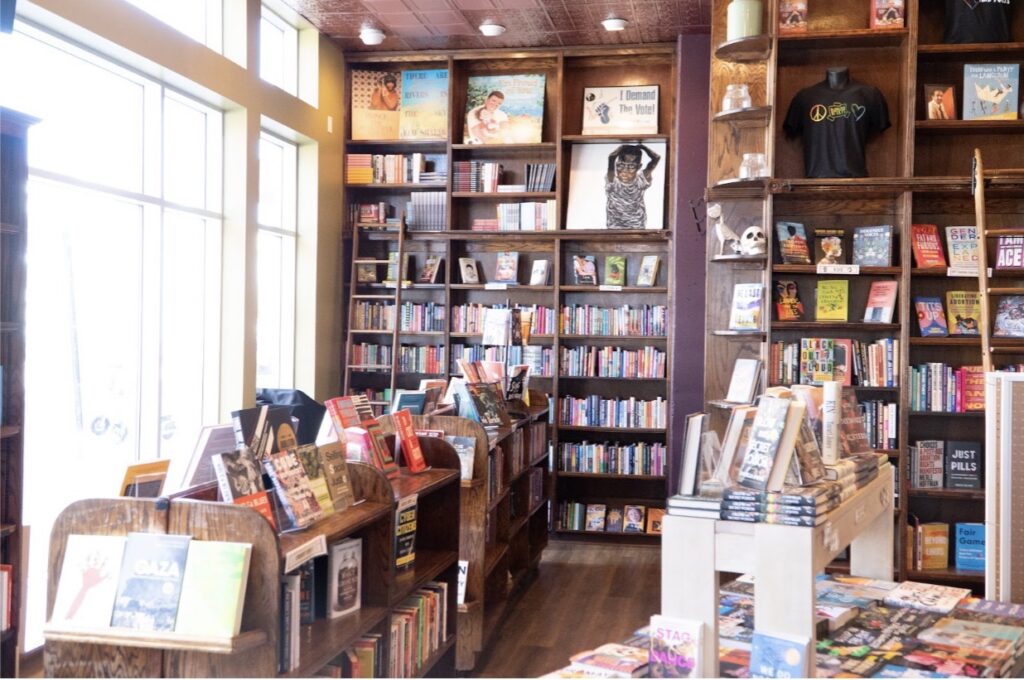
Busboys and Poets. (Cole Edmonds/The Hilltop) 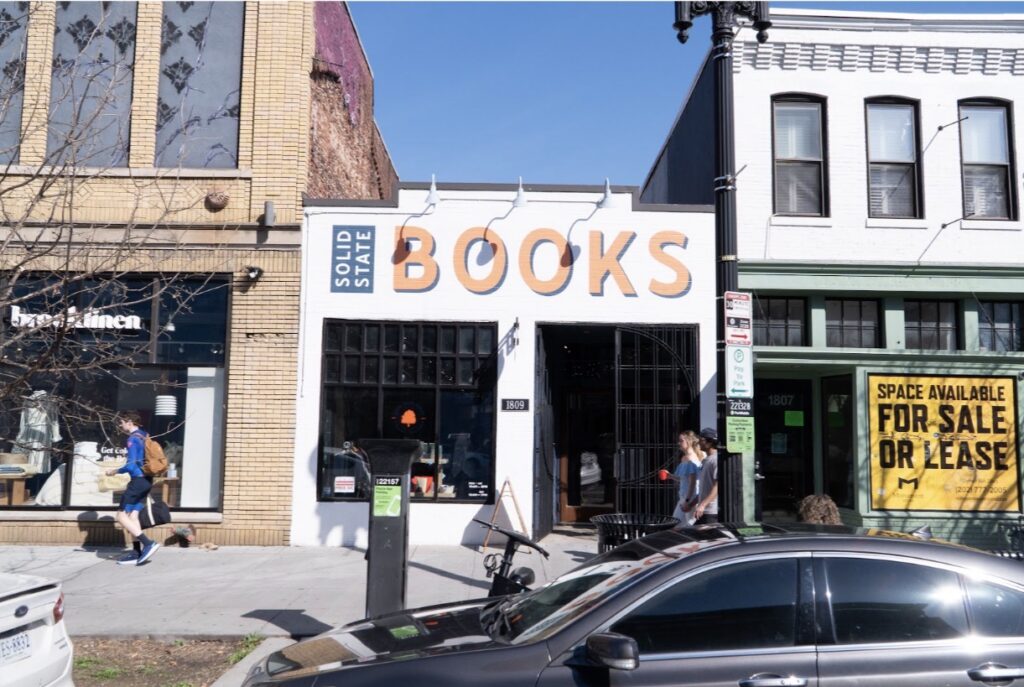
Solid State Books. (Cole Edmonds/The Hilltop) 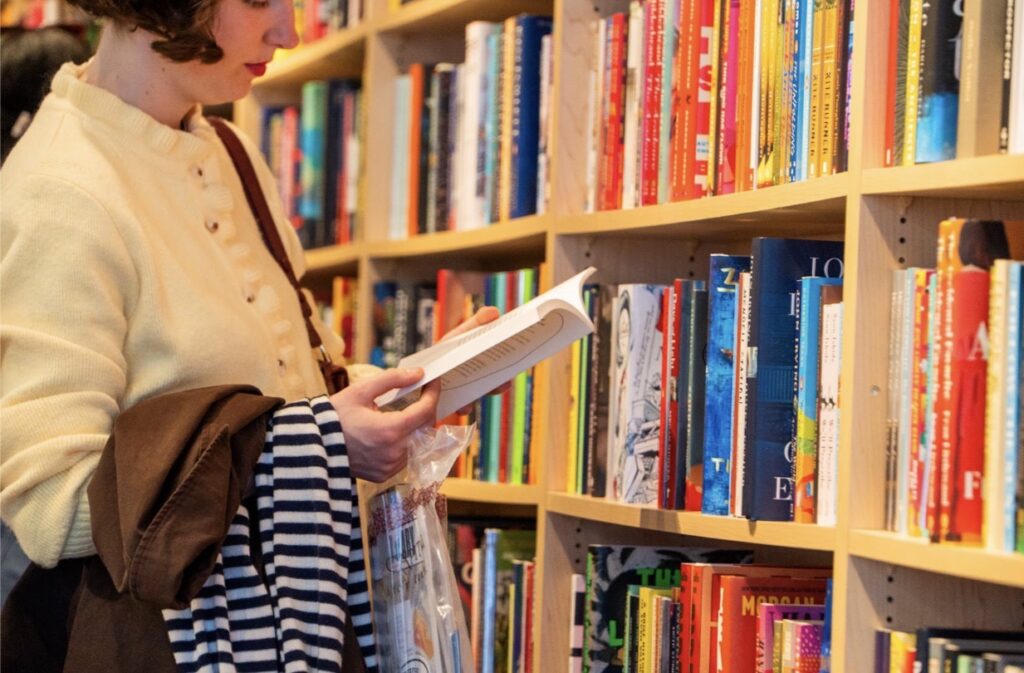
Person reading in bookstore. (Cole Edmonds/The Hilltop) 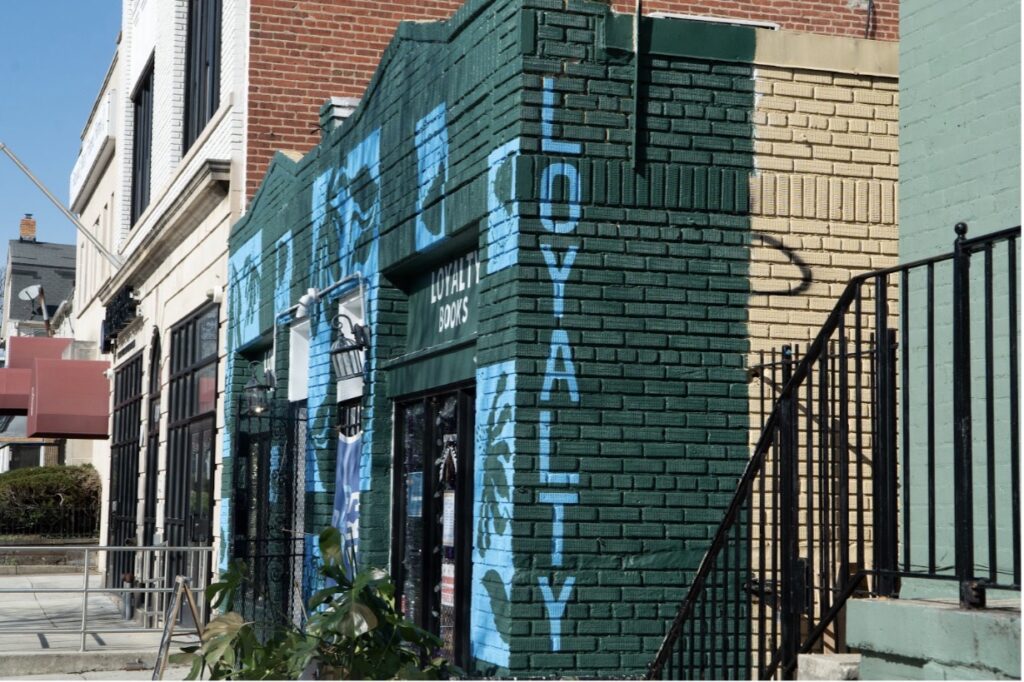
Loyalty Bookstore. (Cole Edmonds/The Hilltop) 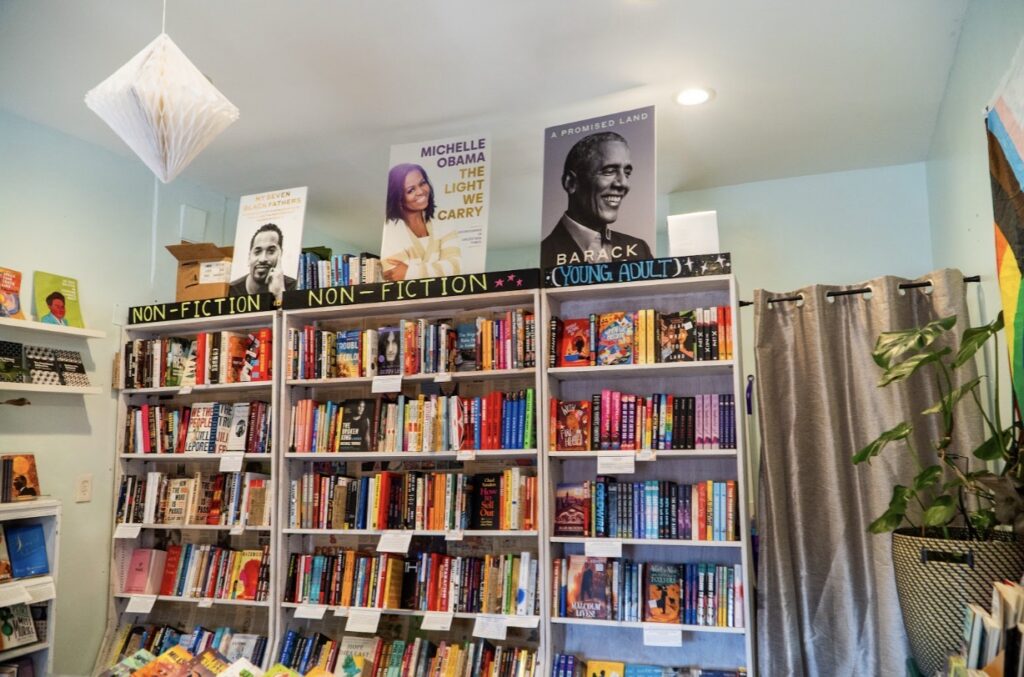
Bookshelf with posters hanging above it. (Cole Edmonds/The Hilltop) 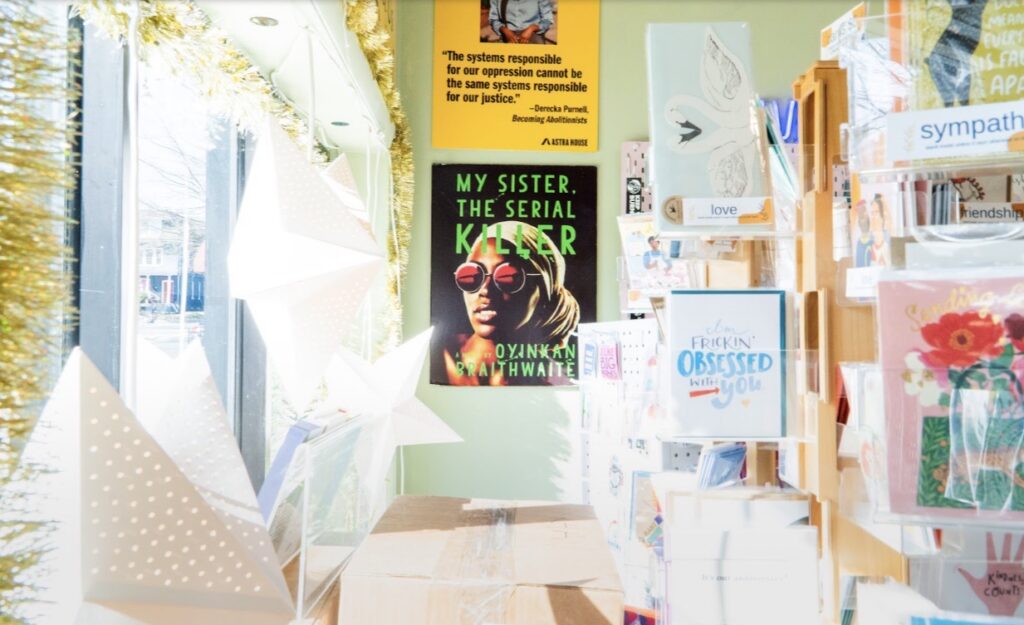
Posters hanging on wall inside bookstore. (Cole Edmonds/The Hilltop) 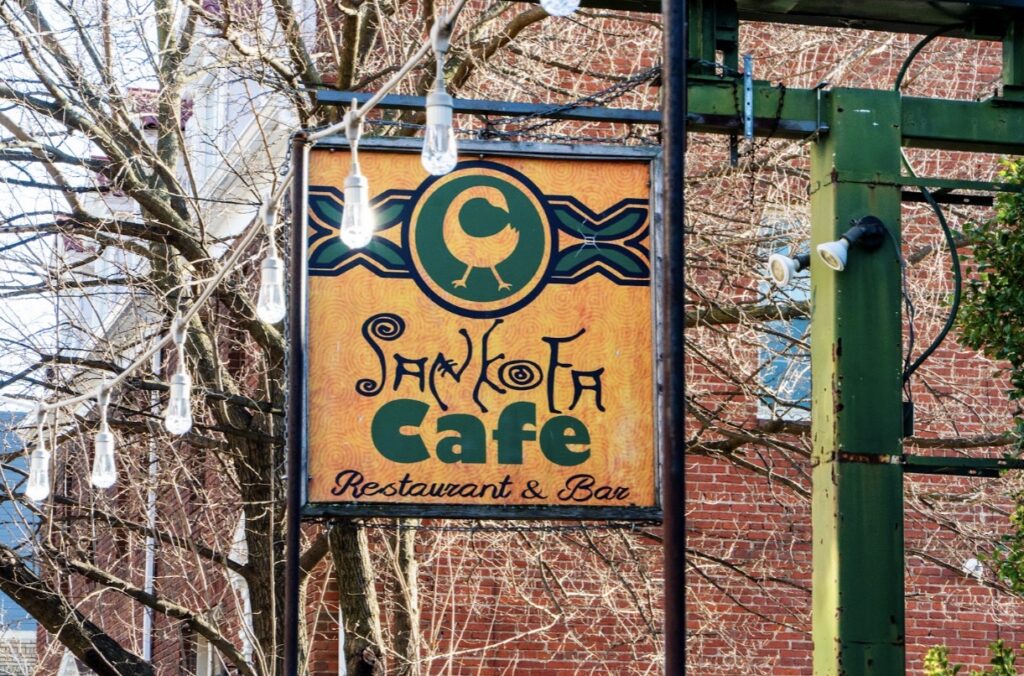
Sankofa Video and Bookstore. (Cole Edmonds/The Hilltop) 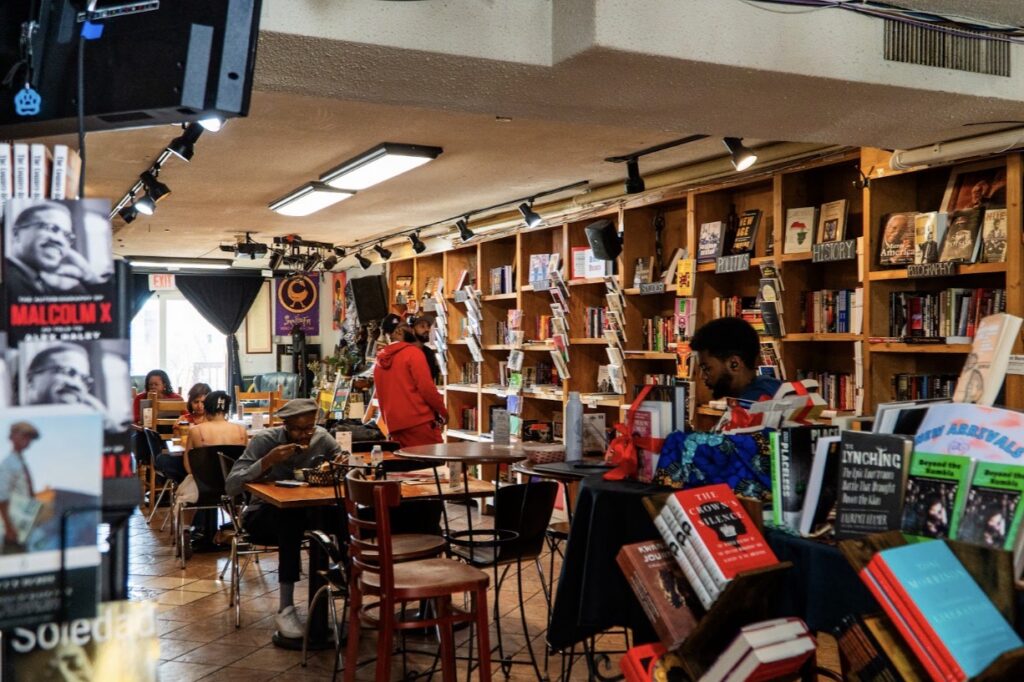
Sankofa Video and Bookstore. (Cole Edmonds/The Hilltop) 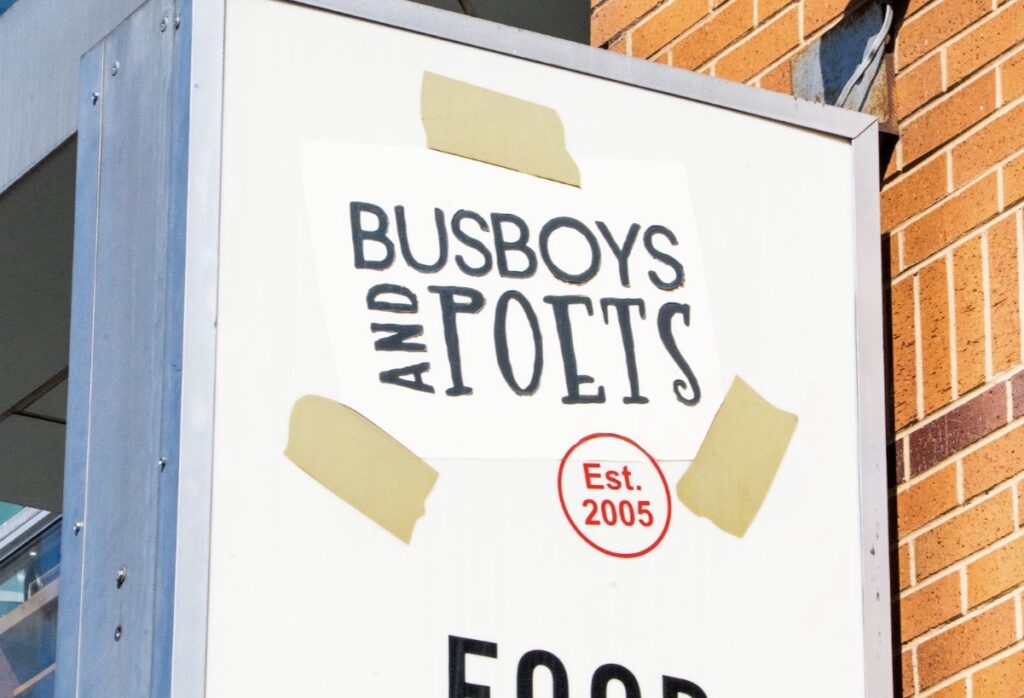
Busboys and Poets. (Cole Edmonds/The Hilltop)
One of the bookstores featured in the directory is Periodicals, a Detroit-based magazine and concept store. Founded by Detroit native Aleiya Olu in 2023, the shop opened to give back to her community.
“It’s her way of showing her appreciation,” said Melissa Reynolds, a current Periodicals employee.
As an employee, Reynolds believes the shop carries a unique presence in the local community.
“It’s kinda bringing more of the niche to the city to educate and give the people of Detroit more of an experience flipping through print media,” Reynolds said.
The Black-owned concept store features various print types, primarily from small, unique authors.
“We’re just trying to fill the store with things that people don’t see on the daily, something you can’t get at Barnes and Noble. We like to keep things fresh,” Reynolds said.
Reynolds feels honored to contribute and further the Periodicals’ mission.
“I’m Hispanic, but it’s a privilege to work here and be surrounded by all the knowledge and to be in a space that is so diverse and experimental,” Reynolds said.
Founded in Sacramento, California, Underground Books is a non-profit bookstore under the St. Hope Foundation, founded by Kevin Johnson.
“It was a comfort place even before they were in the national Black bookstore directory,” Neveah Curtis said, an employee of the organization.
Since the bookstore’s opening in 2003, the bookstore has served as an important hub and cultural pillar in the Oakpark community.
“I believe it’s important to have these locations around the country so that the culture is not dead. So we still have stores that are accessible and that we also have a place on the charts,” Curtis said.
Gibson added that, alongside the directory, the organization released its inaugural “State of Black Bookstores” report, which it plans to publish annually.
The goal, she said, is to help readers understand the history of Black bookstores and to provide insight into how many exist and how they operate.
The NAB2 is also developing a business education series for bookstore owners.

“We’re also providing mechanisms for them to have a community, know who each other are. They can share ideas, collaborate, share best practices, vent — whatever it takes,” Gibson said.
Copy edited by D’Nyah Jefferson – Philmore