
The Howard University School of Law (HUSL) hosted its second annual 14th Amendment Law School Symposium last Friday.
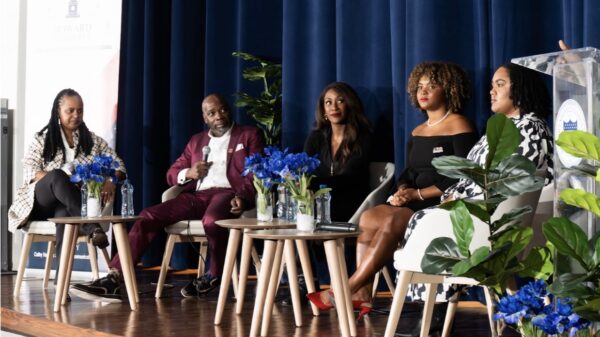
Hosted on the same day as the admitted students day for prospective Howard University law students, this was a busy day for the law school. The symposium brought together current law students, professors and other members of the HUSL community.
The 14th Amendment Center for Law and Democracy at HUSL was founded on March 27, 2025. The center aims to bring a multi-disciplinary approach to understanding and preserving the vision and values expressed in the 14th amendment of the Constitution. Sherrilyn Ifill, PhD, serves as the founding director for the center, as well as the inaugural Vernon E. Jordan Esq. Endowed Chair in Civil Rights.
“I created the 14th Amendment Center so that we would have a place to contemplate, to plan, to strategize, to study the creation of the vision of a new democracy,” Ifill said.
Ifill shared the four pillars of the 14th Amendment Center. The law and policy pillar aims to uncover the potential of the 14th Amendment, while the education curriculum and scholarship pillar strives to deepen the understanding of the amendment through teaching research and critical scholarship.
The third pillar, art, imagination and narrative, explores the power of storytelling and creative expression to illuminate the meaning of the 14th Amendment. Finally, the democratic institutions pillar explores what the 14th Amendment demands of democratic institutions.
“I want the America I dreamed of as a girl. One of the powerful witness of those participants in civil rights,” she said. “I feel ambitious in this moment.”
Ifill also revealed that the theme of this year’s symposium was inspired by a quote from Frederick Douglass, where he states “That the work this time shall finally be done.”
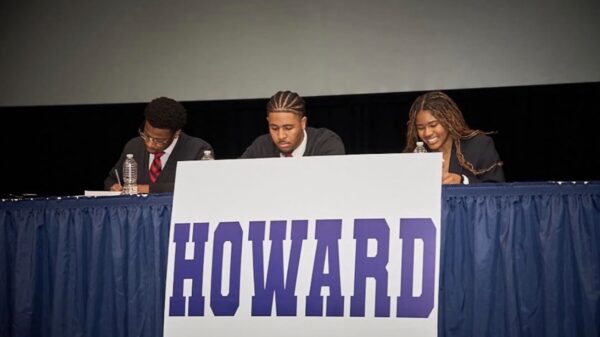
Following opening words from Ifill, a group of students from HUSL shared the legal research about birthright citizenship that they were working on.
After the student presentation, the symposium included a series of panels covering topics that included birthright citizenship, the Supreme Court, voting rights and more.
Students at HUSL were present as both attendees and volunteers. Rochelle Demond is a third-year law student at HUSL from Fort Lauderdale, Florida, who also attended Howard for undergrad, earning her Bachelor of Arts in political science and economics. She was present at the symposium as one of Ifill’s students.
“Even though this [symposium] was a requirement, this is part of a larger journey for me to enter the civil rights field and start my journey as an advocate for civil rights,” she said.
Demond shared the impact the center has had on HUSL and her as a third-year student navigating her law journey.
“In learning about the Constitution, there’s a lot that gets left out,” she said. “The center emphasizes adding more to the story and more to what we can conceptualize for ourselves.”
According to her students, Ifill emphasizes multiracial democracy in her courses, and the symposium’s audience reflected that mission, bringing together students and faculty from across the law school to engage with the idea.
Jesiah Osbourne, a third-year HUSL law student from Mount Vernon, New York, was volunteering at the symposium. He shared what attending HUSL and having access to the center has done for his student experience.
“It’s a tremendous impact,” he said. “Especially at an HBCU like Howard, it spreads knowledge and information that people aren’t always privy to.”
Students at HUSL have the option to take Ifill’s seminar course called Reimagine the 14th Amendment. The class isn’t a requirement for graduation, but according to HUSL students, it should be.
“It’s really helped me think more about the 14th amendment in my life,” said Osbourne.
William Reese III, a third-year law student from Detroit, Michigan, was also in attendance at the symposium. Reese shared how the third pillar has been implemented throughout his experience as an HUSL student.
“Through arts and activism, we can communicate the law in a way that people understand,” he said. “Not just through briefs but through songs, movies, film, and poetry.”
He also shared how the establishment of the center connects to the wider Howard University motto of excellence in truth and service.
“You have all the great thinkers who came from this school,” he said. “Considering that the 14th amendment center is here, is an extension of that work and that legacy.”
Copy edited by Daryl R. Thomas Jr.