

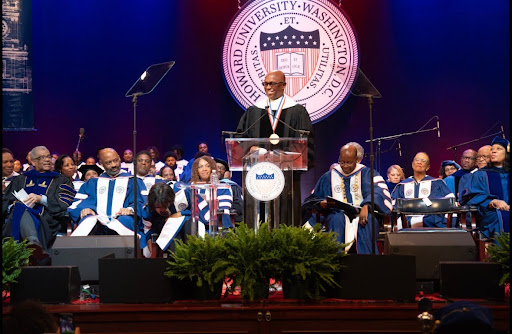
Howard University celebrated the 159th anniversary of its founding on March 2nd, 1867, earlier this month with speeches from Dean Bernard Richardson, Interim President Wayne A.I. Fredrick, and the 2026 orator, Donald B. Christian, who received the Howard University President’s Medal of Achievement for his career and continued support of the institution.
Howard University was chartered by Congress in 1867 in the wake of the Civil War to educate freedmen with vocational skills and knowledge. In its 159 years of operation, the University has produced influential Black leaders of both national and international importance.
After the color guard completed an opening ceremony, Reverend Bernard Richardson, dean of the Andrew Rankin Memorial Chapel, started the day in prayer.
“We are mindful that we celebrate in troubling times. The vision is strife, dismantling of rights, the easing of our history,” Richardson said. “Despite the challenges of the day tomorrow on this 159th holiday, we place our hope in you.”
Amongst gratitude and praise, Interim President Fredrick acknowledged the school of medicine’s recent probation. On Friday, Feb. 27th, the Liaison Committee on Medical Education reaccredited the school while putting it on probation until 2028, meaning the school will be closely monitored by the committee.
Toluwanimi Ibuoye, a junior psychology major from Atlanta, was commander of the color guard for convocation, a role that was special to her as it was her first time commanding as a “shyer” person
“There was a certain type of pride I felt representing the army, but also representing myself and proving that yes, I am quieter, but I have the ability to command,” said Ibuoye.
For Ibuoye, Charter day is a way to recognize how the Black community has progressed.
Ibuoye added that she finds it beautiful that “we are able to just realize that slavery is where we came from and now we are at a point where we can celebrate our wins and losses.”
The same rings true for Donna Grant-Mills, an associate dean at the school of dentistry. Charter day is a time for her to reflect on Howard’s purpose.
“It reminds us of those who came before us that were willing to change how we view belonging: who belonged in education and preparing them to go out and lead,” Grant-Mills said.
As an alumna of the University, Howard’s history feels intertwined with her own.
“I take this day to remember my ancestors who were not allowed to read, to go to school, but who also held education as a priority,” she said.
Erika Mabry serves as president of the Howard University Staff Organization, and says that Charter Day is one of her favorite days of the year.
“It’s always such a wonderful reflection of our history,” said Mabry, who has worked at Howard for 11 years. “It makes me think of Howard, the mecca, and the students that we serve.”
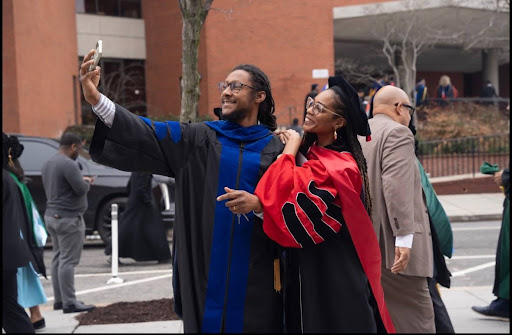
Charter day activities from student support, royal court appearances, and professors taking pictures on the Yard (Caleb MacBruce/The Hilltop) 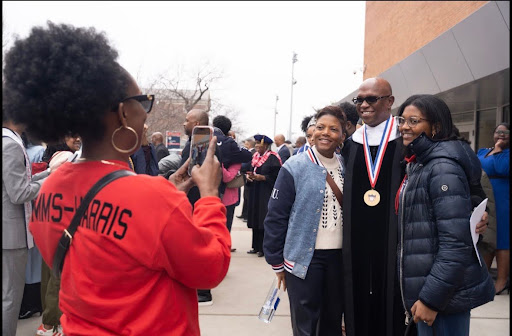
Charter day activities from student support, royal court appearances, and professors taking pictures on the Yard (Caleb MacBruce/The Hilltop) 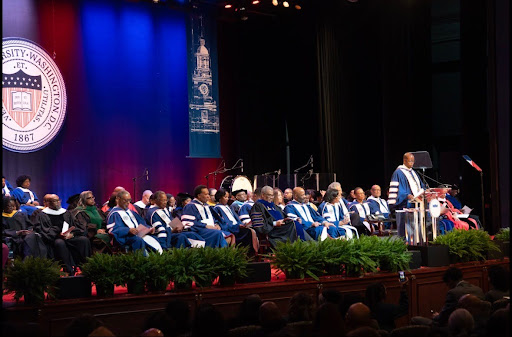
Charter day activities from student support, royal court appearances, and professors taking pictures on the Yard (Caleb MacBruce/The Hilltop) 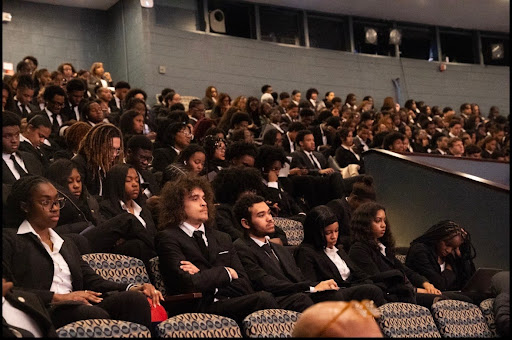
Charter day activities from student support, royal court appearances, and professors taking pictures on the Yard (Caleb MacBruce/The Hilltop) 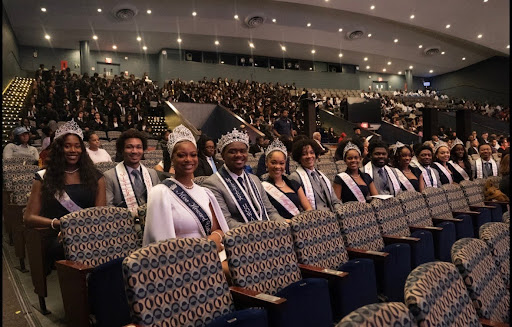
Charter day activities from student support, royal court appearances, and professors taking pictures on the Yard (Caleb MacBruce/The Hilltop)
This year’s orator Donald B. Christian, serves on the board of trustees and was the founder of EquaNX LLC, a business consulting firm. Christian also founded the Jamaican Howard University Affinity Network to provide more financial aid to Jamaican students, who sometimes do not qualify for financial aid as international students. According to Christian, the organization has provided over 463,000 dollars in aid. Christian reflected on his experience as an undergraduate through his speech.
”I did not fully appreciate Howard when I graduated. I left with energy, I left with ambition, and ready to move, but I did not understand what I inherited,” Christian said.
Christian emphasized the university’s legacy and the historical importance of its founding.
“This university does not simply produce graduates, it produces architects of consequence,” he said. “This institution has shaped leaders who build, challenge, and serve, long after they have left his campus.”
Copy edited by Daryl R. Thomas Jr.