

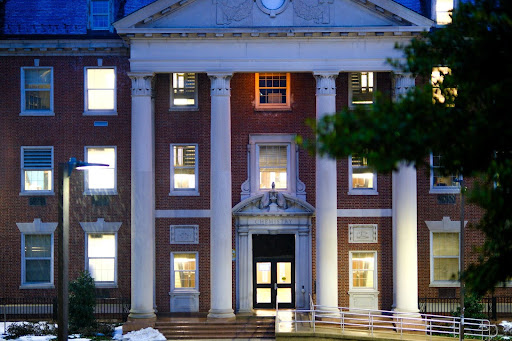
What was supposed to be a standard semester of stochimetry and studying living organisms has turned into a waiting game for Howard University students. Following the HVAC coil rupture on Feb. 2, the Chemistry Building underwent weeks of remediation, leaving STEM students uncertain whether they would return to their labs before the semester ended. As of February 23, that wonder disappeared, as students began in person classes in the Chemistry Building.
The department has shifted to remote learning, a tough pill to swallow for students who thought the days of Zoom classes were behind them. Deo Campbell, a freshman biology major from Chicago, Illinois, expressed the academic strain this creates for those in high-stakes science tracks.
“This closure has resulted in all of my chemistry labs being cancelled, which is crazy because
we’re approaching spring break and haven’t done a single lab yet,” Campbell said.
The move to online lectures is more inconvenient for students who find that the digital barrier impacts retention; some say it is impeding their ability to succeed academically.
“All of my chemistry lectures have been moved to Zoom, which, for me, is problematic because I do not learn well online,” Campbell said.
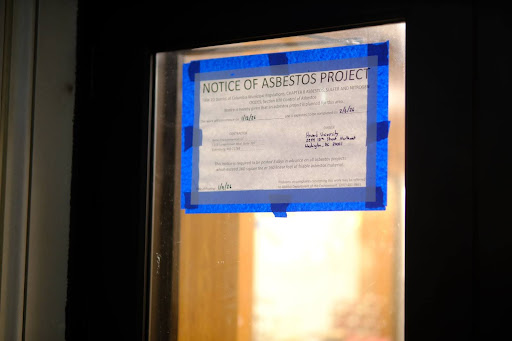
The disruption also extends to the social and academic landscape of the campus.
Laila Jefferson, a freshman psychology major, noted that the building’s closure has stripped away a vital study hub on that side of campus.
“I used to rely on the chem building for a quiet place to decompress and study in between classes,” Jefferson said. “Now, with the building closed, everyone is forced into UGL or Founders, and it can be harder to find seats too.”
Henderson Cleaves, the professor and chair of the Chemistry department, explained that this disruption was not anticipated.
“There was a pipe behind a cinderblock wall, in a non-heated space that used to go to lab facilities and all that plumbing had been terminated,” which was discovered after the wall was forced to be opened, making it difficult to find the point of conflict, Cleaves said.
There was no specific timeline of fixing the building. Cleaves shares that there was “water infiltration through all six floors of the building” that had to be cleaned.
Cleaves said after the plumbing renovations, these kinds of events will be less likely to occur. Due to the interruption, classes were moved to online platforms for a week.
Students were back in person as of the week of February 23, as the building was up to function a day earlier than expected. Online classes and virtual labs took place for a week.
“In reality, we missed about a week of lab,” Cleaves said. For students, labs occur once to twice a week for three to four hours.
Although the situation was stressful, the Cleaves ensured that students received the proper communication to determine their next steps for this situation.
“I think we pulled through the best we could,” Cleaves said.
The university points to its $785 million plan and the future STEM Center slated for 2026 as
signs of a brighter future. This investment marks the largest capital project in Howard’s history, signaling a transition toward a modern campus capable of promoting its status as a premier research institution.
However, with half the semester gone and the Chemistry Building still undergoing water damage assessment, many students are questioning when their education will move from the screens of their laptops and back into the seats of their classes.
Copy edited by Kennedi Bryant