

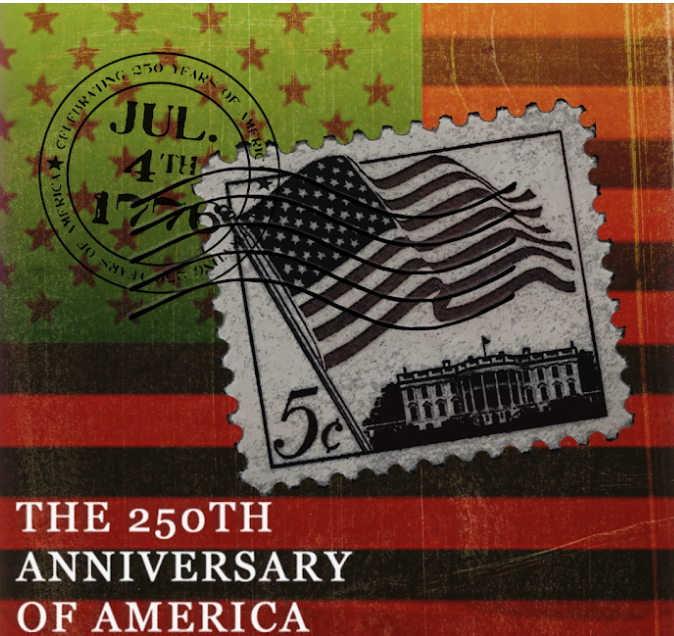
As America’s 250th birthday approaches, a fundamental question lingers beneath the fireworks and patriotism: who built this country? In a year marked by immigration crackdowns and renewed debates over American identity, competing narratives have resurfaced—some crediting immigration as the backbone of the nation, and others insisting that enslaved African Americans laid its physical and economic foundations. The answer, history and students alike argue, is far more complex than political slogans allow.
In the past few months, this conversation has gained increased traction on social media platforms as prominent politicians and celebrities alike have weighed in and expressed their thoughts.
At this year’s Grammys on Feb. 1, American singer Shaboozey spoke out during his acceptance speech, crediting immigrant communities for building the United States, stating, “Immigrants built this country, literally.”
Similarly, in his election victory speech on Nov. 5, 2025, New York City Mayor Zorhan Mamdani brought awareness to the historic contributions of immigrants in New York City.
“New York will remain a city of immigrants: a city built by immigrants, powered by immigrants, and as of tonight, and now, led by an immigrant,” said Mamdani.
Following these statements, Word in Black—a national newsroom and research lab— published an article in response to the discourse. The article expressed concerns about the sentiment that “immigrants built the United States,” because it may contribute to the erasure of black history.
“While immigrant labor has undeniably shaped the nation, the statement erases the reality that enslaved black people and indigenous nations built America’s infrastructure, wealth, and cultural foundation,” the article states.
An article by The Grio, published on Feb. 1, 2026, also brought light to the conversation, showcasing the differing reactions people had over Shaboozey’s speech. According to the article, critics expressed concerns that the language used in Shaboozey’s speech was an oversimplified and exclusionary view of American history.
At Howard University, students are engaging with this debate in both classrooms and campus conversations. Zion Eldridge, a senior political science major, african-american studies minor, said his perspective is shaped by both his education and lived experience.
“Going to a space like Howard gives you a lot of nuance about the American story,” Eldridge explained. “All the things that make up our country are really a mixture of immigrants and our culture and society.”
Eldridge emphasized that the question of “who built this country?” cannot be reduced to a single group, stating that, economically, physically and politically, both enslaved African Americans and immigrant communities played central roles.
“African Americans contributed through the Civil Rights Movement and legislation like the 14th Amendment. ‘Built’ means different things to different people—one group alone didn’t shape it,” said Eldridge.
Similarly, Vaughn Peoples-Hobson, a senior history major and political science minor from Windsor, Connecticut, believes that the conversation should highlight the contributions of both African Americans and immigrants. Peoples-Hobson said he was surprised when he first heard about the discourse, voicing concerns that it would create division amongst minority communities.
“Why would we go out of our way and take credit away from our American brothers and sisters by debating or black people or immigrants did more?” said Peoples-Hobson. “The beauty of America is the melting pot that created our nation.”
Another perspective comes from Jenna Dameus, a junior biology major and chemistry minor from Salisbury, Maryland. Dameus said she was not deeply aware of the discourse surrounding the questions of “who built America?” until recently.
“In school, slavery and immigration were taught separately, but I never heard them framed as a debate about ‘who built America’ until now. At Howard especially, these conversations feel more present.”
As the daughter of immigrant parents, Dameus said her cultural identity strongly shapes how she views the conversation.
“I don’t think people truly understand the level of sacrifice, resilience, work ethic and drive it takes to start over in a new country,” Dameus said.
She emphasised that recognizing immigrant contributions does not negate the foundational role of enslaved African Americans.
“I also understand that enslaved African Americans built the foundation of this country through forced labor. Both truths deserve to be recognized,” Dameus said.
Addressing the concern that the phrase “immigrants built America” may contribute to the erasure of Black history, Dameus acknowledged the nuance within the debate.

“If the phrase is used without context, it can unintentionally minimize or overlook the brutal reality of slavery and the economic system it created,” she said. “The wealth of this nation started with plantations, stolen land and forced labor. Ignoring that would absolutely contribute to erasure.”
However, Dameus argued that the phrase itself is not inherently harmful. She believes the key to navigating the conversation lies in historical accuracy and acknowledgment of chronology.
“Immigrants helped build and rebuild America through railroads, factories, agriculture, small businesses, science and medicine. But that story comes after a foundation that was already laid through slavery,” Dameus said.
She highlighted that she believes the statement itself is not the problem, but the problem lies in the narrative.
“We have to be honest about the order of events. Enslaved Africans and their descendants built the economic backbone of early America. Then immigrants, including families like mine, contributed to the growth, expansion and modernization of this country in later generations.”
She added that while both groups faced discrimination and demonstrated resilience, their experiences were not identical. “We shouldn’t flatten them into one story,” Dameus said.
Eldridge also critiqued the American education system for glossing over these complexities. According to Eldridge, whitewashing history prevents students from understanding how past injustices shape contemporary society.
“When you whitewash American history, two things happen: you think everyone is perfect, and because we don’t discuss past mistakes, we can’t address them in the future,” he said.
He cited Abraham Lincoln as an example, noting that while schools teach about the Emancipation Proclamation, few acknowledge Lincoln’s earlier plans to send African Americans to Liberia. Similarly, discussions of the Civil War often stop at the conflict’s end, omitting Reconstruction and its setbacks, including Black Codes and segregation.
According to historical accounts, buildings such as the nation’s capital and the White House were built by free and enslaved African American laborers.
During America’s inception, the nation experienced a shortage of white craftsmen to hire for construction. Enslaved laborers from surrounding states such as Maryland and Virginia worked on both the white house and capitol building. Regional plantation owners were paid by the Commissioners of the Federal District to use their enslaved workforce.
Enslaved African Americans also built America’s economy from the ground up. An article from History.com highlights how slavery and cotton became essential to America’s economic growth in the 19th century. Slavery drove profits as cotton became the backbone of the Southern economy.
The 19th century is also defined by the work of immigrant communities. American society was largely transformed by industrialization, with a labor force that was made up of millions of immigrants.
According to the Chinese Historical and Cultural Project, the Transcontinental Railroad was built primarily by Chinese and Irish immigrant workers from 1863 to 1869. The railroad was crucial to America’s economic development and revolutionized transportation in a way that was quicker and safer.
Regarding the role of immigrants, Eldridge acknowledged that nearly everyone in America, except Native Americans, arrived from elsewhere.
“In some parts of the country, like Little Italy in New York, immigrants literally built the community. The issue is that some of us were forced immigrants,” he said.
He stressed that recognizing immigrants’ contributions does not have to come at the expense of African Americans’ history, but the conversation must include both.
To approach the debate thoughtfully, Eldridge encouraged a focus on reading and research before forming public opinions.
“Be honest about contributions: first-generation immigrants do work that fuels economic growth, while enslaved Black Americans laid the physical and structural foundations,” he stated.
Peoples-Hobson suggested approaching the conversation from a learning perspective and discussing the contributions of both African Americans and immigrants to the construction of America, as the discourse could risk taking away from the contributions of both sides.
Copy edited by D’Nyah Jefferson – Philmore