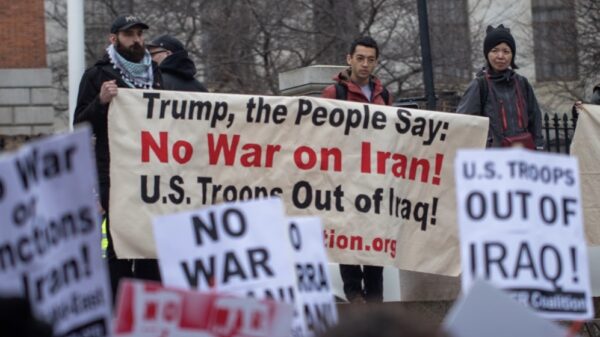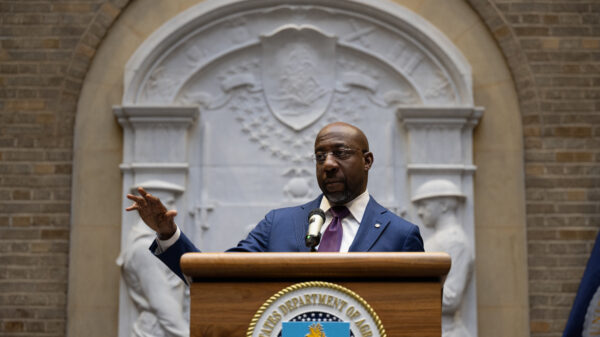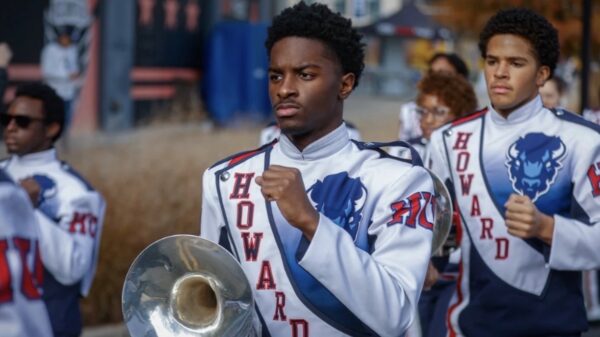
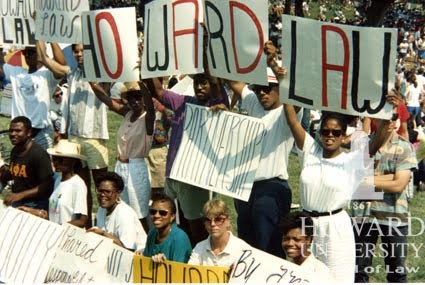
At Howard University student protest has consistently played a role in campus life, connecting generations of students on major issues.
An article in a 1962 issue of The Hilltop reported that an estimated 125 students rallied on the steps of the School of Religion building without clearance from the office of the director of student activities. They were protesting the arrest of a former Howard student in Louisiana who was boycotting.
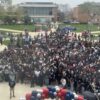
In a 1989 print edition of The Hilltop, the article “Students prevail in 3-day takeover,” by former Hilltopper Keith L. Alexander documented a six-day-long Howard protest involving approximately 3,000 Howard students. On a Friday morning of Charter Day service, hundreds of students rushed the stage of Crampton Auditorium, refusing to leave until their demands were met.
These demands included changes in the financial aid processing system, increased tuition costs and “the removal of Lee Atwater, Republican National Committee Chairman, from the university’s board of trustees.”
Dr. Shannon Clemons Goode, a class of 2009 Howard graduate who studied sports medicine and now works as a team physician in New Orleans, Louisiana, also recalled protests from her time at Howard. She remembered the words of Howard alumna, actress and Dean Emerita Phylicia Rashad, who referenced student protests against rising tuition costs in the early 2000s during her convocation speech.
“She told a story about how when she attended Howard, her mom would call her and say, ‘Where’s that sister of yours?’ And she would say, ‘Debbie out there protesting,’” Clemons Goode said.
Clemons Goode said student protests forced university officials to take them seriously.
“We were always protesting on campus…” Clemons Goode said. “I had never been in a protest until I got to Howard.”
Tatiana King-Moorehead, who is also a Howard alumna, recalled participating in numerous protests, including a protest to defend affirmative action.
“When I was in undergrad, I protested frequently…during the Grutter v. Bollinger (2003) case, marching with my classmates and…students around D.C., sleeping on the steps of the Supreme Court,” King-Moorehead said.
King-Moorehead also mentioned a protest in which she and her peers shut down the lobby of the Administration Building and locked the doors to draw attention to the administrative and operational issues students were facing.
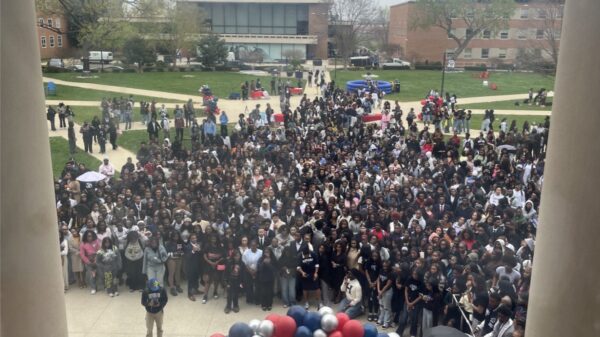
This legacy has made its way to current Howard students. Mahoro Amani, a sophomore political science major from Miami, Florida, was one of the orchestrators of the recent Howard protest against Immigration and Customs Enforcement (ICE) that occurred on Jan. 30 alongside her two peers.
Amani had prior experience organizing walkouts in high school, and noted the privilege of having a continuous platform to speak out, highlighting her mother’s role as executive director of the nonprofit Southern Birth Justice Network.
“I don’t think that us protesting made anyone feel differently about ICE…what it does is it makes people feel differently about themselves and their own power,” Amani said.
Amani said the goal of their protest wasn’t to get Howard to act, but to allow Howard students to see the power they hold within themselves.
“Us marching did not get ICE off of the streets, but us marching did get 700 people in the streets,” Amani said.
She also mentioned the role celebrities also play in politics and activism, with them having the potential to influence people’s advocacy, but noted that’s not necessarily in their job description.
“[People] look at celebrities as a metric for what they should care about, what they should be thinking about…I don’t think that that’s what celebrities have signed up for,” Amani said.
King-Moorehead also speaks on the role celebrities play and how, regardless of their intentions, their approaches can be deeply effective in public opinion.
“Some educate themselves to be able to speak distinctly on topics…others project loudly just for the sake of hearing their own voice and kowtowing to oppressors,” King-Moorehead said.
In actor Chadwick Boseman’s 2018 commencement speech at his alma mater, Howard University, he referenced the protest that took place earlier that year in the Administration Building.
“Some of you here struggled against the university itself. This year, students protested and took over the [Administration] Building, formulated a list of demands and negotiated with our president and administration to determine the direction of our institution. It’s impressive,” Boseman said.
Boseman also recalled protesting in the Administration Building when he attended Howard in order to preserve their alums as well as annual appropriations from Congress. He commended Howard students for their work.
“Your organization and planning was impeccable…You love the university enough to struggle with it. Now, I have to ask…to continue to do that even now that you received your demands.” Boseman said.
In 2021, Gucci Mane’s 1017 Records label participated in an HBCU tour. Revolt reported that members from the record label, Big Scarr, his manager and Bigwalk Dog joined in on a sit-in taking place at Howard’s Blackburn Center as students protested poor housing conditions upon returning in the fall.
A video was uploaded to their Instagram stories, showcasing them sitting alongside Howard students. They refused to perform and instead joined in on the Howard protest.
“We’re still here! Students, you are the revolution. We are the revolution. This is not okay,” Scarr’s manager said on social media.
Clemons Goode suggested that Howard will always be a pillar of higher education and standing for what’s right.
“When it comes down to standing up for what’s right and speaking your mind, Howard University is always gonna come to mind…” she said. “The students at Howard University are going to forever continue that legacy, because there will always be something to stand up for.”
Copy edited by D’Nyah Jefferson – Philmore