

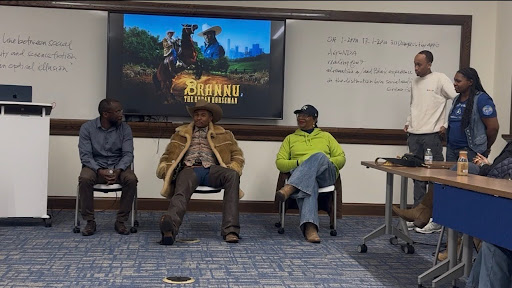
Brannu Fulton along with other panelists and 3G at film screening. (Photo courtesy of 3G) 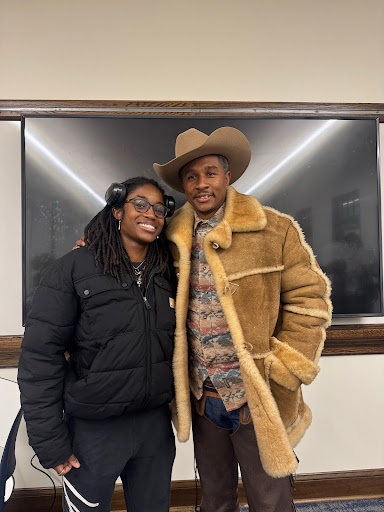
Members of the 3G’s excited to greet and talk to their panelist (photo courtesy of the 3G’s) 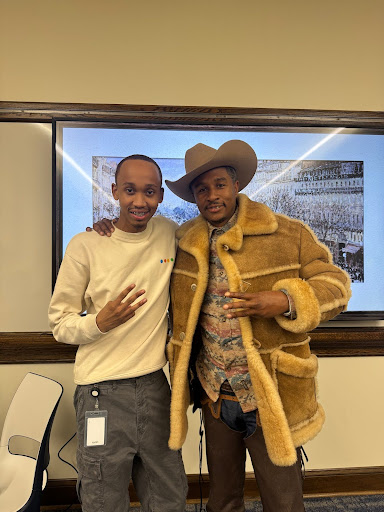
Members of the 3G’s excited to greet and talk to their panelist (photo courtesy of the 3G’s) 
Members of the 3G’s excited to greet and talk to their panelist (photo courtesy of the 3G’s) 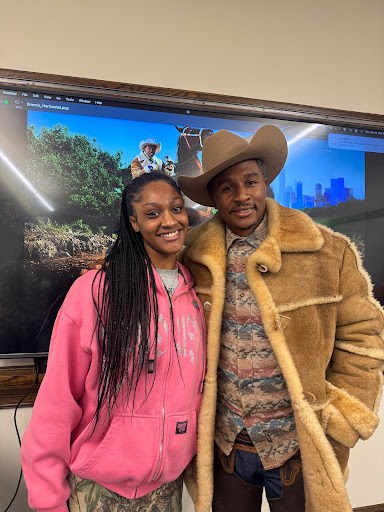
Members of the 3G’s excited to greet and talk to their panelist (photo courtesy of the 3G’s)
From a civil rights protest at a Maryland amusement park to a land dispute outside Atlanta, two documentaries screened during Black History Month at Howard University this semester documented various chapters of activism. They showcased how student-led picketing and individual pursuits of the ‘American Dream’ both serve as tools for social change.
Ain’t No Back to a Merry-Go-Round
On Feb. 17, the Youth Democracy Institute (YDI) concluded its ‘Leadership & Legacy’ series with a screening of “Ain’t No Back to a Merry-Go-Round,” centered on the 1960 protest against the segregated Glen Echo Amusement Park. This event took place at the Blackburn University Center. It started in the Gallery Lounge, where Howard students, many of them political science majors, mingled with alumni over refreshments.
Howard alumna Tralonne Shorter serves as the president and CEO for the Youth Democracy Institute. Shorter founded YDI to formally cultivate leadership for young people before anyone tells them they are “too young to try.”
“Students have always been the architects of change,” Shorter said.
The program transitioned to the Blackburn Auditorium, where the audience was greeted by Hannah Fuller, a Howard freshman and vice chair of YDI’s National Advisory Council. Fuller shared how the institute shaped her own trajectory.
“[This organization] is incredibly important to me as I’ve developed a deeper love for diplomacy,” Fuller shared. “YDI has helped me nurture that curiosity.”
Proceeds from the event directly fund the YDI Policy Academy’s inaugural Howard University cohort. The YDI Policy Academy focuses on a rigorous leadership pipeline that includes cohort-based academies, mentorship from policy experts and a paid fellowship program. Students engage in monthly workshops centered on policy analysis, advocacy and identifying misinformation.
The movement showcased in the film was ignited by five Howard University students: William (Bill) L. Griffin, Cecil T. Washington Jr., Marvous Saunders, Michael A. Proctor and Gwendolyn Greene (later known as “Gwendolyn Britt”), known as the ‘Howard Five.’ While the original activists were not in attendance, the film told the story of their refusal to be barred from the park, forcing the DMV to confront its exclusion of Black people.
“We just wanted what was equal,” Tina Clarke, a Howard University student and member of the Nonviolent Action Group (NAG), said in the film.
Throughout the film, the audience sat in silence during the historical retelling of discrimination, but broke into collective cheers as the student activists successfully challenged the park’s barriers.
The film featured the historical accounts of original activists like Courtland Cox, a member of NAG, who recalled the boldness of the group.
“NAG, we were some bold people. We need you to get out of the way so we can knock the barriers down,” Cox said.
The protest itself was an exercise in persistence. The ‘Howard Five’ tried everything to get into the park, including NAG member Dion Diamond posing as a “rich, famous guy from Africa,” while fellow member Hank Thomas acted as his “interceptor” to test the boundaries.
When a security guard explicitly stated that the park was for “white people” only the students refused to leave. Ultimately, Griffin, Washington Jr., Saunders, Procter and Greene were arrested for their defiance, earning them the nickname the ‘Howard Five.’
“By bringing this film home, we are affirming that the fire lit by the Howard Five still burns through the Yard today,” Shorter affirmed, bridging the historic alliance of the past with YDI’s mission of the present. “The YDI is the antithesis of the fear we see in politics today.”
The 1960 protest at the amusement park successfully forced Glen Echo Amusement Park to desegregate and open on a non-discriminatory basis for the first time in 1961. Shorter’s goal is to ensure that modern student activism continues and lasting change turns into law.
“If the kids don’t fight for their legal and inalienable rights, it’s going to come back and bite you,” Diamond said.
Brannu, The Urban Horseman
Feb. 19 marked the screening of “Brannu, The Urban Horseman,” a documentary about a horseman outside of Atlanta who faces challenges with the local government after purchasing land. The film centers around Brandon “Brannu” Fulton, whose story ultimately serves as a larger message about living the ‘American Dream.’
Grit, Grace and Growth (3G) is a new student organization that partnered with the writer and director of the documentary, Adelin Gasana, to have the exclusive screening at Frederick Douglass Hall. The event invited students, alumni and people from across the DMV. Included in the screening were free snacks and drinks, a Q&A session with Gasana and producer Julia Griggs and a surprise appearance from Fulton, the urban horseman himself.

Fulton was born and raised in Brooklyn and spent his undergraduate years at Clark Atlanta University, where he continued his DJ career. He later rediscovered his love for horses, which eventually led him to buy his own plot of land.
“When I got to Atlanta, I experienced being an adult on my own, it allowed me to be able to find myself,” Fulton says.
The film finished production last summer but took over two years to make. Gasana, a Rwandan-born independent filmmaker, said making this documentary about Fulton’s dreams fulfilled his own.
“To tell Brandon’s story and to see how inspiring his journey is, it’s fulfilling my journey,” Gasana said. “To see he’s doing exactly his own pursuit of his happiness and even carving his own American dream…that tandem worked well in relationship to build the storyline,”
Gasana shared that he wanted to get the film out of Atlanta to show students, specifically in a space like Howard.
“Howard is the perfect backdrop; its history has shown the relevancy to hot-button topics,” Gasana said. “What better one than gentrification, eminent domain, land ownership and rapid urbanization in our communities?”
The director reached out to several organizations on campus to see who’d be willing to collaborate and 3G responded.
“As someone who believes in the arts, believes in everyone’s rights and everyone’s voice matters, I thought this was an amazing thing to do in collaboration,” said Ruth Atta, a junior musical theater major from Harlem, New York, who serves as the president of 3G.
3G does a variety of things around campus and in the community, including Common Spark, a jubilee-inspired event to create commonality through conversation in the community.
“As a newer organization, the goal isn’t necessarily just to talk to Howard people, but D.C., getting the world to connect on a deeper level in a fun way,” Atta said.
Atta and Gasana were in contact since last semester, planning the screening together. It brought together students, filmmakers and community members to reflect on activism through historical and contemporary stories.
“I think being able to appreciate different mediums, scales, or levels of art is always important,” said Jess Brathwaite, a new member of 3G.
After the screening, the audience had a meet and greet with Fulton.
To conclude, Fulton shared with the audience about the power of living authentically in your truth. Director Gasana echoed the same message to students.
“Let those who circulate you in these college environments [can] help mold those ideas and even give it that spark,” Gasana finishes, “It’s really the power of the dream.”
Both screenings helped bring together the community for camaraderie and gratitude, creating a space for education, reflection and celebration during this year’s Black History Month.
Copy edited by D’Nyah Jefferson – Philmore