

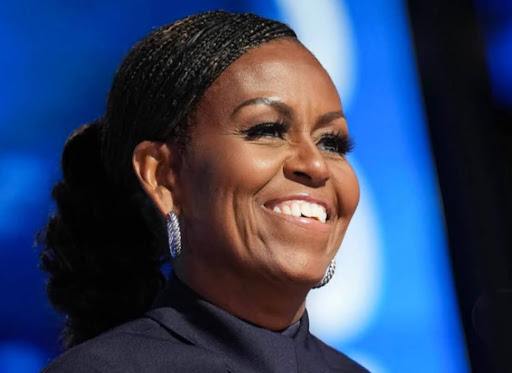
First Lady Melania Trump recently released her documentary “Melania,” recounting the twenty days leading up to the 2025 presidential inauguration. In response, viewers drove a 13,000 percent increase in streams of former First Lady Michelle Obama’s documentary “Becoming.”
This spike comes as “Melania” has struggled to maintain streaming momentum into its second weekend and as online debate surrounding both films has intensified. On TikTok, some users alleged that Netflix temporarily categorized “Becoming” under children’s programming before returning it to the adult section.
Media scholars say the renewed attention reflects how audiences increasingly use their consumer habits to signal political and cultural positions.
Christine McWhorter, an assistant professor in the Cathy Hughes School of Communications at Howard University, who specializes in media persuasion research, says consumers are becoming more aware that their engagement carries weight.
“We’re in a state where people are trying to find the best way to make their voices known,” McWhorter said. “They know companies listen to where the money is…. A spike like that shows dissatisfaction in one of the only ways that people know how to get their voice out.”
McWhorter described the surge in “Becoming” viewership as a form of digital activism, noting that some social media users actively encouraged others to stream the documentary to boost its chart position.
She added that political polarization often drives audiences toward media that reinforces their existing beliefs. Rather than approaching content neutrally, viewers frequently gravitate toward material that aligns with their identity, a pattern that can be intensified by today’s algorithm-driven platforms.
“Social media is engineered for engagement,” McWhorter said. “It’s not a mistake that some of the things that go the furthest are the most sensationalized.”
Because emotionally charged content travels farther online, backlash itself can sometimes amplify the very media audiences claim to oppose. TikTok content creator Elle Murasaki (@Briefedbyelle) described online attention as a form of capital.
“It’s all currency,” Murasaki said. “We talk about it on the internet because it’s currency. The same creators who tell you to boycott it will make 10 videos. If I make 10 videos telling you not to watch something, what are you gonna do? You’re gonna wonder what it’s about.”
As debate around “Melania” and “Becoming” circulated across platforms, the increased attention further boosted viewership of the former first lady’s documentary.
Murasaki said many of the women she speaks with aren’t discovering “Becoming” for the first time, but returning to it as a form of protest. She noted some viewers were watching it across multiple screens, even when they were not in the room, as a way to signal support.
“I want to be very clear, that’s not to knock Michelle Obama’s art,” Murasaki said. “Black women just wanted to be heard, and Michelle Obama’s ‘Becoming’ was a catalyst.”
Murasaki asserts that the renewed attention to “Becoming” was not accidental, but rooted in Obama’s longstanding resonance in the Black community, especially with Black women.
“The forever First Lady, being a brand of somebody that is authentic to them and representative of who most Black women see themselves as,” Murasaki said
Clariss Duhaney, a junior biology major from Queens, New York, said she had seen criticism of Melania Trump’s documentary circulate on TikTok but was unaware of the surge in viewership of “Becoming.” She added that at Howard, political awareness often develops through social media spaces.
“At Howard University, it’s very blue, but I think students are missing a lot of news and information about politics, solely getting their information from social media,” Duhaney said.
She said streaming behavior can still function as a form of response.
“Watching her documentary was the last thing to do as a form of protest and really showed what the people think,” Duhaney said.
Copy edited by D’Nyah Jefferson – Philmore