

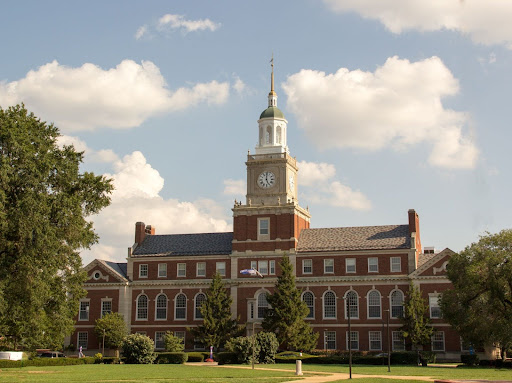
As social media fuels distrust of higher education, Howard University students are reflecting on what that means for them as scholars at one of the only historically Black colleges and universities (HBCUs) classified as a Research One (R1) institution.
In 1963, Pulitzer Prize recipient and historian Richard Hofstadter politicized the term “intellectualism” in his book “Anti-Intellectualism in American Life,” emphasizing the antagonistic perception of academia. Living in an era of societal transition, Hofstadter sought to defuse the feud between the public and intellectuals.
In The New York Times essay “The American University is in a Crisis. Not for the First Time,” Beverly Gage, a history and American studies professor at Yale University, uncovered the historic political foundation between higher education and American identity.
“As Hofstadter pointed out more than six decades ago, the United States has a long record of resenting its professors, experts, intellectuals and scientists — and questions if higher education is actually good for the national soul,” Gage wrote.
Brandon Hogan, an associate professor in the Howard University department of philosophy, believes that the lack of education equity for Black citizens contributed to internal division.
“I think because of this history of the denial of education and opportunities, there is probably more of a stark divide within the Black community. So I think we have the educational divide and we end up having these tensions, but I think it’s more of an American problem,” Hogan said.
This divide was on full display after a viral moment on retired NFL player Cam Newton’s podcast “Funky Friday” featuring Howard alumna and rap artist Lady London. During the episode, London prompted Newton to express his style in one word.
Newton responded by creating his own word, “nclecta.” London offered a correction, thinking he meant “eclectic,” but Newton defended his creation. The social media praise of London’s intelligence, followed by the ridicule of Newton’s response, revealed a glimpse into what the public values in terms of intelligence.
Similar to Gage’s historic findings, Hogan believes that society is under the impression that everyone’s opinion should matter, regardless of whether one’s statement is factually proven, further fueling the dispute.
“I think because we [Americans] want to be egalitarian, democratic and under the notion that everybody is important,” Hogan said.
Tara Ulich, a sophomore English and political science double major from New York City, attributes the rise of academic distrust to the development of social media.
“Specifically, within our generation, we were the first to have this kind of unfettered access to full-blown social media,” Ulich said.
She noticed the dismissal of academic structures on social media platforms like TikTok, which contributed to heightened online discourse.
“Within online rhetoric, especially the alt-right pipeline, the social media that catered to young boys, like the Joe Rogan podcast. They look down on higher education. They see it as a waste of money and a waste of resources,” Ulich said.
Hogan also mentioned the relationship academics have with social media, saying many filter their ideas to cater to the public, losing some of the substance of their work in the process.
“There are a lot of academics who feel that they have to present stuff for the public, but end up getting watered down, and that continues anti-intellectualism,” Hogan said.
The rise of social media fuels the battle between performance and substance when interacting in academic settings.
Brooklyn Ramey, a sophomore political science major from Detroit, offered a perspective on how the current rise in anti-academia rhetoric impacts the intellectual identity of Howard students.
“Our generation can easily make a joke out of a lot of things. The jokes normalize the life we live in, like that ‘woke friend’ or ‘it’s not that deep,’ Ramey said.
Ramey asserts that anti-intellectualism lingers beyond social media platforms and is visible on campus.
“Anti-intellectualism is on campus. People who are STEM majors may be very knowledgeable about that, but when you talk about sociological concepts and ongoing politics, they will fall into that misinformation… and vice versa.” Ramey said.

She believes that students play an important role in reversing the rise of distrust against academia.
“Not even just as Howard students but just as educated citizens… Anti-intellectualism is going to affect everyone negatively. I think it’s our role to combat that,” Ramey said.
Dana A. Williams, dean of the Howard University Graduate School, asserts that the rise of anti-intellectualism shouldn’t deter students from embracing intelligence.
“If a student isn’t anti-intellectual, the fact that a segment of the population purports to be is wholly irrelevant. People are curious. It’s hard to stop curiosity just because someone says thinking has fallen out of favor with a drunken populace,” Williams said.
Sheena Howard, Ph.D., an award-winning author, scholar and communication professor at Rider University, believes that anti-intellectualism eradicates the value of critical thinking.
“When education is framed as unnecessary or fraudulent, young people are discouraged from developing the very skills required to navigate complex social, political and economic systems,” Howard said.
As students seek guidance on thriving within an anti-intellectual climate, Howard advises students to use their success as a tool for resistance.
“When grounded in values and paired with intellectual rigor, the lives they build and the impact they create become visible counterpoints to narratives that dismiss education, complexity and critical thought,” Howard said.
Dean Williams and faculty encourage students to continue to openly explore their curiosity.
“The best advice I can give is the best advice I was given: be intellectually curious about everything. That means reading and inquiring and reading more to answer the questions that emerge as you’re exposed to new ideas,” Williams said.
In agreement, Hogan asserts that students shouldn’t shrink themselves for outward approval.
“Never minimize your expertise, be confident,” Hogan said.
Copy edited by Kennedi Bryant