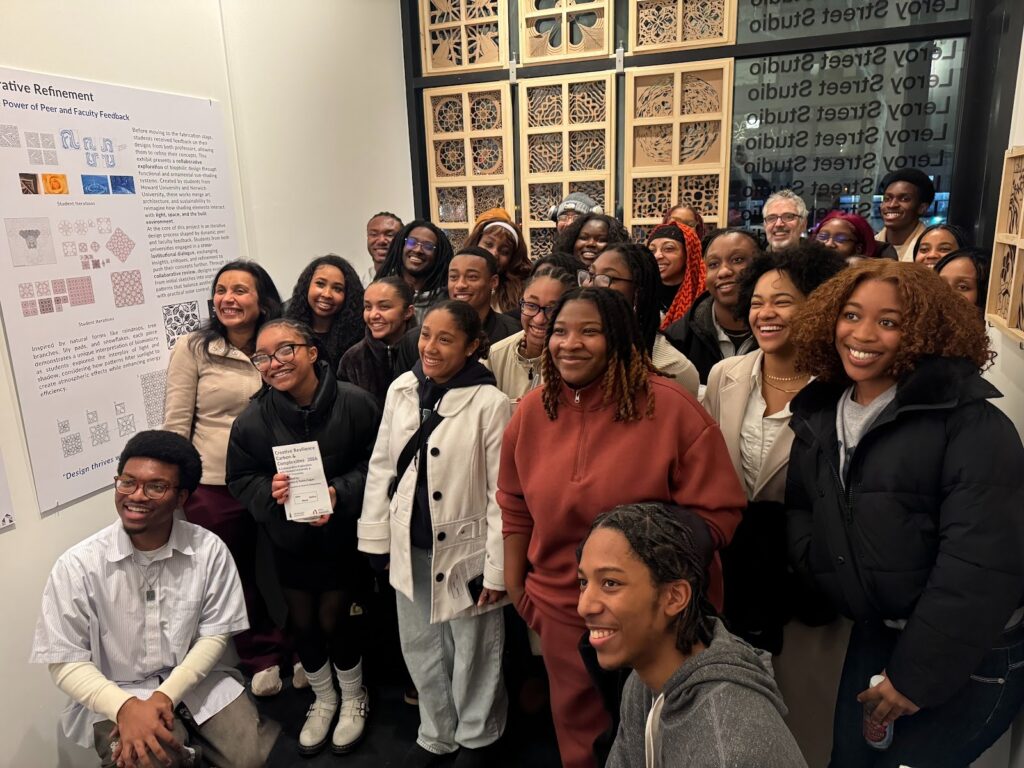
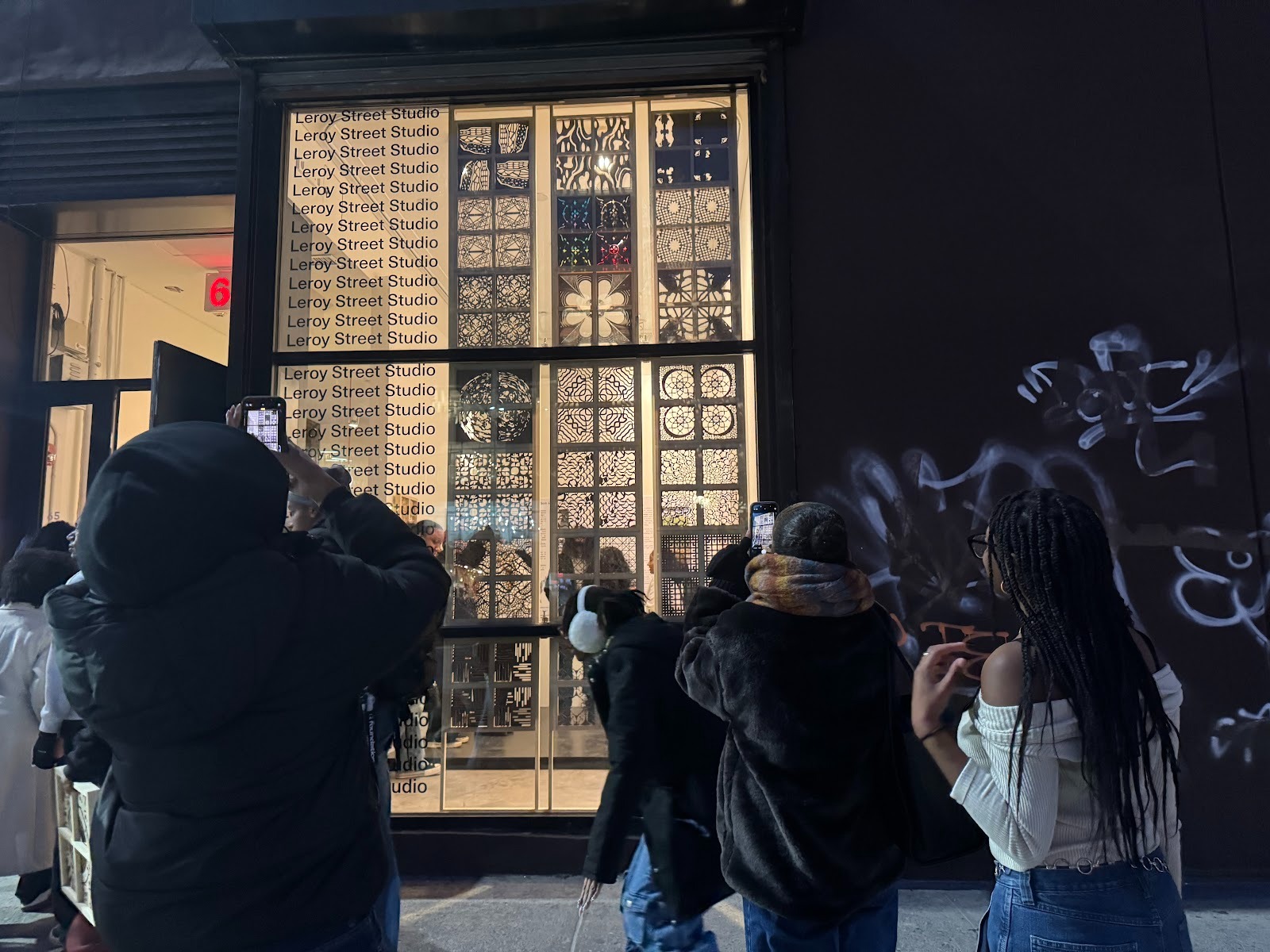
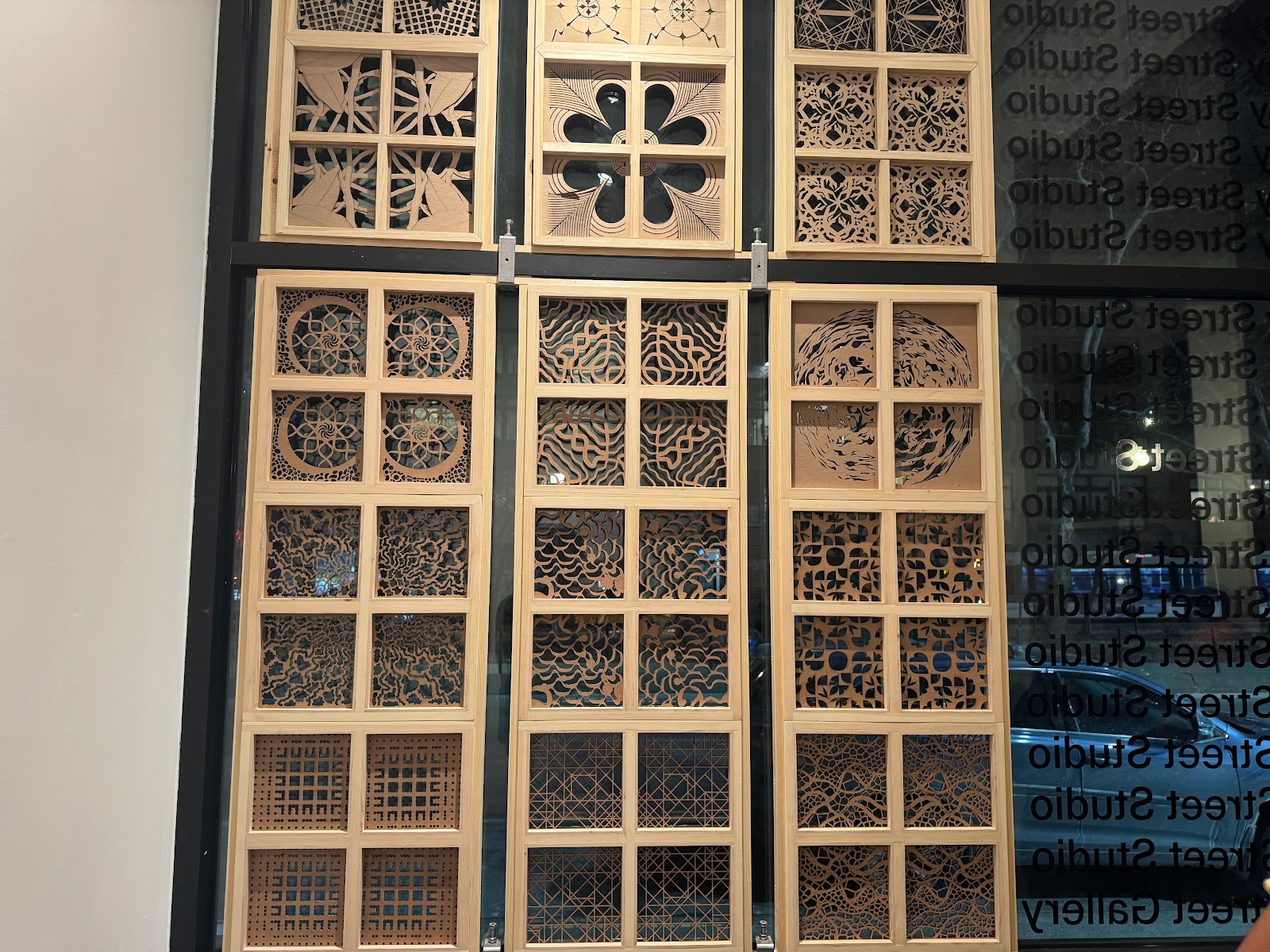
In the heart of New York City’s Chinatown, several meticulously crafted wooden frames hang in the window of Leroy Street Studio, displaying a variety of patterns and shapes. It’s more than an art exhibit — this is the work of Howard University third-year architecture students.
Last Friday, about thirty of them boarded a charter bus for the three and a half hour ride to New York City. After a long day of sightseeing and fighting sharp January wind, the bus approached the corner of Allen and Grand Streets.
“There it is!” One student said, which set off an excited chorus of students saying, “That one’s mine!”
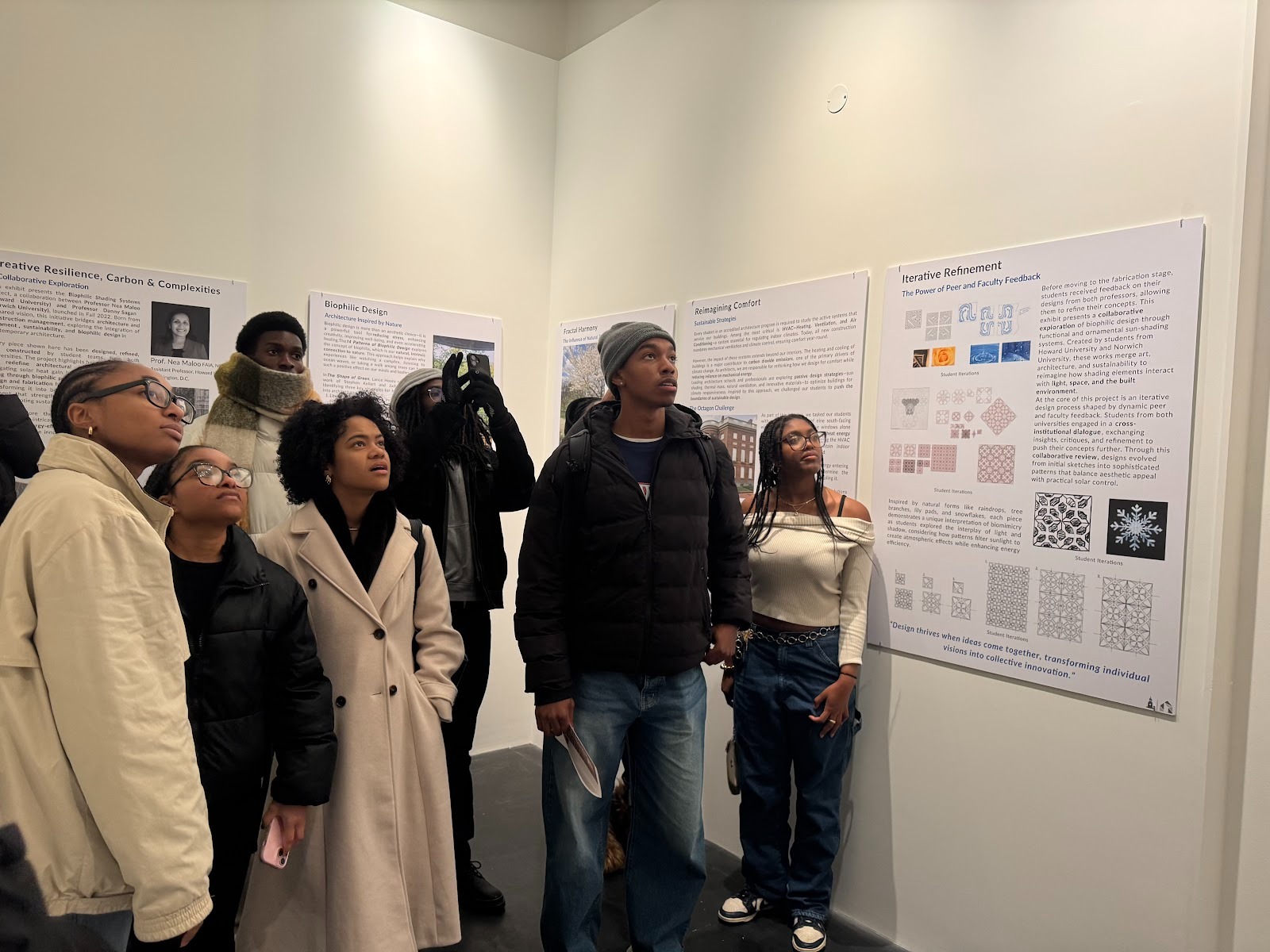
The exhibit was a collaboration between Howard Assistant Professor Nea Maloo and Associate Professor Danny Sagan of Norwich University. After meeting at a conference, they developed a curriculum around biophilia, which integrates nature into architectural design using light, plants and other organic materials.
In their environmental systems class last fall, students designed sun shading devices for window frames. The goal was to blend aesthetics with calculations for minimizing carbon emissions while retaining natural light.
“This is our fourth year of collaboration and then after three years I came up with the idea: now, I have enough that I want to showcase my students,” Maloo said.
Architect Danai Metoyer gave students a tour of Leroy Street, which is home to a gallery and a studio for architecture, construction and interior design. Upstairs, in a room lined with wood samples – cypress, oak, cedar, pine and more — she led students in a sketch exercise, emphasizing that architecture is about loving the process and not the product.
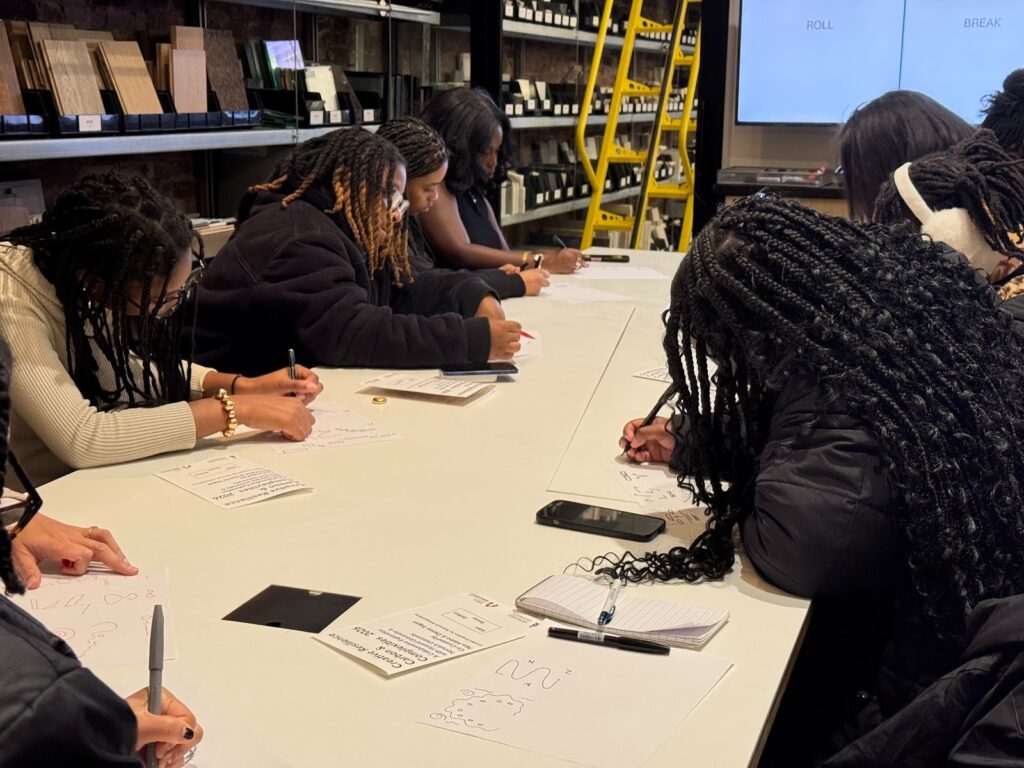
“It was really inspiring hearing her story, especially from her being here for four years, that’s my future in a few years,” said junior architecture major Ebony Williams from Dallas, Texas.
The building showed the studio’s architecture philosophy in practice, with three dimensional models hanging on the walls like art, open space for working and lots of texture, from fabric swatches to metal and cork. The exhibit soon filled with community members and professional architects like Natalka Khodarchenko, eager to hear from the students about their work.
“You have to start it really early, working and being involved in real projects to understand the architectural world more,” said Khodarchenko, who’s worked at Leroy Street for three years. “Not only some student project, but you need to understand the real clients, needs, how to do stuff step by step.”
A few of Maloo’s other students, including fifth-year students who weren’t required to attend, chose to come on the trip to show support. The work displayed in the exhibition came from an optional project, and junior architecture major Ron Caldwell said he felt like his hard work paid off.
“The time period I had to work with my group to make that project was very short and very stressful, because we also had finals for our own studio projects. It was like doubling up,” Caldwell said. “So it’s a nice refreshing feeling to see that finishing touch hanging on that window.”
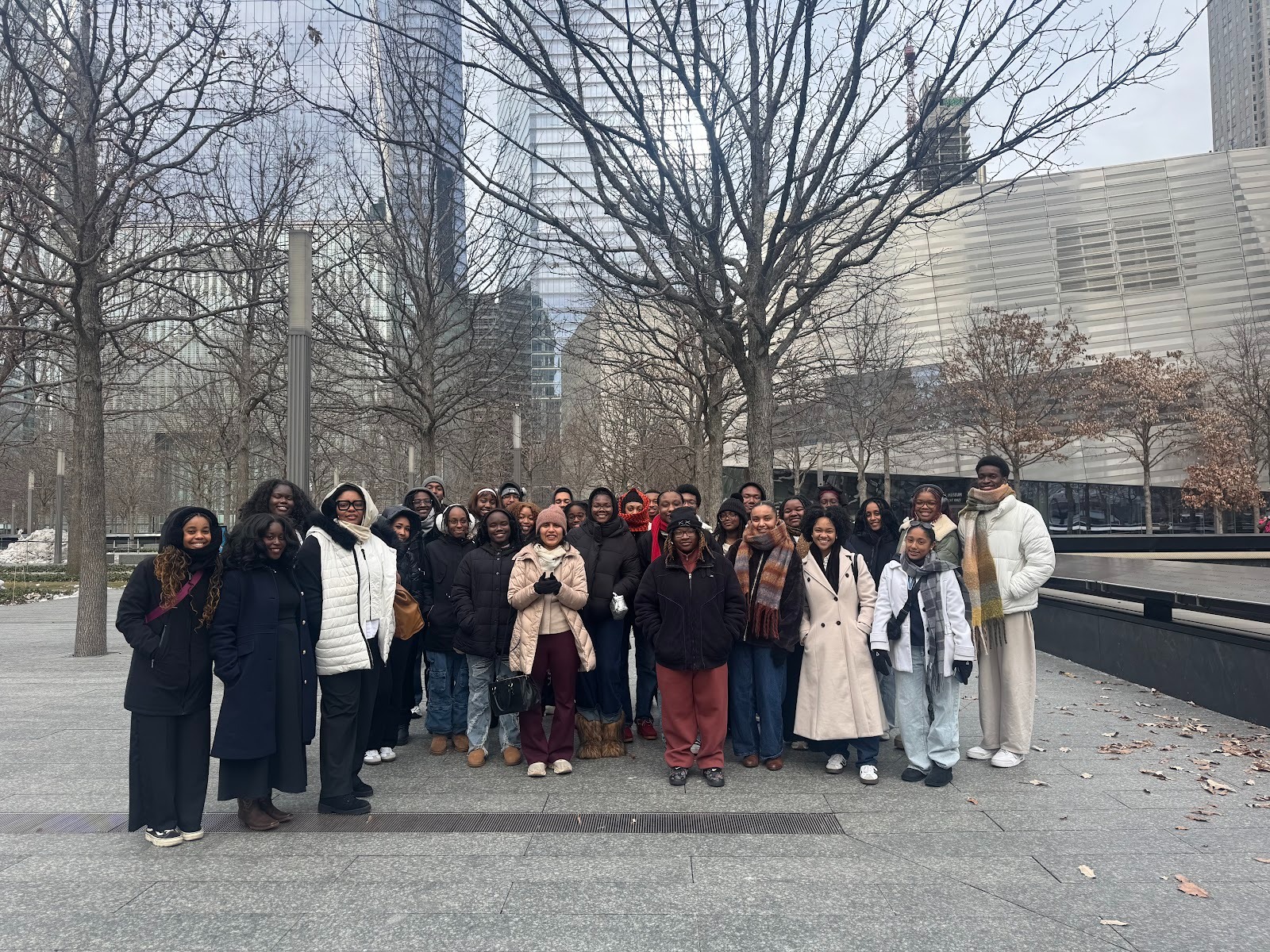
Outside of seeing the exhibit, Maloo made time for a visit to the World Trade Center, African Burial Ground National Monument and the Brooklyn Bridge. For some students, it was their first time in the city, with many pulling out phones to take pictures of the city’s contemporary buildings.
Maloo was determined to get her students to New York, negotiating the bus accommodations all the way up to the night before the trip.
“I teach at Howard because of the students. They trust me, one hundred percent,” she said. “I don’t know if I’m elevating them but they’re elevating me.”
She emphasized how important advocating for her students is to her, and for many of them, the feeling is mutual. Several students expressed gratitude for Maloo, including junior architecture major Noah McBride from Washington, D.C.
“I think we, as students who pay a lot to go to school, wonder often when will we reap the benefits of the labor that we put in, the love that we put in, the sweat and tears that we put into our work?” McBride said. “And having a professor who’s just as dedicated and committed to seeing our vision come to fruition, I’m grateful for that.”
Howard’s architecture program is five years long, allowing students to earn their bachelor’s and master’s degrees consecutively. For them, this means long, sleepless nights in the studio of the Mackey Building, and countless trips to the art supply store for materials.
“People have very little understanding of what architects do. It’s not just creating a building, creating a little house,” Williams said. “It’s creating an experience. It’s crafting a community. And it’s timeless, something that’ll be there forever.”
Copy edited by Daryl R. Thomas Jr.