

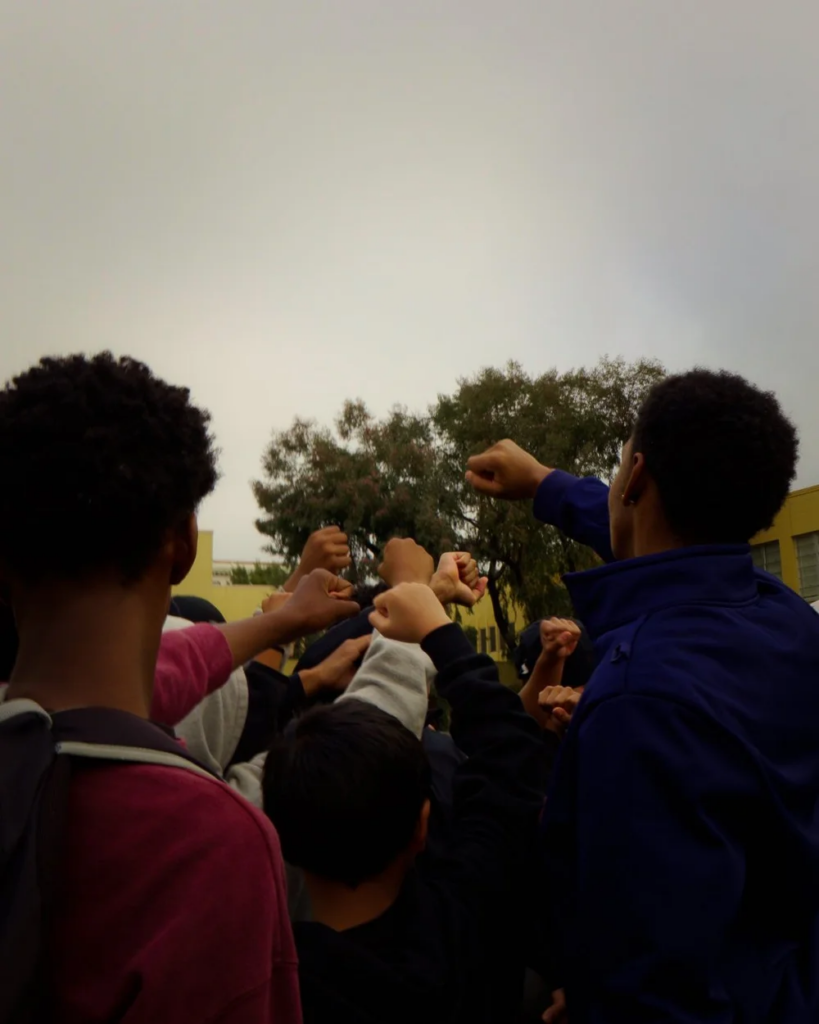
Three college students founded a program called Beyond the Finish Line to help student-athletes from underserved communities prepare for life beyond athletics.
Howard University junior pre-law student Evan Garrick, Hampton University sophomore business major Jalani Walker and Sean Bullard, a student-athlete at the College of San Mateo student-athlete all grew up in Oakland, California, where opportunities for young athletes often came with limitations.
While sports offered recognition and a path forward, many students lacked exposure to professional development, career guidance and mentorship. Beyond the Finish Line was created to bridge that gap and empower young athletes to envision possibilities beyond the game.
Garrick, the organization’s CEO, oversees daily operations, partnerships and communications with volunteers, donors and schools.
“Coming to an HBCU and getting the professional development I did off the rip, I felt the need to bring that back to the community as soon as I could,” Garrick said. “Many underrepresented students can really only envision what they see. We want to show all the possibilities that are out there.”
Planning events often begins weeks or months in advance, including scheduling, securing locations and coordinating with speakers. The goal is to ensure that each session is meaningful and engaging.
Beyond the administrative side, the nonprofit develops workshops designed to help student-athletes explore who they are outside of sports.
Sessions cover career readiness, resume-building, professional etiquette, financial literacy and mental health. They also emphasize leadership, teamwork and discipline, teaching skills that transfer from the playing field to professional life.
Walker, the organization’s CFO, said his motivation came from observing peers in Oakland who lacked access to resources and opportunities. He said exposure is the key to helping young athletes see the full range of paths available to them.
“The Bay Area is very tight-knit, which can keep people in a bubble,” Walker said. “It’s imperative that young people get out and experience life in other places. There’s so much more culturally that they don’t always see.”
Walker added that Beyond the Finish Line aims to expand beyond just one school, connecting minority student-athletes to multiple HBCUs to help them envision success.
Bullard, the COO and a current football player who plays defensive back, said his perspective as an active athlete shapes how the nonprofit designs its programs.
“I’m living the reality that many young Black athletes hope to reach,” he said. “I see firsthand how easy it is for athletes to tie their identity to sports. We design sessions that acknowledge the pressure, expectations and time demands while helping students explore who they are beyond the field.”
Growing up in Oakland and playing multiple sports, Bullard said he saw the challenges student-athletes face, from injuries and burnout to academic struggles and uncertainty about life after sports.
“Those experiences shaped my understanding of the obstacles student-athletes face and reinforced why we help them see themselves as more than athletes,” he said.
Bullard also ensures events run smoothly, balancing preparation with being hands-on during workshops.
“I focus on preparation and presence,” he said. “During events, I check in with students and make sure our message hits. The goal is for students to leave inspired, informed, and confident about paths beyond sports.”
Since its launch, Beyond the Finish Line has hosted workshops in Oakland schools. Students have responded positively, with some saying they learned more during a single session than they had all year. The founders see this as validation that the nonprofit’s approach is working.
Looking ahead, Garrick said growth is the organization’s primary goal.
“Growth in our team, our partners and our impact,” he said. “Getting better as leaders and improving how we manage the organization, that’s the mindset going forward.”
Walker said the long-term goal is to build networks and lasting mentorship opportunities.

“Networking is the most important aspect,” he said. “This is a brotherhood and a family here to support each other.”
Bullard emphasized the bigger picture for student-athletes.
“Life beyond sports isn’t a failure or backup plan,” he said. “It’s an opportunity. Athletes are more than a stat line or highlight reel.”
Beyond the Finish Line plans to expand its workshops to additional communities in the coming years, focusing on creating sustainable programs that equip student-athletes for success in school, work and life.
Copy edited by Daryl R. Thomas Jr.