

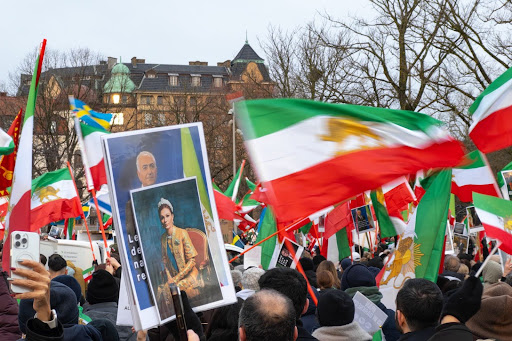
Mass protests have broken out in Iran over the country’s growing affordability crisis, political dissatisfaction and lack of social reform. CNN reports that since late December, hundreds of protests have erupted throughout Iran’s 31 provinces.
The protests are a culmination of a long-standing tension between Iran’s government and its citizens over dissatisfaction with the treatment of women, impositions on personal freedoms and economic hardship. Reports out of Iran suggest that between 12,000 and 20,000 people have been killed, but with the regime obscuring numbers by shutting down the internet, it remains difficult to verify the approximate death toll. The demonstrations have put the country on an international stage and raised questions about the long-term sustainability of the country.
The demonstrations began in the country’s capital, Tehran, as shopkeepers went on strike over rampant inflation. As the cost of basic goods like eggs and cooking oil skyrocketed, the value of the Iranian rial simultaneously reached a record low of 1 U.S. dollar to 1.42 million rials, leaving citizens without a way to access or afford necessities.
Mazaher Koruzhde, a Howard University professor in political economy and American foreign policy and a scholar in U.S. foreign policy in the Middle East and Persian Gulf, said that most of Iran’s protests in the last decade stem from economic mismanagement.
“People are tired of corruption,” he said. “People are tired of seeing officials without concern for their people filling up their own pockets.”
Khoruzhde attributed Iran’s economic turmoil in part to U.S. sanctions, which forced Iran, as one of the most heavily sanctioned countries in the world, to sell much of its oil through unofficial channels. The Islamic Revolutionary Guard Corps (IRGC), Iran’s military force that controls roughly half of these exports, pockets around $50 billion from oil annually, highlighting the stark wealth disparities between regime elites and ordinary Iranians.
The protests are the largest Iran has seen since the 2022-2023 “women, life, freedom” movement, which was sparked by the death of a 22-year-old woman, Mahsa Amini, while in custody for violating the strict dress code. While that wave of protests is often framed as a response to social and ideological repression, Khoruzhde notes that they were rooted in the same economic inequalities fueling today’s unrest. Instead of addressing economic hardship, the government has increasingly responded by labeling protesters as disloyal and suppressing dissent.
What started as a strike in one city quickly mobilized into a nationwide outcry against the government as a whole. On Jan. 1, the first fatalities occurred when the security forces killed seven demonstrators in Iran’s Lorestan province.
In response to the demonstrations, the Iranian government shut down the internet and restricted access to international sites such as Google, VPNs and SMS messages. In an unprecedented move to suppress protests, the government deployed military-grade GPS jammers to shut down Starlink access, the last resort for anti-regime activists without ordinary internet access.
The internet blackout has left Iranians without a way to document mistreatment or access foreign news, banks or travel options, allowing the government to limit outside scrutiny of reported atrocities. Eyewitness reports out of Amnesty International and The New York Post have described indiscriminate killing, snipers shooting the hands of people recording and live ammunition fired at the backs of people fleeing, with authorities charging “bullet fees” to families if they want the bodies of their loved ones back.
In response to the protests, Iran’s president, Masoud Pezeshkian, initially made pacifying remarks to the public but has continued to stand firm in his opposition to the protests.
“People have concerns, we should sit with them, and if it is our duty, we should resolve their concerns,” Pezeshkian said. “But the higher duty is to not allow a group of rioters to come and destroy the entire society.”
Every night, protesters flood the streets by the thousands chanting “death to the dictator,” in reference to Iran’s Supreme Leader, Ayatollah Ali Khamenei. The country’s ongoing human rights abuses and rising death toll have drawn international condemnation, particularly from the United States.
President Donald Trump warned on Truth Social at the beginning of January that the United States would intervene if peaceful protestors are killed.
“If Iran… violently kills peaceful protesters, which is their custom, the United States of America will come to their rescue,” the statement said.
The warning comes just months after the 12-day war between Israel and Iran in which the U.S. struck three Iranian nuclear sites. Tensions continue to rise between the U.S. and Iran as Khamenei proclaimed that President Trump has Iranian blood on his hands from stoking the protests.
“Protestors are ruining their own streets . . . in order to please the President of the United States,” Khamenei said earlier this month in a public address in Tehran. “Because he said he would come to their aid. He should pay attention to the state of his own country instead.”
Despite Trump’s warning, Khamenei and the Iranian government have grown increasingly hostile towards demonstrators, often referring to them as “terrorists.” Iran’s attorney general, Mohammed Movahedi Azad, has announced that anyone who is caught taking part in the protests or even helping “rioters” will be considered “an enemy of God” and will face the death penalty.
Most recently, Trump has taken to Truth Social to correspond with “Iranian patriots,” encouraging them to keep protesting and announcing that help is “on the way.”
Trump’s national security team has ruled out conducting a boots-on-the-ground military intervention in Iran but has alluded to other military operations to destabilize the regime. White House Press Secretary, Karoline Leavitt, told Fox News that if diplomacy fails, airstrikes are one of the “many, many options” Washington could use to exert lethal force against Iran.
Khoruzhde emphasizes that any change brought by U.S. intervention in Iran would primarily serve American interests in the region rather than provide lasting reform.

“If any meaningful change is supposed to happen in Iran, it must happen from within.” Khoruzhde said. “U.S. intervention in developing countries anywhere in the world has not helped the people of those countries, the working class of those countries, meaningfully. It has only led to the enrichment of an elite class in those societies.”
According to Khoruzhde, proposals circulating in the U.S. about Iran’s future – particularly the idea of reinstating Reza Pahlavi, the exiled son of the former shah – would repeat this pattern. He noted that replacing the current regime with a U.S.-backed monarchy would undermine the demand for a republic free of Western interference that drove Iran’s 1979 revolution.
While the outcome of the demonstrations remains uncertain, Professor Khoruzhde suggests the current protests differ fundamentally from earlier movements, with the government cementing itself as “the enemy of its people” through intimidation and mass violence.
“These protests have to come to an end. Either with the revolution or with oppression,” Khoruzhde said. “If revolution does not occur, if it goes the route of oppression, society will still have to function. Almost every family has lost someone. They will not be the same. It’s like the entire society is sleeping in a room full of gunpowder.”
Copy edited by Kennedi Bryant