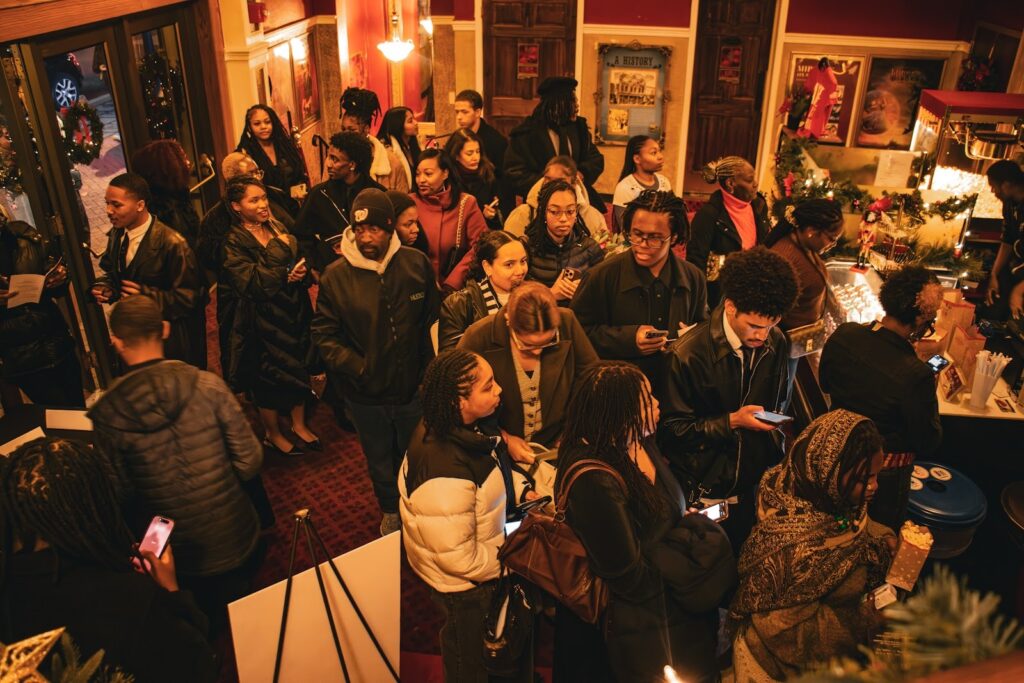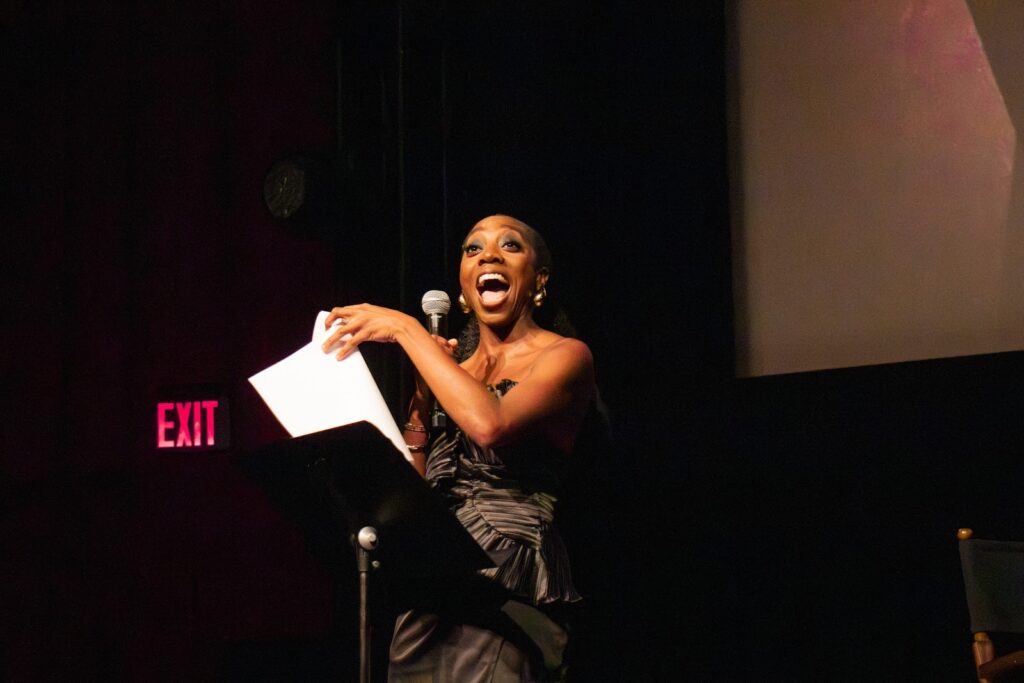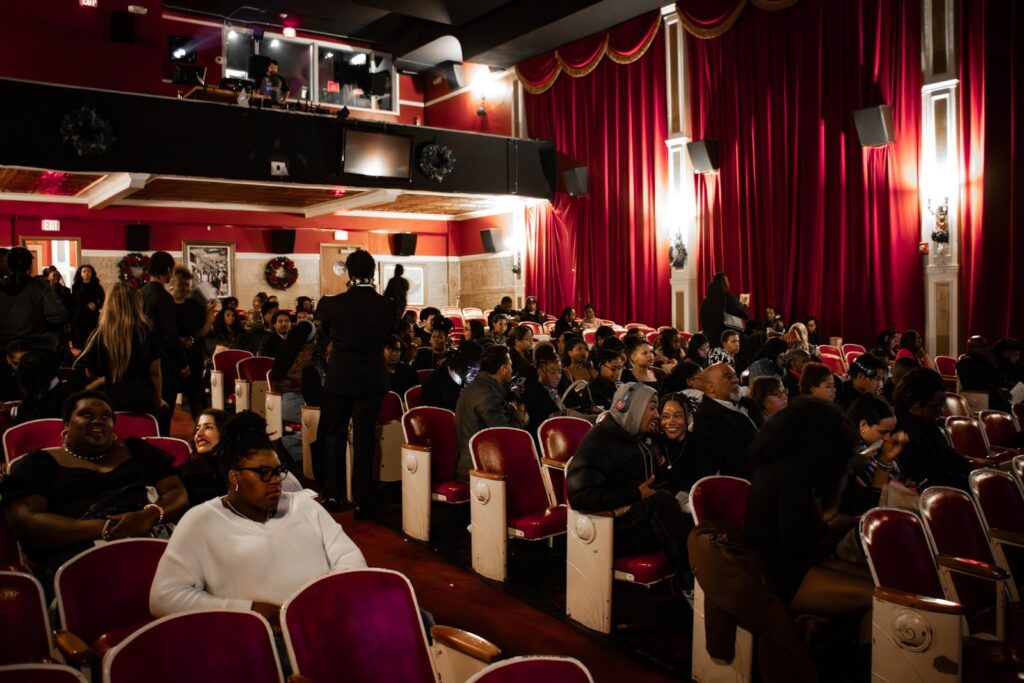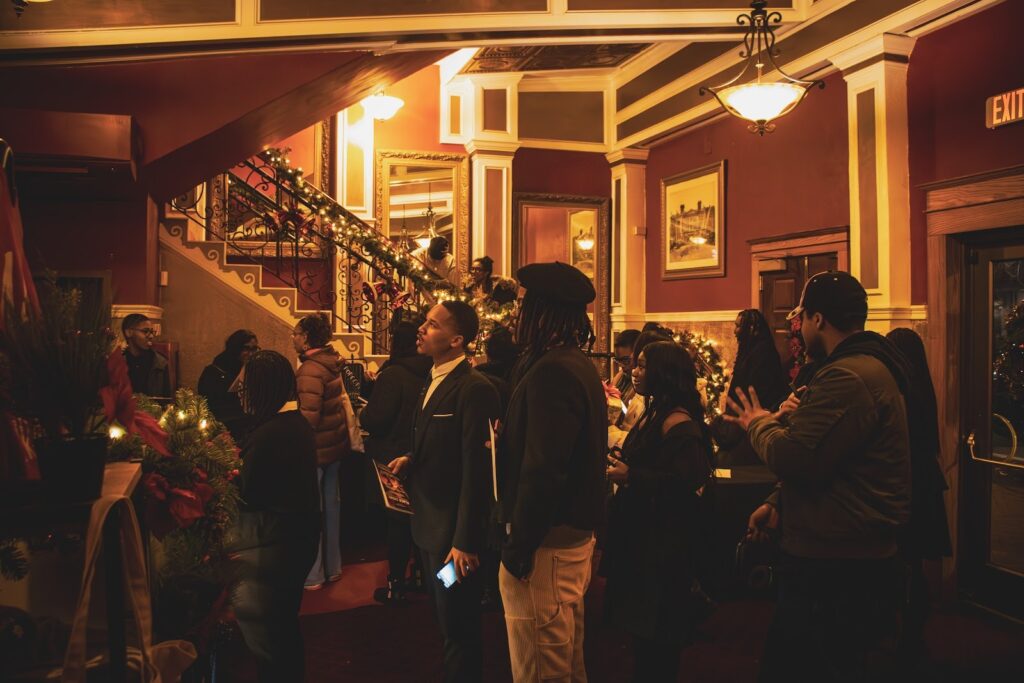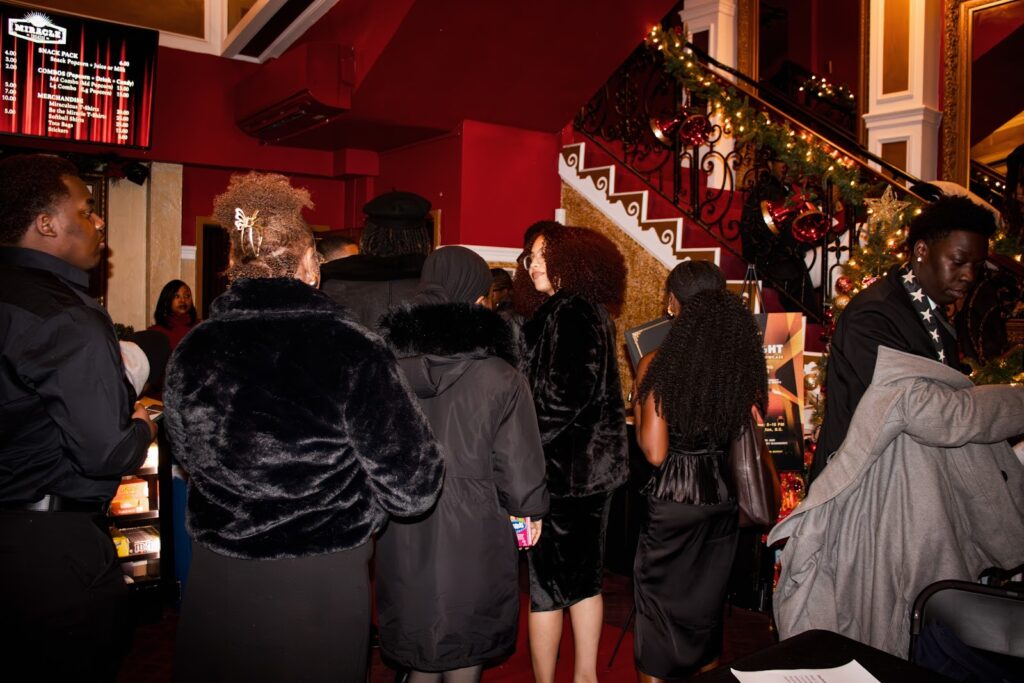

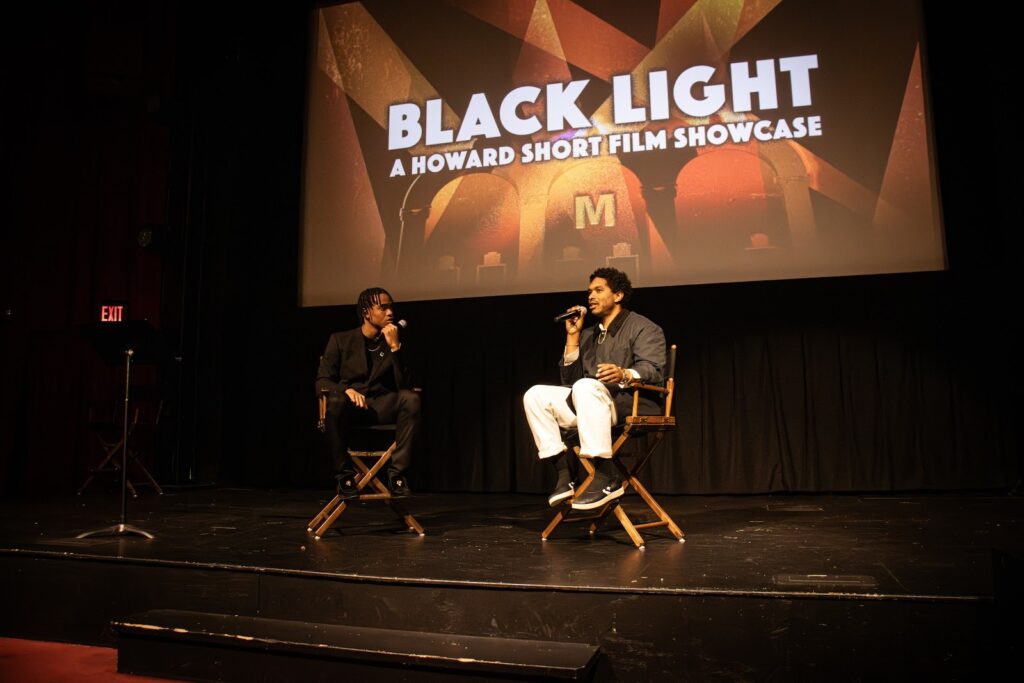
Over the winter break, students and alumni alike gathered at the Miracle Theater for the first annual Black Light Showcase, exhibiting short films. The collaborative event brought together film lovers and created a space for current students and alumni to share their work and build community.
Black Light is run and coordinated by Howard University television and film professor Akosua Adoma Owusu. Her involvement in the film community, along with students from the Howard University Film Organization (HUFO) and Master of Fine Arts student (MFA) Zion Murphy, led to the creation of a platform where all students could share their work.
“[I had] a desire to build community through film,” Owusu said.
As a professor in the Media, Journalism and Film department, Owusu said her initiative to start Black Light followed her observation that students received little recognition for their intensive thesis and script work at the end of the year.
“There was a gap at Howard,” Owusu said. “They produce excellent work at the end of the semester, but there isn’t a consistent showcase that treats their films with the professional respect that they deserve.”
Owusu was referencing the Howard Thesis Showcase, founded by Payton Mack, which allows film students to view their work at the end of the spring semester at the Howard Theatre. Owusu sought to bridge the gap between undergraduate, Master of Fine Arts students, or MFA and alumni by creating a shared space for the collective.
As an active member of the film community, Owusu has showcased her work at international festivals, an experience that helped shape the goals of the Black Light Showcase.
“It’s legacy building. Howard has produced some of the most important Black artists and filmmakers, and Black Light will contribute to that lineage,” Owusu said. “Now students won’t just be working towards earning a grade, but Black Light creates a home base for the next generation of filmmakers.”
The evening began early, with students arriving in coordinated all-black attire. The smell of popcorn and the sound of laughter filled the room as attendees streamed into the red seats of the classical theater.
As the opening remarks concluded, HUFO’s president, Kameron Outland, received a special shoutout along with a certificate of appreciation.
“Whether you’re a fellow filmmaker, sailor, fireman or anything in between, I think you can take something valuable with you from showing up to Black Light,” said Outland, a senior television and film major from Houston.
Outland expressed his gratitude for the turnout and said he believes the momentum will carry over into future showcases.
“We don’t have too many spaces like this for our film students,” Outland said. “For the amount of people that came, I think it really signifies the strong community and demand for spaces celebrating our work.”
Between film screenings, keynote speakers Terence Nance, a visual artist and musician known for his HBO series Random Acts of Flyness, and Karyn Parsons, an author and artist known for her role as Hilary Banks on The Fresh Prince of Bel-Air, were acknowledged.
At the end of the first night, a Q&A session was held with Nance, which Outland hosted.
“I became in awe of his specific film style,” Outland said.
Nance often works within the Afrosurrealism genre, using strong visuals and sound to convey his message.
“It’s like watching a drawing artist who got the chance to make their ideas into a cohesive motion picture,” Outland said. “He was super calm and attentive to my questions and the audience.”
Nance himself also shared his remarks on filmmaking.
“Filmmakers are artists who have some sort of strange appetite for adrenaline and leadership…to be in the challenge of leadership, you’re like a chef,” Nance said. “A chef is not a cook, but a cook who wants to be a leader…you’re not going to get a good film without having a great leader.”
Another student, Leila Gbelia, a senior television and film major, reflected on the impact of Nance’s words.

“Personally, the highlight of my night was being given a shout-out by Terence Nance,” Gbelia said. “It made all my hard work feel truly worth it. I think all filmmakers can relate to wanting to prove ourselves and see that our visions can be appreciated.”
Gbelia directed several projects that screened during the first night of Black Light.
“I really wanted my vision to not only make sense, but be beautifully understood,” Gbelia said. “I felt like a capable, competent filmmaker…especially given that my premiere crashed and I had to edit pretty much all films from scratch four days before the showcase.”
Night two continued with the momentum from the night before, with the focus now on the MFA and alumni students’ films.
Zion Murphy, a third-year MFA student at Howard, was the co-curator of Black Light, and also received a certificate of appreciation. He spoke on Howard’s MFA program.
“It’s the only HBCU with a graduate film program in America…as a result of that, I think we have some very special films,” Murphy said.
Murphy was joined by his peers, whom he described as his “chosen film family.” Their films were also screened, and served on a student Q&A.
“We are not attempting to emulate or re-create, rather inventing our own Black film aesthetics and stories,” Murphy said.
Parsons collaborated with Owusu in 2017 on a short film created and directed by Owusu. The film was screened as part of the showcase. She helped bring the night to a close.
“This is a space that takes care of us,” Parsons said. “The kind of support and representation that’s unique from a lot of other colleges, a lot of other spaces.”
Parsons emphasized the importance of platforms like Black Light and offered advice to young aspiring artists.
“The most important thing is to follow your joy. If there is something bubbling in you, you need to follow it, because that’s not coming from nowhere,” Parsons said. “You better go after that thing and do it.”
As the second evening came to a close, hugs and expressions of appreciation filled the room.
“I love the word ‘Ubuntu, ‘ which refers to the phrase ‘I am because we are,’” Outland said.
Black Light is centered on the upliftment of Black artists. The showcase is planned to continue once every semester, according to Owusu.
“I think when people show up to events like these, they’re able to see different versions of themselves, and possibly leave feeling inspired,” Outland said.
Copy edited by D’Nyah Jefferson – Philmore