

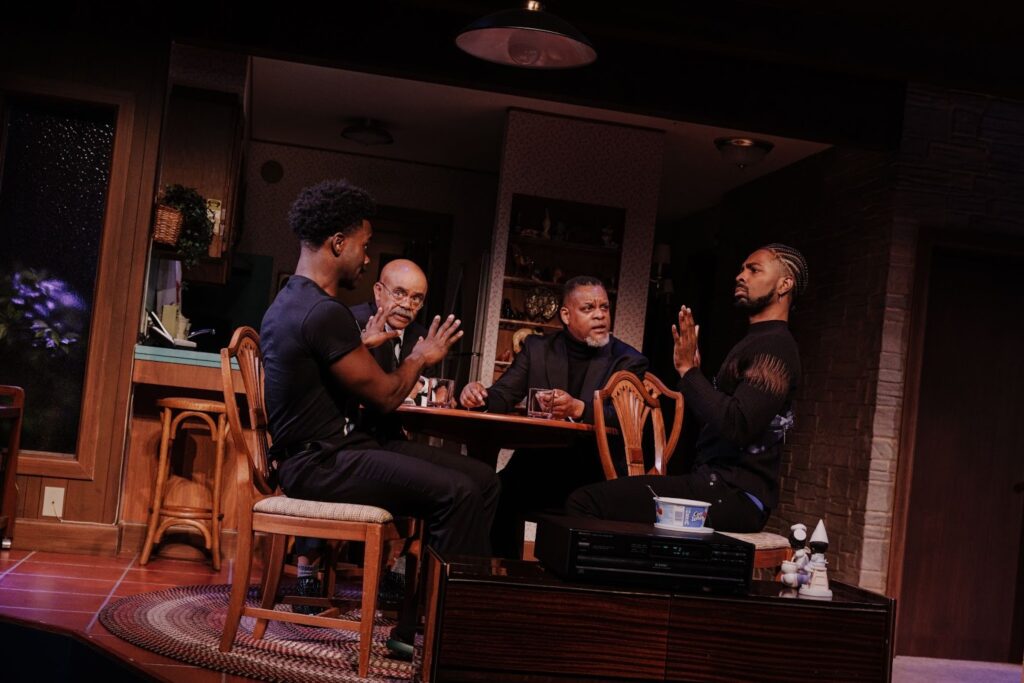
Arena Stage Theater is presenting the inaugural production of the new dramatic comedy, “Fremont Ave.” alongside California’s award-winning theater, South Coast Repertory. The play surrounds three generations of Black men and their journey with love, masculinity and identity, all revolving around a merciless game of Spades.
The play’s Arena Stage world premiere began on Oct. 8 and will be live until Nov. 23 in Washington, D.C.,, before transferring to Costa Mesa, California, for its 2026 Spring season with South Coast Repertory.
Belinda Davis was encouraged to attend the show by her sister, who accompanied her. Following the first half of the play, Davis said she appreciated the older tunes played within the play, bringing light to different eras of music and culture.
“It’s nice to have a blast from the past with the music. I’m enjoying the old music that they’re playing throughout and I definitely understand the themes that they’re bringing up through the different years,” Davis said.
Fermont Ave. was created by Reggie D. White and directed by Lili-Anne Brown. White is an award-winning artist and New York-based actor, writer, director and musician. He is currently the senior director of artistic strategy & impact at Arena Stage, with experience as an educator.
Brown is an award-winning director based in Chicago who also serves as an actor and educator. She has produced many award-winning shows both in Chicago and nationally.
The play features an all Black cast that has ties to Howard University; three members of the cast, Jeffrey Rashad, who plays Tony, Stanley Andrew Jackson, who plays Walter and Galen J. Williams, who plays Damon, are all Howard alums.
The lighting designer, Kathy A. Perkins is also a Howard alum, adding to the play’s intimate setup with her utilization of warm lighting. The play is set in a home with antique wooden features, as well as a wooden piano where brief musical interludes and notes occur.
Ranging from the mid-twentieth century to the early twenty-first century, the play is characterized by vast humor, color and musicality. The cast dons a pattern-filled wardrobe to represent different eras of style, as well as music, while vintage radios blast old records.
Davis also showcased cultural significance in the play, such as the issues present during such eras.
“Cultural things like Rodney King and the AIDS epidemic and illusions to drug use, I think that it’s provocative and gives you something to think about,” Davis said.
The comedic environment and close stage-to-audience setup enabled the audience to laugh along with the cast in real time.
The play’s production was meticulously crafted, with the cast performing synchronized dances during intermissions that seamlessly transitioned into the next scene. These brief pauses were integrated in a way that made the audience feel as though they were an intrinsic part of the performance.
Linell Broecker has been a subscriber to Arena Stage for 30 years and attends every play. Having attended “Fremont Ave.,” she said she admired the choreography and production of the play.
“It was really well-written. It was well-choreographed with everything, including how they changed props on the stage,” Brocker said.
Bari Bienia, a member of Arena and viewer of “Fremont Ave.,” also expressed appreciation for the cast and the energy that they provided for the audience.
“The actors looked like they really enjoyed working as a group. They played off of each other as if they really understood one another. I can imagine them having a lot of fun doing that as well as being serious about what they did to produce a great production,” Bienia said.
As the play highlights familial patterns, brotherhood and hardship, it also explores queerness, faith and religion.
Traveling through Black life, love, struggle and complexity, the game of Spades can represent life lessons, much like music genres such as hip-hop and gospel.
“Arena has always done so much for culture,” Bienia said.
Copy edited by Damenica Ellis