

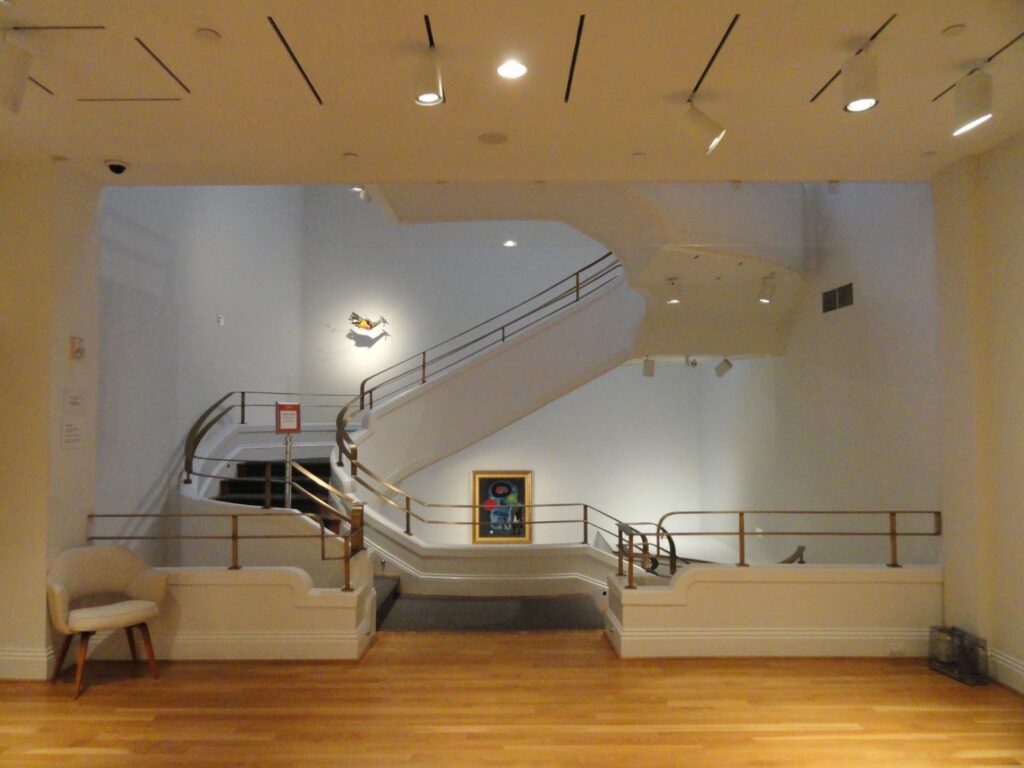
When the federal government shut down on Oct. 1, the pulse of D.C.’s learning life slowed to a hush. Museums dimmed their lights, galleries locked their doors and spaces that once nurtured students’ curiosity fell silent. For students who relied on these free corners of the city to learn, create and connect, the closures redefined learning in the capital.
Congress’s failure to approve a new spending bill before October froze federal funding, shutting the doors to the Smithsonian museums, the National Zoo, and the National Gallery of Art. The shutdown disrupted D.C.’s network of public institutions, dimming the very spaces that once embodied the city’s curiosity and creative energy.
For students like Olivia Griffen, a freshman psychology major from Seattle, the closures have been disorienting.
“Those free spaces were such a big part of how I connected with D.C… they gave us somewhere to belong outside of school,” she said, recalling her regular visits to the Smithsonian museums before the shutdown.
Griffen says the shutdown reshaped her approach to learning. She now seeks out libraries, unconventional galleries and neighborhood cafés to study alongside fellow students.
“It’s like the city’s missing a heartbeat,” she said.
In D.C., students often use libraries, museums, parks and cafés as their third spaces, finding opportunities to study, collaborate or simply be inspired. With federal closures, these spaces are suddenly scarce, forcing students to rethink where learning happens in the city.
D.C.’s federal museums once welcomed all students, turning the city into a classroom without walls. With closures and ticketed access, these spaces are no longer freely available, prompting students to explore alternative venues for study, collaboration and reflection. Even amid these barriers, students continue to adapt, finding ways to learn, connect and engage despite the shutdown.
While Griffen has adapted by finding new corners of the city to study, other students are discovering that the shutdown affects not just where they learn, but how they experience D.C.’s cultural ‘heartbeat.’
Zion Odem, a sophomore TV and film major, said the shutdown has forced him to explore different parts of D.C. for study and cultural engagement.
“I’ve been to areas like Adams Morgan and visited other college campuses just to have something to do… with the closures, I’ve found a few workarounds,” Odem said.
Even with these creative workarounds, Odem said the closures demonstrate the deeper impact of losing free access to the city’s third spaces.
“It’s almost suffocating. Everyone deserves to be able to freely access culture and gain knowledge, and museums are such a big part of that,” he added.
With federally funded museums and national institutions still closed, students are turning to alternative sites for research and study. Local libraries, independent museums and ticketed venues now offer access to resources that students once relied on at federal institutions, whether for free or at a fee.
Here are some student-accessible spaces across D.C., such as independent museums, libraries and community parks and cafés that remain open despite the shutdown.
Shaw Branch Library (DC Public Library)
Address: 1630 7th St NW, near U Street/Shaw
Admission: Free
Shaw Branch Library offers students a calm refuge for studying, reading or catching up with classmates. Griffen said she spends a lot of time there because it’s nearby and provides a quiet space to work while still being around others who are making the best of things. The library’s high ceilings and sunlit reading rooms create a sense of focus and community, making it an ideal spot for solo research or group projects.
The Phillips Collection
Address: 1600 21st St NW – Dupont Circle
Admission
Adults: $20

Student (with ID): $10
18 & under: free
This privately funded modern art museum offers a calm, intimate setting compared to the larger federal institutions. Smaller crowds allow students to immerse themselves in artworks for coursework or personal reflection. Quiet corners and thoughtfully curated galleries make it easy to spend an afternoon sketching, journaling or absorbing the creativity around you.
Planet Word Museum
Address: 925 13th St NW
Admission: Free (suggested donation $15)
Planet Word is an interactive museum celebrating language and storytelling. Students can engage with hands-on exhibits that make words and communication tangible, from sound labs to poetry walls. Its vibrant and playful design encourages exploration, making it a unique third space where study and creativity intersect.
The Kreeger Museum
Address: 2401 Foxhall Rd NW
Admission
Adults: $15
Students (with ID): $10
18 and under: free
Set in a modern mansion surrounded by sculpture gardens, the Kreeger Museum offers a serene escape. Students can wander galleries filled with works by modern masters, enjoy quiet corners for reading, or sit outside among the sculptures. With walk-in tickets available, it’s a flexible spot for reflection, inspiration and study away from crowded spaces.
National Museum of Women in the Arts
Address: 1250 New York Ave NW
Admission
Adults: $16
D.C. Resident: $13
21 & Under and visitors with disabilities: free
Free first Sunday & second Wednesday
Celebrating women artists from around the world, this museum offers galleries, a library and café spaces where students can explore art and ideas. Griffen noted that third spaces like this make D.C. feel alive with learning opportunities, even when Smithsonian museums are closed. Free days on the first Sunday and second Wednesday of each month provide accessible options for students on a budget.
United States Holocaust Memorial Museum
Address: 100 Raoul Wallenberg Place SW
Admission: free (reservations via Etix)
This museum provides a solemn and reflective environment for students to engage with the history of World War II, the Holocaust and the human rights lessons that continue to resonate today. Carefully curated exhibitions and survivor testimonies make it a space for deep learning, discussion and reflection. Students can explore permanent exhibitions or temporary displays while taking in the gravity and importance of historical memory.
Adams Morgan Neighborhood Walk & Local Galleries
Address: Centered on 18th St NW
Adams Morgan offers students a lively escape filled with colorful murals, eclectic galleries and bustling cafés where culture and creativity come together. Odem said he has been exploring the Adam Morgan neighborhood to stay engaged while federal institutions are closed. Independent galleries, such as Gallery O on H Street NW and Hemphill Fine Arts, along with café spaces like Tryst and The Potter’s House, provide flexible spots to study, sketch, or meet with friends. Wandering the vibrant streets and pausing at outdoor tables, students can soak in the energy of the neighborhood while staying connected to the city and their work.
The Wharf Waterfront
Address: 2200 – 2300 District Ave SW
The Wharf is a bustling stretch along the Potomac River, where students can gather outdoors, study at waterfront benches, or enjoy public art and performances. Its combination of cafés, open-air seating and lively energy makes it a flexible space for both solo and group learning.
Meridian Hill Park
Address: 16th Street NW between Euclid & W Streets
Admission: free
This historic park features cascading fountains, open lawns and terraces perfect for outdoor studying or small group discussions. According to the National Park Service, the park remains accessible during the federal shutdown, though some services may be limited. Students can soak in the scenery, find quiet corners and continue learning outside traditional indoor spaces.
Busboys & Poets
Address: 2021 14th St NW – U Street Corridor
Admission: free; food & events costs vary
This café doubles as a cultural hub, offering events, poetry readings and community discussions alongside meals and coffee. Students can grab a table for study, enjoy the artistic atmosphere, or attend talks and performances. Its combination of food, culture and workspace makes it an ideal alternative to federally funded institutions.
George Washington University
Address: 2121 I St NW
Nearby universities, including George Washington University, offer libraries, galleries and public cultural events that are accessible to students. These campuses offer alternative study spaces, temporary exhibits and student-centered programs for those seeking educational and creative engagement that do not rely on federal institutions.
Even with alternative spaces available, the federal closures continue to limit students’ access to D.C.’s educational and social resources. Odem said the loss of free spaces exemplifies the growing challenges to equitable learning.
“Education is a right, not a privilege,” he said. “The lack of free cultural spaces shows how much access is being privatized, and we cannot allow that to continue.”
Copy edited by Damenica Ellis