

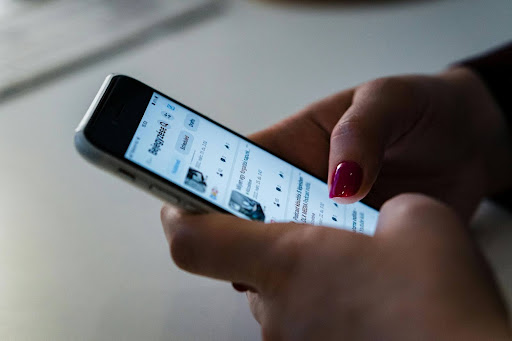
In the age of the internet, a person’s For You page on social media has become more than just an algorithm, but a window into identity. Someone’s interests, hobbies, politics, religion, careers, hopes and aspirations can all be accessible in one place. This makes it easy to get trapped in curated content.
However, endless scrolling, swiping and double-tapping has never been as detrimental to the mind as it is now.
In light of recent events, the polarization of media has trended across For You pages on popular social media platforms such as Instagram, TikTok and X.
What do you think about the government shutdown at 12:01 a.m. on Oct. 1?
Have you listened to Taylor Swift’s album? She dropped it on Oct. 3.
Did you see that President Trump posthumously awarded the Medal of Freedom to Charlie Kirk on Oct. 14?
Do you think Angel Reese should have been in the Victoria’s Secret fashion show Oct. 15?
While these questions and buzzing topics may seem like everyday conversations we have amongst friends, family, peers and on social media, there’s an underlying danger in normalizing the extremism present in the media.
Alyssa Arnold, a sophomore biology major from Las Vegas, reflected on her own experience with the polarization present within her social media pages.
“They try and push the happy and entertaining side to make us forget about what’s actually happening,” she said.
Events such as the government shutdown riding under pop culture announcements like Taylor Swift’s selectively anticipated album, “The Life of a Showgirl,” create a conflicting consumption of media. The fluctuation of emotions between the two events juxtapose one another greatly and may be intentional to keep the American people distracted.
If everyone is wrapped up in the “Life of a Showgirl,” then no one pays attention to the lives of the American people.
There are Americans being unlawfully detained and deported, losing jobs due to the color of their skin and being discriminated against for their sexuality. There are Americans without reproductive care and children left defenseless in school due to gun violence.
These are the lives that should be in the spotlight.
However, Arnold also said being constantly exposed to negative news is overwhelming. She said she believes there should be a balance between good and bad news, rather than one dominating the other.
“I don’t think you should be constantly bombarded with negative stuff. You still need to get some form of enjoyment or laughter,” she said. “I don’t think it’s healthy, but I also don’t think it’s completely unhealthy.”
The consistent pendulum swing of goofy, unserious media to grave, historical events can send anyone into guilt-ridden distress. Consistent exposure to violence is not only incredibly harmful to mental health, but it is also numbing people into inaction.
Freshman English major Funmi Coates reflects on her experience with witnessing this in her own feed.
“I’m watching a funny video, I don’t even scroll on my screen anymore because I know what the next video is gonna be,” she said, “It’s gonna be something entirely depressing or horrible…I just know it’s gonna have those violent images, and I just get so down, and sometimes I’ll be crying.”
She mentioned taking a break from social media, particularly for this reason.
“Subconsciously, I’m normalizing these images in my head,” she said. “Every time I see something about Palestine, or in Sudan, the terrible atrocities happening there, it’s normalized in my head.”

Coates also expresses a sentiment of “political and internet fatigue” that she feels extends to many social media users as well.
“People are not willing to engage in their civil duty of protesting these things because we’re so tired of seeing the same things,” she said. “People don’t organize because they’re sick of it. There’s political fatigue and internet fatigue.”
The overconsumption of media allows information to come and go in the blink of an eye without being fully processed or discussed — especially content focused on violence. Although a respite from life’s struggles is important, meaningful conversations often go unsaid when they’re immediately swept up by the next shiny topic.
This too is a tool the current administration is using to keep media consumers focused on media aligned with their political agenda. TikTok’s ownership shifted into American hands, meaning users’ algorithms would be controlled by the majority American owners and investors.
This also means that users’ algorithms will not be aligned with their own interests, but rather the political interests of those in power and their allies.
When a journalist inquired about MAGA related content in the algorithm, President Donald Trump expressed resentment for needing to treat every policy, group and perspective fairly.
“If I could, I’d make it 100 percent MAGA related,” he said.
Since Trump’s inauguration in January, TikTok users in particular have already reported seeing unusual censorship on videos taken in or discussing Gaza or content against the administration.
Political content creators reported extreme viewer drops and outreach, their videos being blocked in search bars, limited sharing options, repeated “fact-checking” alerts, comments or posts repeatedly being taken down and certain videos unable to play to their full recording time.
Most recently, users have been alarmed by the media pushed forth of Charlie Kirk’s death and how it occurred just shortly after a conversation about the release of the Epstein files erupted. With speculation rising that Trump is on the list, Americans considered Kirk’s death an explicit, intentional distraction from a more pressing issue.
Ultimately, some content creators argued that Trump wanted to manufacture a criminal for the American people to point a finger at other than himself.
In a political climate such as this, it’s imperative now more than ever to remain critical of what is consumed on the internet. It’s never been more important to ask questions, reconsider and do an independent investigation.
The most valuable thing is your mind. Nourish it and read beyond what’s initially observed to see what’s really being said.
Copy edited by D’Nyah Jefferson – Philmore