

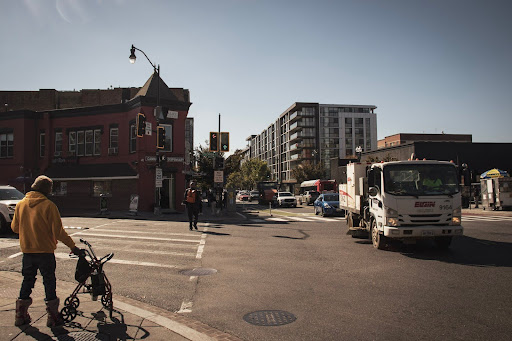
Washington, D.C., also known as ‘Chocolate City’ for its deep-rooted culture and historically majority-Black population, is changing.
The term ‘Chocolate City’ was coined in the 1970s by D.C. radio stations because 70 percent of the District’s population was Black. As of 2023, that number has dropped to about 40 percent. The D.C. metro area is home to about 1.8 million Black residents, making it the third-largest Black population in the country after New York and Atlanta.
Howard University alumna Traci Tait, class of 1986, has lived in D.C for over 30 years. Tait mentions that the Shaw neighborhood has changed significantly since she was a student, both in racial demographics and the buildings themselves.
“When I was a student…you just didn’t really see that many people who were not Black in the space,” she said. “Since then, apartment buildings have gone up and I don’t ever really see Black people going into those apartment buildings. It seems almost [like] an aggressive erasure.”
Some D.C. residents are worried that this drop in the Black population could be caused by gentrification — when a low-income urban area experiences an influx of wealthy residents, often resulting in increased property values and the displacement of longtime residents.
Gentrification Around the Howard Campus
Just an eight-minute walk from The Yard, this is happening in the Shaw neighborhood and Tait isn’t the only D.C resident to notice these changes happening in real time.
Another Howard alum and current D.C. resident, Chad Dennis, also discussed the changes that have occurred in the Shaw area over the years. Dennis has lived in D.C. several times since he arrived as a first-year Howard student in 1995.
“This was an area with a really highly concentrated African American [population], mainly working class to lower class. And you had a high concentration of Black owned, independent businesses,” he said.
Small and Black-owned businesses make up 35 percent of D.C. businesses. An increasing amount of these establishments are owned by Black women, having grown by roughly 20 percent in 2020.
However, residents like Dennis worry that these businesses are being negatively impacted by gentrification.
“White people…made it [more] desirable to live in this neighborhood and over the last 10 years, you see less and less independent stores,” Dennis said.
Tait also said that she noticed culturally significant buildings that were changed or redeveloped in the past decade.
“There was a little corner store at the intersection of Georgia [Avenue] and Florida [Avenue] that used to blast go-go music,” she said. “When the apartment building across the street went up, the new residents wanted quiet. There’s still music that’s played there, but it’s nowhere near the same level…the character of the space is changed.”
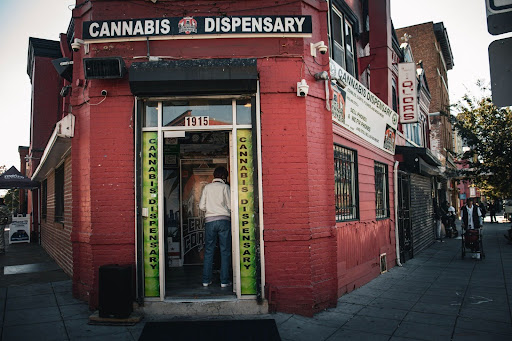
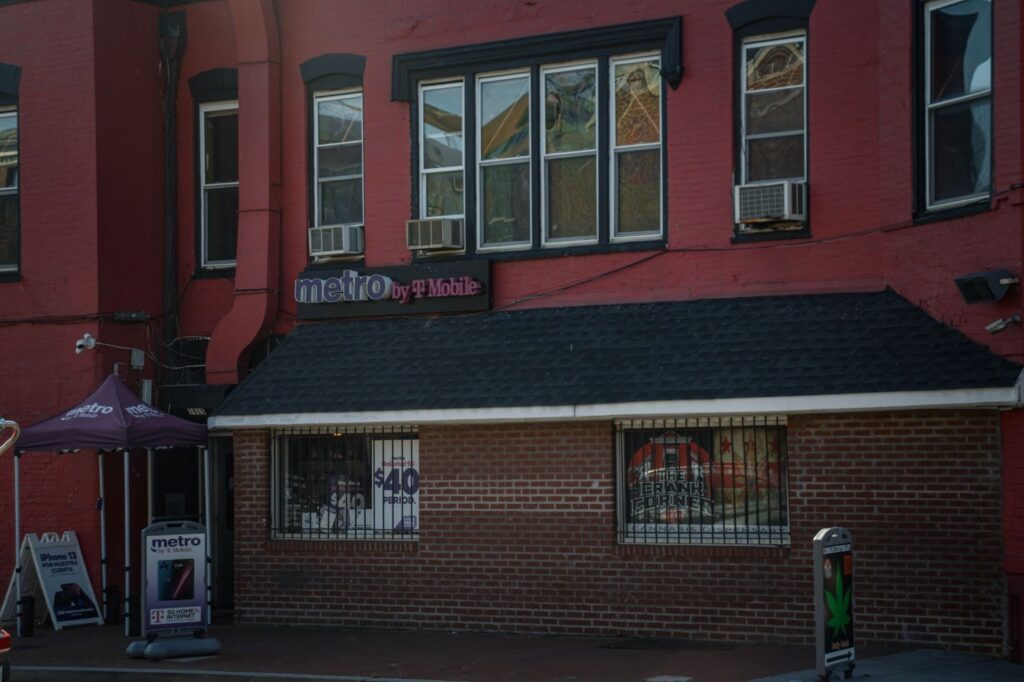
Tait is referring to Central Communications, a local electronics store owned by T-Mobile. Milo Johnson, who has worked at Central Communications for 18 years, described how gentrification has impacted the store.
“It’s affected the area a lot,” he said. “Business levels have slowed.”
In many D.C. neighborhoods, gentrification is an ongoing process, with Black residents often unable to afford increased property values in their neighborhoods. According to a report by the Black Homeownership Strike Force, the homeownership rate for Black households in D.C. is 34 percent, down from 46 percent in 2005. This is compared to nearly 49 percent for white households.
Recent data suggests that the redevelopment of Shaw spaces remains ongoing, with more urban renewal projects in the works.
In 2025, a new luxury housing apartment building was introduced near the Shaw/Howard Metro stop, The Langston. The apartment building has floor plans that include studio apartments and one to two bedroom units. Monthly rental prices range from about $2,653 to $2,878.
Across Shaw, that pattern plays out block by block, between new luxury spaces and the few developments still trying to preserve some sense of community stability.
For many Black D.C. residents, rental prices like those of The Langston total a majority of their earnings. The median income for Black households in the city is about $5,000 a month, while the average rent is $2,500. Compared to other races, Black households are dedicating considerably more of their monthly income to housing, with the average Black renter in D.C. spending over 30 percent of their income on housing.
Howard’s Role in D.C.’s Changing Neighborhood

While The Langston isn’t a Howard University property, buildings like it show the kind of luxury development reshaping the neighborhoods around campus. Howard itself has also become deeply involved in this wave of construction through its own real estate arm.
Through its Real Estate Development and Capital Asset Management division (REDCAM), Howard has invested more than $1.3 billion in commercial mixed-use developments. According to REDCAM, those projects have supported over 13,000 jobs, generated $710 million in personal earnings and created more than $1.5 billion in total economic impact across the D.C. metropolitan area.
Howard has launched several major redevelopment efforts, from modernizing campus buildings to introducing mixed-use spaces that combine student housing, wellness facilities, dining and retail.
According to the university, REDCAM’s mission is “to devise and execute real estate portfolio management strategies that deliver high-caliber campus environments.” Howard also says it plans to deliver 250 affordable housing units as part of its ongoing development strategy.
The U.S. Department of Housing and Urban Development (HUD), determines ‘affordable housing’ using the area median income (AMI), a regional average of household earnings used to determine eligibility for low-income housing.
In line with that definition, the university classifies Howard Manor as an affordable housing development and a way to still serve the surrounding community. The building includes 80 units reserved for residents earning up to 60% of the District’s median income, about $84,000 a year, which HUD categorizes as low-income under federal housing guidelines.
Median household income in D.C neighborhoods surrounding Howard varies. Shaw is roughly $96,000, while in Pleasant Plains and LeDroit Park it ranges between $80,000 and $126,000.When housing is priced for those earning 60% of the AMI, it can still target households making around $80,000 a year.
Under HUD’s formula, even people earning near the top of that range can qualify for affordable housing, which means that residents who’ve been there for decades and make far less, are pushed further to the margins.
This puts middle-income earners and working-class residents in direct competition for the same limited housing units. This may also mean that families or individuals earning closer to 30 percent of the AMI are priced out.
A 2019 study by the Institute on Metropolitan Opportunity found that, since 2000, over 35 percent of residents living in economically expanding neighborhoods in D.C. are classified as low-income.
Reese, an unhoused man who goes by the single moniker, has lived in Washington, D.C. for over 60 years and said he has watched the neighborhood around Howard change entirely. Most days, he can be found along 14th St. near the Trader Joe’s, a 15 minute walk from campus, or at a nearby shelter off Corcoran Street.
He said he remembers when Shaw was “mostly Black,” but streets that were once lined with family homes are where luxury apartments now stand.
“Back then, you’d hear police and ambulances every night,” he said, describing the poverty and violence that once defined the area. “It was rough, but it was ours.”
The changes, he said, began in the late 1970s, when redevelopment first started reshaping the community. While he doesn’t miss the crime, he misses the culture and the people who made the neighborhood feel alive.
How Gentrification Impacts Homelessness in D.C.
Thousands of D.C. residents are currently struggling with homelessness. According to May 2025 point-in-time results, over 5,000 people in D.C. are experiencing ‘literal homelessness.’
The HUD Exchange defines literal homelessness as an individual or family living in a temporary residence or someone who is using a public or private place, not intended for housing, as their living situation.
Point-in-time results are required by HUD every other year and are used to assess homelessness and progress for policymakers and community members. This data is calculated through an annual count done with administrative records to count the individuals living in shelters.
At the time of publication, The Hilltop was unable to reach a spokesperson from the HUD for comment. Amid the federal government shutdown, a notice on HUD’s website states that the department “will use available resources to help Americans in need.”
In 2015, Mayor Muriel Bowser and the District of Columbia Interagency Council launched Homeward DC, a five-year strategic plan set to reduce homelessness rates in D.C. Now it’s in its second phase, Homeward DC 2.0, with the same goal.
In May 2025, Homeward DC 2.0 reported that homelessness rates had decreased in the city since the plan was put into place. However, 2025 data shows that homelessness has actually surpassed what it was in 2021.
Community aid organizations and nonprofits have also worked to provide support to those displaced or otherwise negatively affected by gentrification.
The National Center For Children and Families (NCFF) helps families experiencing homelessness in the D.C. metro area through their housing programs. According to a statement from their Deputy Executive Director Janelle Martinez and Administrator for Family Services Kasey Makell, lack of affordable housing and systemic barriers, including landlord discrimination and criminal and eviction history screenings, prevent low-income residents from finding stable housing.
“These challenges disproportionately impact communities of color and those already facing economic hardship,” the statement said. “Until both the housing supply crisis and the systems that reinforce inequity are addressed, true housing stability will remain out of reach for many D.C. residents.”
The statement also linked high rates of homelessness to gentrification.
“As neighborhoods redevelop and rents rise, low-income residents are often displaced. This reduces the availability of affordable housing and pushes vulnerable families into shelters or unstable living situations,” it continued.
As gentrification keeps evolving, Dennis and Tait both expressed concern that it is contributing to homelessness within the neighborhood.
“You have a whole lot of people who are homeless and I think gentrification has heightened it,” Dennis said. “When I was a student, I could have lived in D.C. for $400 a month. Now it’s a couple of thousand a month.”
Tait agreed.
“Builders are building more expensive housing and either taking over housing that was less expensive and upgrading it, or simply driving up rents for everything that exists,” Tait said. “People who were on the margin simply aren’t going to be able to keep up and are going to be pushed out of their homes.”
Kai Mallette, a senior literature and creative writing major from Fort Lauderdale, Florida, also linked gentrification to homelessness in the area.
“Gentrification is only an excuse to displace homeless people and find a way to criminalize [them] as a whole,” he said.
67 percent of single adults experiencing homelessness and 79 percent of adults in families experiencing homelessness are Black, according to the Metropolitan Washington Council of Governments.
Mallette expressed concern about the disproportionate impact on predominantly Black communities.
“Gentrification is just another facet of systemic racism,” he said. “It will always affect Black neighborhoods first.”
Some students and D.C. residents criticize Howard’s role in the gentrification of its surrounding neighborhoods. Given that the university has developed and is redeveloping more properties within and around these neighborhoods, the concern is that Howard is adding to the forced increase in market value.
Mallette mentioned Howard’s recent closing of multiple restaurants on Georgia Avenue as an example of this gentrification.
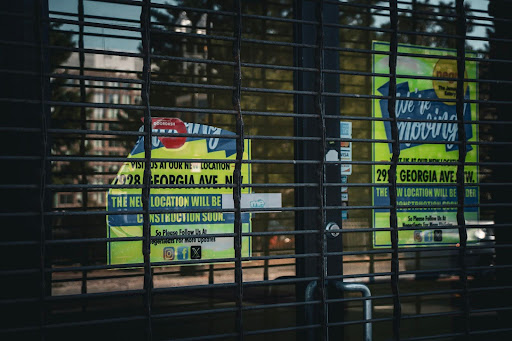
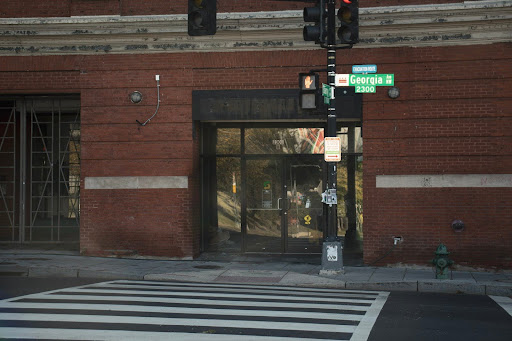
“Any attempt to create a newer or aesthetically pleasing space while also detracting from what was already there, be it family-owned restaurants or small businesses, is in fact gentrification,” he said.
The closures are included in the redevelopment of Wonder Plaza, part of Howard’s broader campus plan. According to REDCAM’s website, in partnership with the real estate firm Holland & Knight, the 27-acre project expands on that vision of combining housing, wellness, retail and technology resources for 21st-century students.
Mallette said that Howard is contributing to gentrification and that it is particularly disappointing in light of their status as a historically Black university.
“This institution was created to better Black lives, so [it] has a responsibility to do more. And that doesn’t mean for a certain type or group of people. It means for everyone who’s around this campus — it’s a community,” Mallette said.
When The Hilltop reached out to the university for comment on claims of contributing to gentrification, they suggested referring to the 2020 Central Campus Master Plan.
Like the Shaw area, the neighborhoods of LeDroit Park, Meridian Hill, Truxton Circle and Pleasant Plains near Howard are currently experiencing gentrification.
According to the Thomas Fordham Institute, the number of white residents in D.C. zip code 20001, which encompasses these neighborhoods, has increased by 27 percent in the previous decade. This increase in white residents is accompanied by the displacement of lower-income residents; according to a study by the National Community Reinvestment Coalition, the median income of residents in the Shaw neighborhood increased from $41,947.36 in 2000 to $164,364 in 2020 — an approximately 292 percent increase.
According to current Black residents of LeDroit Park, gentrification has significantly changed the area.
LeDroit Park residents Rhonda Moore and Vicky Miles said that gentrification has affected their neighborhood in both negative and positive ways. Miles, who has lived in LeDroit Park for 13 years, described the recent developments in the area.
“It’s changed a whole lot. I mean, we got the playground since I’ve been here. This wasn’t here,” she said, indicating the sitting area in the Park at LeDroit. “And then they put in the dog park a year after I got here.”
Miles said that she has seen crime decrease over the past few years in LeDroit Park.
“A lot of guys used to hang out on the streets; it’s not that many out here now. And that’s a good thing,” she said. “Less drug activity and stuff like that.”
However, Miles also acknowledged the negative changes in LeDroit Park and D.C. as a whole over the years.
“They don’t have the YMCA centers no more for kids to go after school,” she said. “They have libraries, but they run a lot of kids out. …If they see 10 or more black kids in the library, they force them out.”
Moore, who has lived in LeDroit Park for 10 years, agreed and criticized the motives of people who move there and contribute to gentrification.
“You’re gentrifying for others, not for us,” she said.
Moore and Miles both emphasized the need for community action among Black residents of LeDroit Park.
“We need more help to get to a point where we don’t need help, where we can maintain our structure, maintain our house, maintain everything,” Moore said.
Based on the average income of Black households between 2016 and 2020, only 8.4 percent of first-time home buyers could afford homes sold in D.C., while 71 percent of white households could afford homes at the time. Due to the comparison of homebuyers in those four years, the housing market has spiked, making it difficult for D.C. residents to afford homes.
Although the number of white residents in D.C. has increased, in 2022, Bowser established the Black Homeownership Strike Force, which focused on increasing homeownership among Black residents amidst the city’s increasing housing market while maintaining property value and affordable housing prices.
When D.C. acquired the nickname ‘Chocolate City’ the District was immersed in Black culture, but now Black residents worry that their community is being pushed out.
“The tragedy of gentrification is that it makes Black people not establish community. We’re like cattle, being herded here, herded there,” Dennis said. “The natural progression of community has been stifled.”
This unfamiliarity is not the end for most D.C. residents. Most natives have recognized the necessity for the preservation of Black communities in D.C. and the steps needed to end any form of marginalization.
“You have to come together as a community, and you have to make your message heard through the channels that are available,” Tait said.
Copy edited by Daryl Thomas Jr.