

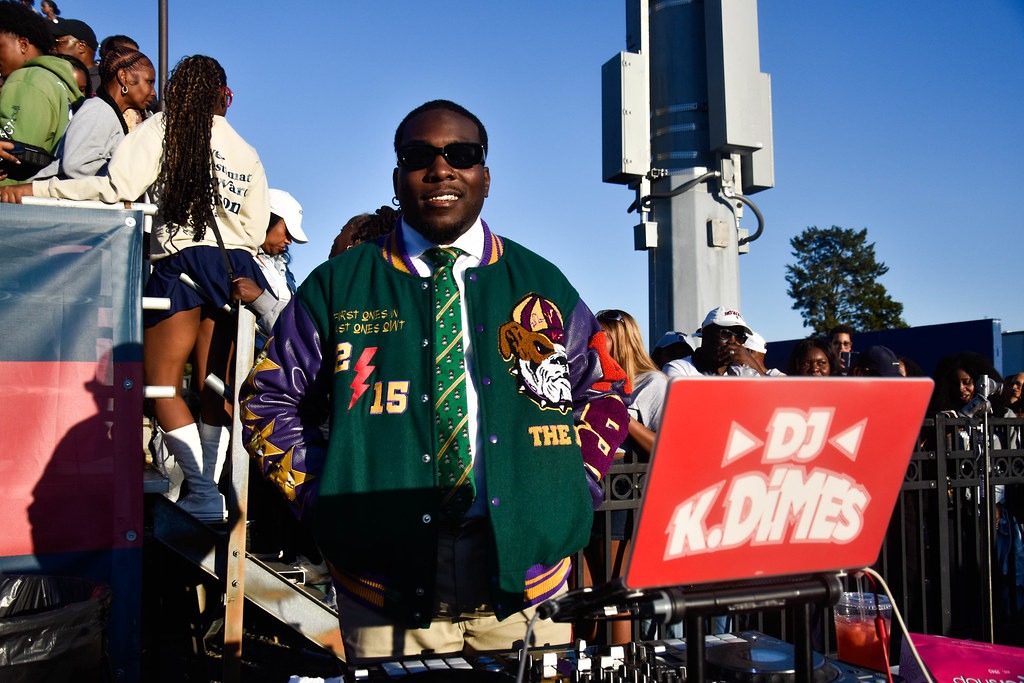
The party was packed, sweat thick in the air as the crowd filled every room and spilled into the basement. Smoke swirled beneath flashing strobe lights while bass shook the floor.
Austin King, a sophomore mechanical engineering major from Houston, hunched over his board, fingers flying across knobs and faders. When the beat dropped, the room erupted and bodies moved as one.
“When I control the crowd and they’re real hype, I know I made it. When everyone is dancing, that’s the most gratifying feeling,” King said.
At Howard University, DJs set the tone for Homecoming, providing music that carries through parties, performances and campus gatherings.
They set the vibe while juggling classes, organizations and late-night gigs.
For King, music has always been a part of his life.
“I started out with the flutophone and the recorder, then the drums, then stage band. When quarantine hit, I lost that musical aspect of my life,” King said.
He said he later rediscovered his passion through a mentorship opportunity with Howard alumnus Jacobi Barfield, another DJ known as 24DidThat. Hours of practice and borrowed gear led to his first real gig, turning a hobby into a craft.
“I practiced seven hours a day, then I was asked to be a campaign DJ for the ‘Beyond’ campaign [a student association campaign], I knew I had to take it seriously,” King said.
Justin Dobson, a 19-year-old DJ from D.C., had a different path. He started DJ’ing in fifth grade but was held back by stage fright.
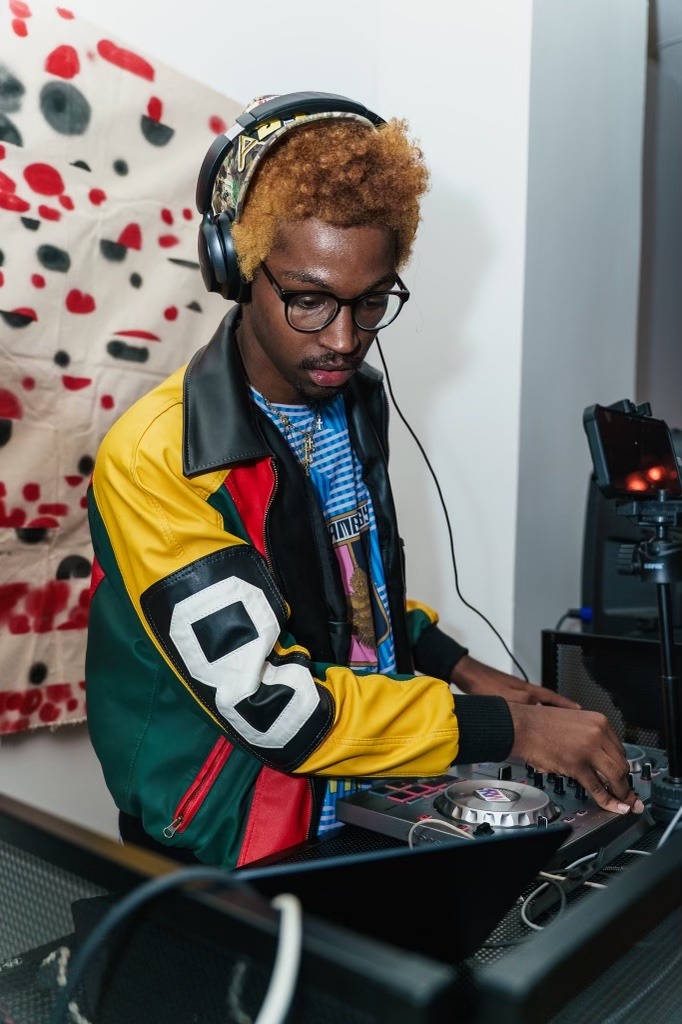
“I avoided DJ’ing…But, once I started doing sets and getting love, I realized I should’ve been doing this,” Dobson said.
While pushing past his fear of performing, Dobson said he found motivation in a gap in the local D.C. DJ scene. He explained that many DJs tailor their sets towards male audiences, a choice that, in his view, alienates women and drains energy from the party.
“I think that the DJ scene, especially in this area, is really mundane,” he said. “There is this misunderstanding with these DJs that they can play what men want to hear, but if there’s no women at a party, the party is not going to be good.”
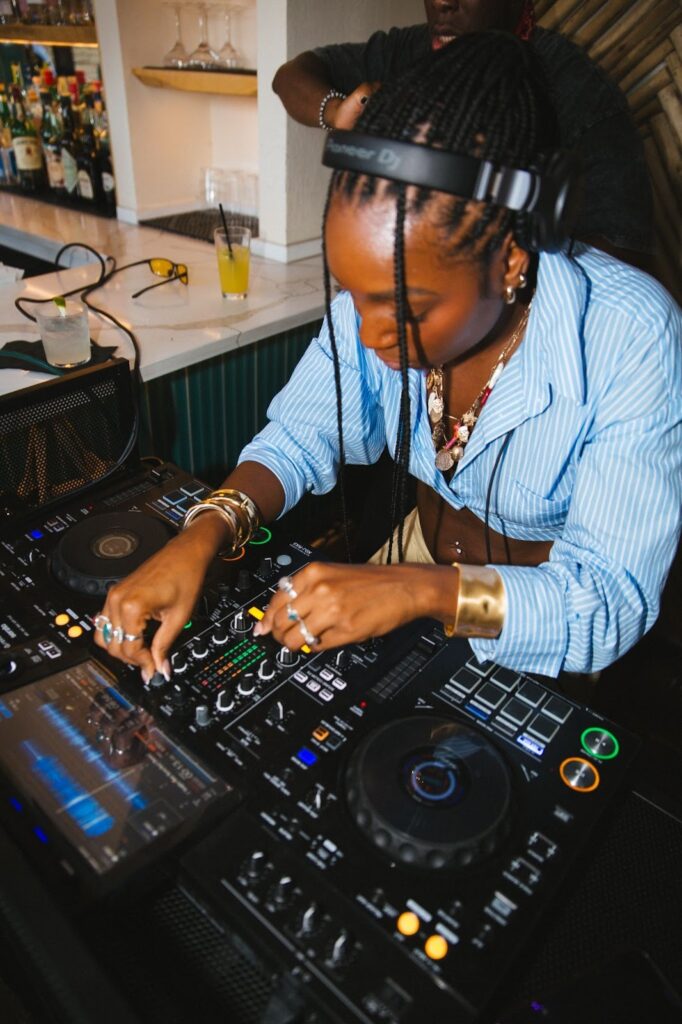
Many female DJs shared Dobson’s frustration. Madyson Patterson, a Howard alumna and psychology Ph.D. student, began DJing under the name DJ Wild Child in her sophomore year. She also aims to make the party scene more enjoyable for everyone.
“I need something for the girls,” Patterson said.
Their critique echoes a larger conversation on TikTok, where users note how DJ booths once surrounded by women are now crowded by men — a shift Dobson hopes to reverse.
“I cater to women because they also listen more carefully. If I see someone paying attention to what I am doing, I’m going to cater to that person,” Dobson said.
Dobson describes DJing as an interaction, not a solo performance. Instead of moving to his own beat, he joins the rhythm of others.
“I play off of what they like and build from there to get the good reaction I am looking for,” Dobson said.
Like many DJs growing through the scene, Patterson’s sound has evolved. Moving away from Hip-Hop, Patterson was drawn to the pulse of the diaspora: Afrobeats and Amapiano, a fusion of house, jazz and kwaito originated in South Africa. The discovery came through Patterson’s former roommate and her boyfriend.
“I really like Afrobeats and Amapiano,” Patterson said. “What initially got me attracted to those genres is …specifically African people or people of African descent, how they’re always dancing.”
Student DJs study the craft closely, watching transitions, tracking song choices and noting how crowds respond.

This new development of sound pushed Patterson to go headfirst. In her process, she builds a collection of study material.
“I dove deep and [educated] myself, whether it was going to events, catering to those genres or literally being on TikTok like, ‘Where did this music come from? Where did this originate?’” Patterson said.
Also exploring the vast genres of music, King reflects on the parallels of Howard students. He builds a set that reflects the mosaic of his peers, the diverse pieces making something vibrant.
“Howard is a melting pot with so many different flavors of Black people. All of those little things add up to shaping your entire sound,” King said.
Like King, other student DJs see their craft as a reflection of campus culture but each approaches it differently. Dobson thrives on improvisation, creating a checklist of goals as challenges to guide him through each night. His mixes are spontaneous but precise, designed to energize and surprise, he said.
“I tell myself, I have to hit these three things. Weave in Brazilian beats, bounce music and mix an old song with a new song. I want people to hear something familiar but in a way they’ve never heard it before,” Dobson said.
For many DJs, balance is the hardest part—taking on classes, clubs and late-night sets. Donovan Mose, a junior computer information systems major from Prince George’s County, Maryland, knows it firsthand. As a student-athlete on the soccer team and rising DJ, he navigates a packed schedule.
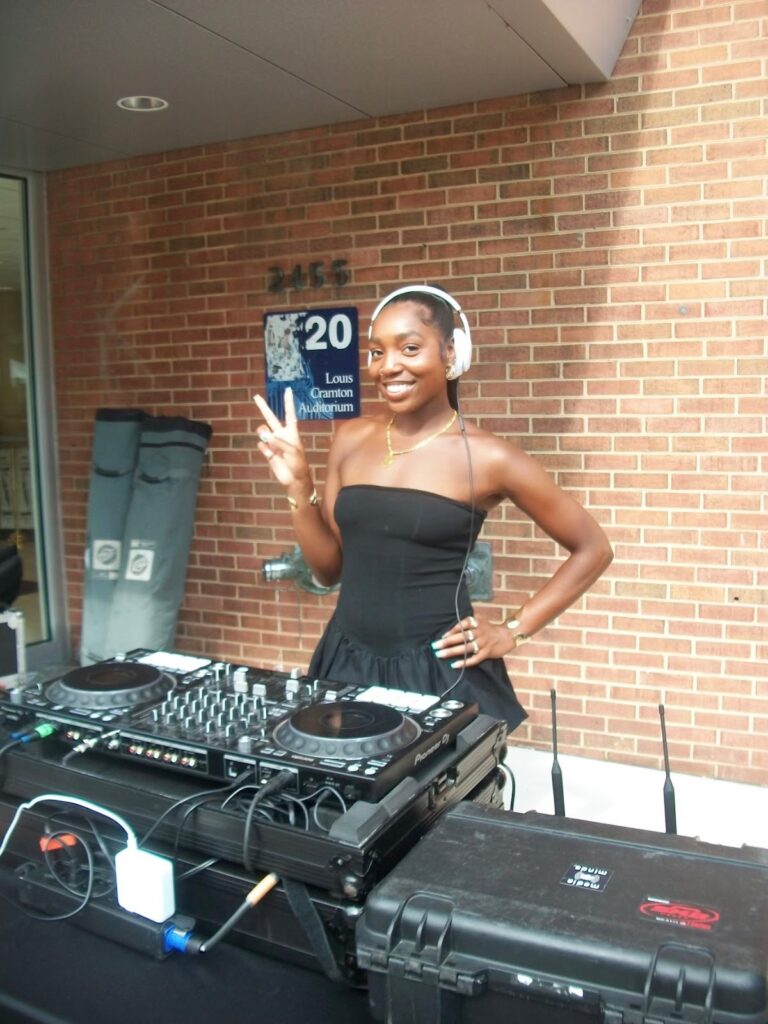
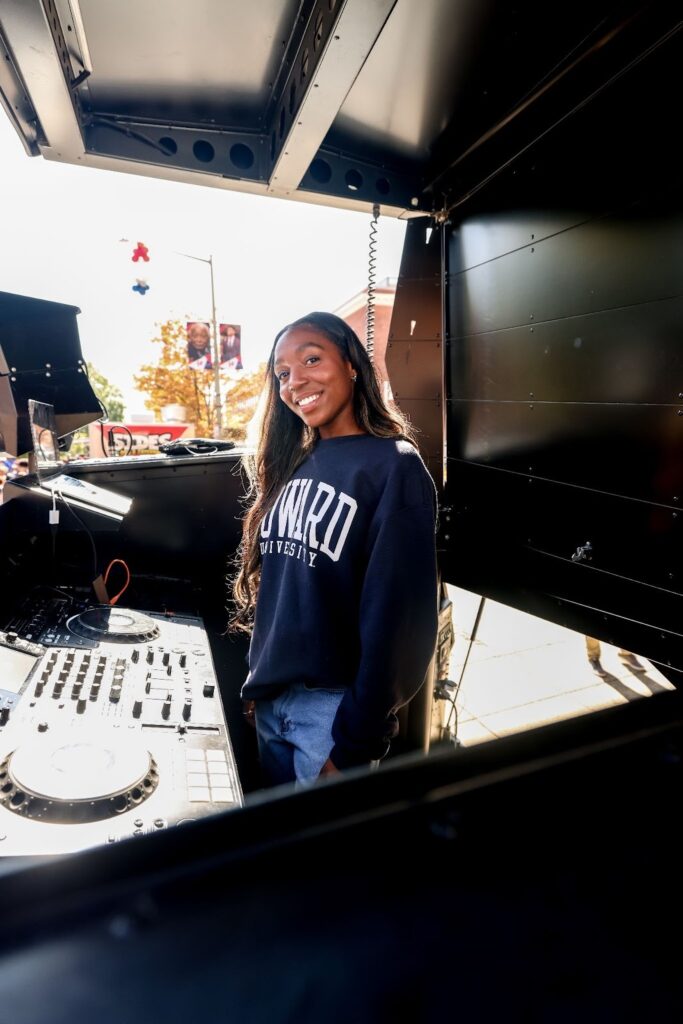
“Everyday we train. I have to be in the locker room at 6:50 a.m., lift after and I have classes throughout the day,” Mose said. “On the weekends, I’ll have two gigs scheduled. It’s all about seeing my schedule and knowing my time.”
King approaches his time with the same discipline, blending the pressures of school, organizations and practice sessions with a focus on efficiency.
“You really have to lock in and do it. I don’t spend any time doing nothing, I’m always doing something to contribute to something,” King said.
With Homecoming imminent, midterms circling the mind and Halloween being October’s cap, Patterson prepares for what she knows to be the most hectic part of the year.
“This month, I have at least 20 events, and I would say right now, 13 of those are during homecoming. That’s like 13 events in four days,” said Patterson.“I told myself I was going to limit myself to 10, but I just have a problem saying no.”
For students and local DJs, performing at Howard isn’t just another gig. Dobson says the atmosphere is unmatched.
“Performing at Howard is very different because it’s not only an HBCU, but there is no school like it,” Dobson said. “The last time I played at Howard was really eye-opening. I overheard a woman say, ‘We’ve been waiting for this. We’ve been waiting to hear these things.’”
Dobson is planning how he is going to turn the energy of Homecoming into opportunity.
“I’m slowly going to wedge my way in there, just through word-of-mouth. I might use a potential connection to get something more official and play a set, but I’m really excited,” Dobson said.
With persistence, Dobson hopes to plant the seeds for his future as he takes on his DJing career.
“I’m not going anywhere. You might as well just listen to what I have to play,” Dobson said.
Copy edited by D’Nyah Jefferson – Philmore