

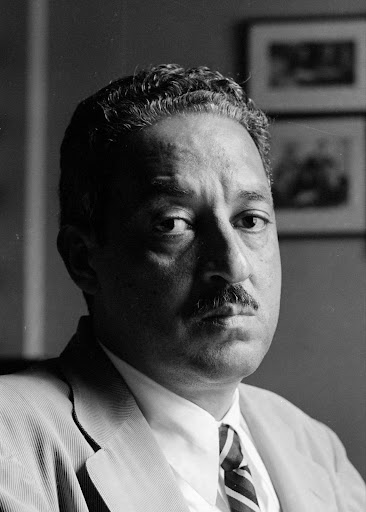
Maryland Public Television’s HBCU Week Now 2025 marks its sixth year honoring historically Black colleges and universities (HBCU) through a lineup of films and features, including Howard students and alumni. The documentary “Becoming Thurgood: America’s Social Architect” is the centerpiece of this year’s showcase.
The week-long celebration, from Sept. 8-14, presented academic, cultural and artistic contributions exclusively from HBCUs and streamed on PBS.
Travis Mitchell, senior vice president and chief content officer at Maryland Public Television who co-produced “Becoming Thurgood,” positioned Marshall’s story as the centerpiece of this year’s national HBCU Week NOW celebration.
He said it was important to pair the documentary with HBCU Week.
“HBCUs are places that demand excellence and allow students to be their authentic selves,” he said. “Centering this film in HBCU Week illustrates how these institutions shaped Marshall’s thinking and helped him discover his role in society.”
“Becoming Thurgood” places him at the center of his own story. The film draws from an unusually extensive eight-hour oral history recorded in 1977— one of the few comprehensive interviews Marshall ever gave, spanning almost 200 pages of transcript and covering his civil rights work, legal career, and Supreme Court years.
Born July 2, 1908, in Northwest Baltimore, what he later described as “the middle of the Negro area,” Marshall grew up amid segregation.
After graduating from Lincoln University in 1930, Marshall continued his studies at Howard University School of Law under the mentorship of Dean Charles Hamilton Houston. At Howard, he developed the strategic legal thinking and expertise that would guide him through pivotal civil rights cases, graduating first in his class in 1933.
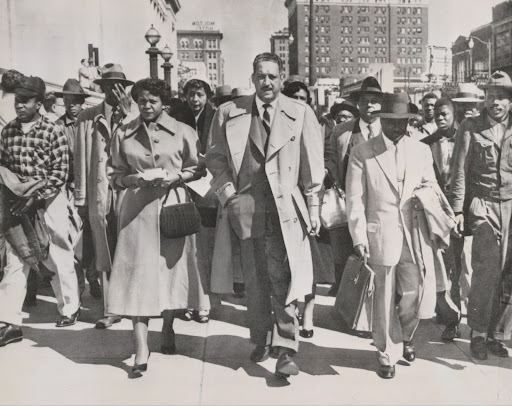
Unlike traditional biographies, the documentary relies on Marshall’s reflections to drive the narrative. From his early cases with the NAACP Legal Defense Fund to Brown v. Board of Education and his tenure on the Supreme Court, Marshall tells his story in his own words, offering a rare, firsthand perspective on the man behind historic rulings.
Professor Sherrilyn Ifill, the Vernon E. Jordan Jr. Distinguished Chair in Civil Rights and founding director of the 14th Amendment Center for Law & Democracy at Howard Law School, emphasized Marshall’s lasting influence.
“Marshall’s civil rights work literally changed the direction of American democracy in the 20th century,” she said. “He set out to end Jim Crow segregation, and he accomplished it. Those of us raised in a world without legally sanctioned segregation need to understand how that world was created.”
Ifill also reflected on the power of hearing Marshall’s story firsthand.
“I sometimes forget that there are generations now who have never heard his voice…Marshall was a raconteur, a storyteller by nature and a compelling one,” she said. “His brilliance, his dedication, his excellence as a litigator and the forces that shaped him tell a powerful story.”
She said Marshall’s determination under extreme adversity remains a lesson for future generations. He faced constant danger in the South, encountered systemic racism in the courtroom and yet remained persistent, never seeking personal glory.
Mitchell said the film’s release is particularly relevant.
“The film really helps us understand the price that was paid for African Americans…to achieve full citizenry,” he said. “Through the lens of history, we can bring the current debate around our democracy into clearer focus.”
“Becoming Thurgood” depicts these historic struggles African Americans faced to secure their rights and connects those sacrifices to the institutions that nurtured future leaders to fight for justice.
In the early to mid-20th century, HBCUs were centers of education and leadership for a generation of African American leaders. Facing segregation and limited opportunities, students found rigorous education, mentorship and networks that prepared them to challenge injustice.
“One of the most important arcs of the film was to establish how Marshall becomes who he eventually would be as a member of the United States Supreme Court,” Mitchell said. “These HBCUs are places where you can be your authentic self, and they demand excellence.”
Highlighting Marshall’s legal acumen, Mitchell added, few attorneys in American history have matched his success rate at the nation’s highest court, a legacy shaped by the discipline and rigor instilled during his years at HBCUs.
“He was truly a genius…he tried 29 cases before the Supreme Court and he only lost three,” he said. “That success speaks to his academic excellence and legal genius. Much of the preparation came from his studies at Lincoln and Howard.”
Mitchell added that pairing the film with the week’s premieres and conversations offered both a reflection on history and a source of inspiration.

“We want students and communities to see themselves in Marshall’s story,” he said. “It’s about understanding the legacy of HBCUs and recognizing how they continue to shape leaders who impact the nation.”
Mitchell said the film was designed to spark dialogue about what it truly means to participate in democracy. By revisiting the sacrifices that secured full citizenship for Black and brown Americans, he hopes audiences — especially students — will recognize their responsibilities to protect those rights.
“No Thurgood Marshall, no freedom,” he said. “It’s just as plain as that.”
Several of the week’s films also highlighted other stories connected to Howard.
Artworks: Imani-Grace Special presented Howard alumna Imani Cooper performing two sets of Black American music classics, spanning jazz, soul and contemporary sounds. The Golden Year: Howard Women’s Basketball chronicled the program’s commitment to resilience and achievement since 1974.
In addition, new short films produced by a partnership of PBS stations — including Howard University Television and several regional affiliates — premiered during the week.
These films spotlighted Howard University’s Department of Theatre Arts, Southern University’s jazz program, Spelman College’s Glee Club, Miles College’s Purple Marching Machine marching band and the fashion arts program at North Carolina A&T State University.
Copy edited by Damenica Ellis