

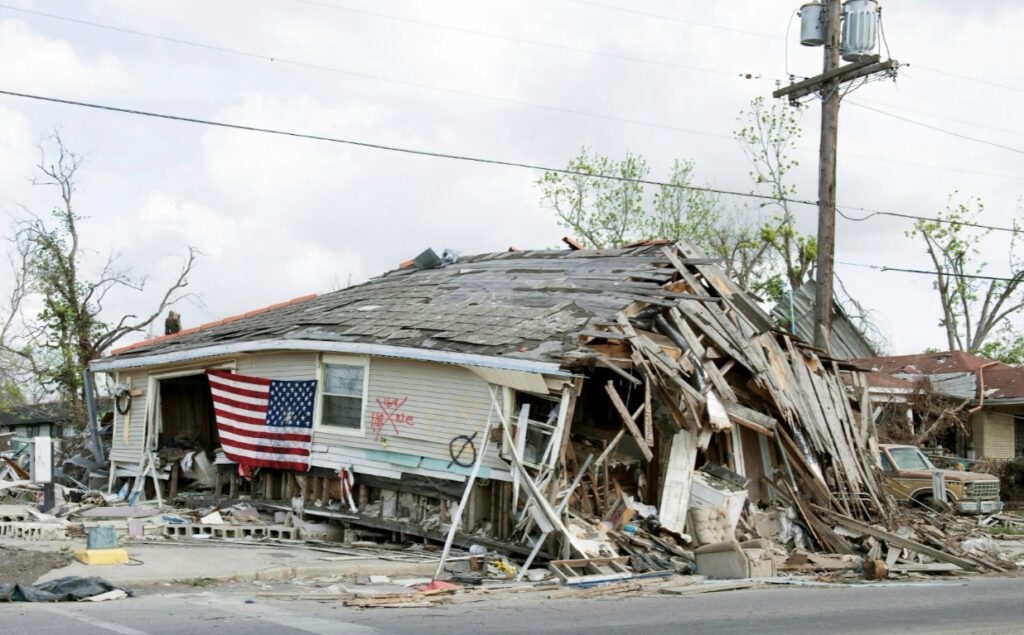
Jaime Welsh is a senior nursing major at Howard and a proud New Orleans native. Other Bison from the pelican state know her as a leader, serving as vice president of Howard’s Louisiana Club. Howard graduates and families know Welsh as a liaison for current students and the local alumni association.
However, to family and those who remember, Welsh is a “Katrina Baby.” This title, bestowed upon the children who survived the storm, is a reminder of the miracles that can occur in the midst of devastation.
August marked 20 years since the torrents of Hurricane Katrina. The category five hurricane is on record as the costliest tropical storm in the Atlantic, tied with 2017’s Hurricane Harvey according to Brookings. But what made the storm so terrifying extended beyond the disaster itself and laid with the response from authorities.
One retroactive study by the Cato Institute says there were approximately 1,800 people killed and $100 billion in property damage, but the storm’s impact was only exacerbated by failures of Congress, the Bush administration, the Army Corps and the Federal Emergency Management Agency (FEMA). The lack of government proactivity led to a drastic oversight of the storm’s actual damage in New Orleans, especially the predominantly Black area.
Although Welsh’s earliest memories are somewhat fuzzy, her mom painted a vivid picture with descriptions of the houses they grew up around in East New Orleans.
“Mold and dead bodies. When my mom moved us into our home, that’s all she could smell,” Welsh said.
One study by Harvard Medical demonstrated that smell can resurface old memories and invoke emotional responses. One can only imagine what life during Katrina was like, when reminders of the storm were everywhere you can see, touch, and smell.
To take it a step further — smell can denote one’s social class, everywhere in New Orleans smelled like mold and dead bodies. That’s when Welsh clarified, “everywhere but the French Quarter.” The city’s biggest investment, the historically glamorous financial district, remained relatively unscathed compared to the ruins of working class neighborhoods.
One study conducted by Brookings corroborates an ongoing American cultural conversation of Katrina as ground zero for environmental racism in the United States, as Black people were uniquely stripped of their dignity in recovering from the storm’s impact.
More specifically, an over-reliance on racial stereotypes and bloating of media coverage on the storm turned the suffering of real people into an almost fictional-sounding spectacle. Welsh confirmed this when asked what her exposure was to the media coverage of Katrina from a local perspective.
“I remember this white lady came to take pictures of [my family], but didn’t want my mom to brush our hair or anything,” Welsh said.
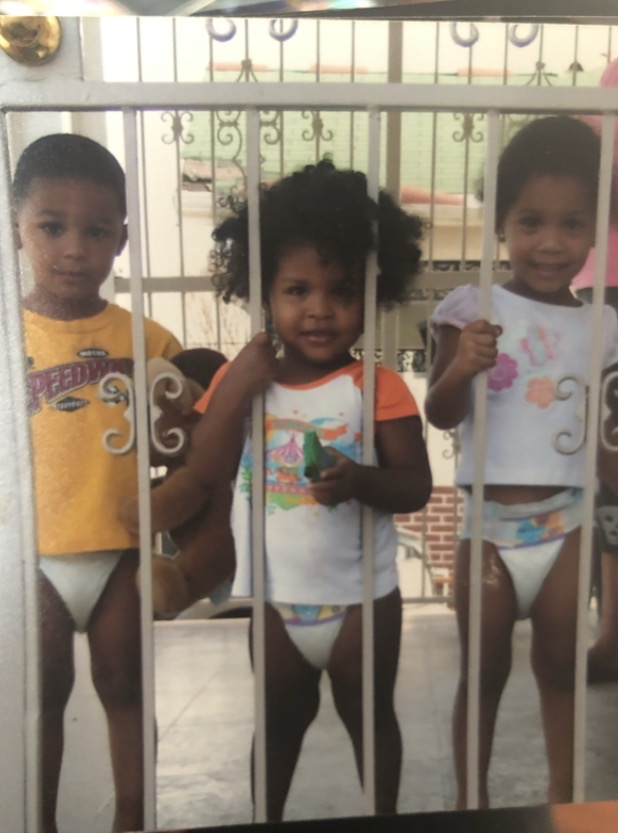
The photographer sought to capitalize off the aesthetic of struggle, therein relinquishing their right to dignity.
For African Americans, being lauded as a charity case or sensationalizing the pain and suffering of disaster is an old song. Daily Northwestern writes about the spectacle of black death, as it has existed since minstrel shows and carries into today.
Since Hurricane Katrina, we have been at the mercy of countless lynchings, shootings and hate crimes by law enforcement. Like this Medium article suggests, the constant stream of headlines detailing Black suffering has, regrettably, forced many to become numb to it all.
Perhaps that was the greater media conglomerate’s objective all along. Quietly, an overexposure to Black trauma could wear down the human inner mechanisms of compassion and sensitivity to grief, thereby making Black suffering seem more ordinary than other races, until Black American issues become shelved and dismissed entirely.
When Welsh was asked if she harbored any sort of resentment or distrust towards governmental institutions based on how they failed her community with extended delays in distributing resources and blatant disregard for the infrastructure of East New Orleans.
“I’m a Christian. I forgive,” she said. “But I have faith that they will get what’s coming to them.”
Black Americans get written off too often when facing a traumatizing experience. At best, press releases use words like “resilient” and “long-suffering” as a cop-out for developing legitimate solutions to their lack. At worst, Black Americans are vilified as if to justify their unfortunate circumstances. During Katrina, Black Americans were photographed and purported as “looters” while their white counterparts were referred to as “finding necessities”, according to a fact check by Snopes.
Twenty years later, the legacy of Katrina remains as torrential as the eye of the storm. The memories, the inequities and the ongoing fight for justice are carried with people like Jaime today. Closing up our conversation, Welsh remained kind and understanding of her conditions, only lamenting the disrespect Black Americans faced with institutional discrimination:
“Parts of [my hometown] are still in ruins”, she recalled. I then asked her if she felt like she missed out on the chance of having a less tumultuous childhood. “I’m a Katrina baby!” she joked. “We make do with what we have.”
No one would volunteer a brush with death to justify their character. But despite the turmoil around them, people like Welsh serve as everpresent reminders of the indomitable human spirit that keeps the city of New Orleans a cultural hotspot.
Commemorating Katrina today is greater than recalling its destruction; it means reckoning with the truths it revealed and committing ourselves to making sure that the most vulnerable are never abandoned again. Still, memory is forever. If not in the 20 years since the storm’s passing, when do you think the community of New Orleans will receive justice?

Copy edited by Damenica Ellis