
As part of the landmark House v. NCAA settlement announced on June 6, universities can now distribute up to $20.5 million per year in athletic revenue to compensate student-athletes as of July, which can include both direct payments and scholarships.
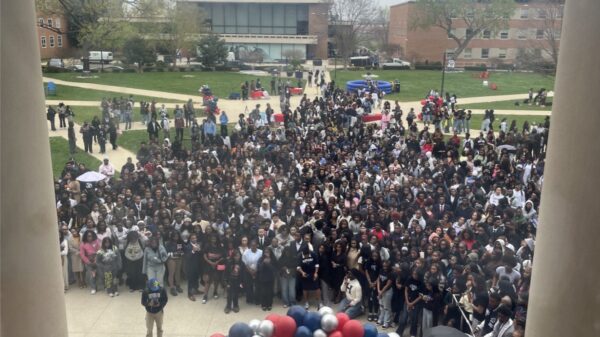
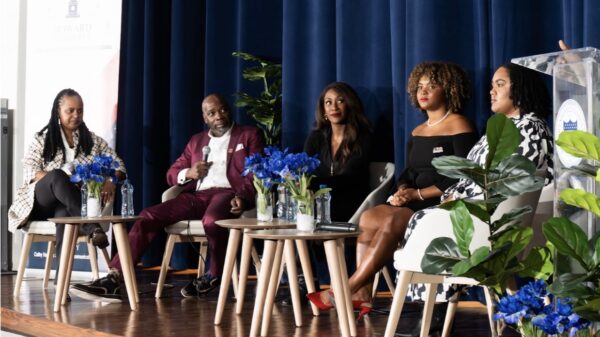
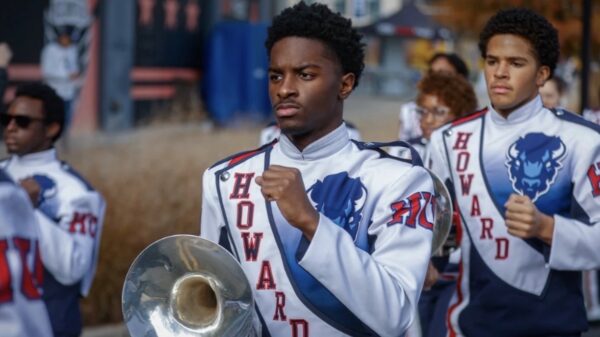
While the ruling offers new opportunities, it also presents challenges, particularly for smaller institutions such as Howard University, which faces the unique pressures and responsibilities of being a historically Black college and university (HBCU).
“I think the NCAA settlement is a blessing,” said Ja’Shawn Scroggins, the university’s starting quarterback for football. “If you’re helping your school make money, you deserve a share of it. It might be harder for smaller schools, but any money helps keep players financially stable.”
Though utilizing the revenue sharing cap is optional, it creates a new competitive standard. Power Five programs, which are schools in the Atlantic Coast Conference (ACC), Big Ten Conference, Big 12 Conference, Pac 12 Conference, and Southeastern Conference (SEC) and represent the top tier of Division I college sports, like Alabama, Ohio State, and Georgia, backed by massive television contracts and deep donor support, may be able to offer the full $20.5 million.
For a Football Championship Subdivision (FCS) program such as Howard, offering that level of compensation poses significant hurdles. With smaller athletic budgets, limited media exposure, and fewer high-revenue sports, meeting the $20.5 million mark presents a challenge. Still, expectations around athlete compensation are rising, and programs across all divisions will be expected to find ways to stay competitive.
This could involve leveraging creative solutions, such as alumni-driven Name, Image and Likeness (NIL) funds, corporate partnerships, or enhanced academic and career support. As the Associated Press reported, alumni-led NIL collectives like Icon 1901 are emerging to support HBCU athletes, helping them compete despite smaller budgets.
Coach Larry Scott, head coach of Howard University’s football team, called the settlement “a turning point for college sports.” He said Howard’s community, academic reputation and status as a historically Black university continue to be significant advantages in recruiting for prospective players.
“Howard’s brand resonates nationally and internationally. We attract student-athletes who value both high-level competition and a quality education,” Scott said. “Our legacy as an HBCU, combined with our academic strength, plays a key role in bringing top talent to campus.”
“This ruling will reshape recruiting, retention, and athlete support,” he added. “At Howard, our goal is to remain competitive while honoring our mission as an HBCU.”
A growing concern centers on equity. Shortly after the settlement’s approval, a group of female athletes filed an appeal, arguing that the plan could disproportionately benefit men’s sports.
Since football and men’s basketball generate the most revenue for many schools, athletic departments may direct a larger share of the payments to those programs, leaving female athletes and lower-revenue sports at a disadvantage.
“I think it would benefit a lot of student-athletes if they got paid, even with scholarships,” said Gabriella Garcia, a Howard University women’s soccer forward and Northeast Conference Rookie of the Year. “You’re putting in so much time with practice, games, and events. It feels like a job on top of school, so getting paid would feel amazing.”
This aspect of the settlement may push all universities, including Howard, to adopt more equitable practices for sharing revenue and NIL opportunities, ensuring that all athletes benefit from the changing landscape, regardless of gender or sport.
Copy edited by Daryl Thomas Jr.